- 100% Natural
- Premium Quality
- No Preservatives
- Fresh & Healthy
Learn how to make rich traditional badam milk at home with soaked almonds, creamy milk, cardamom, saffron, and pistachios. This detailed guide explains how to soak and peel almonds, prepare a smooth almond paste, cook the milk without burning it, adjust sweetness and thickness, and create delicious variations with dates, cashews, walnuts, khoya, rose water, and saffron. Discover how to serve badam milk warm or chilled, prepare it for Ramadan, Eid, weddings, winter gatherings, and guests, plus practical storage and troubleshooting tips.
Few traditional drinks are as comforting as a glass of creamy badam milk.
Made with almonds, milk, cardamom, and often saffron, badam milk is a simple but luxurious drink that can be enjoyed warm on a cold winter evening or chilled when the weather is hot. In Pakistani homes, variations of almond milk and dry-fruit milk drinks are also served at family gatherings, Ramadan, Eid, weddings, and other special occasions.
The beauty of homemade badam milk is that you can control almost everything. You can make it thick or light, mildly sweet or rich, smooth or slightly textured, and simple or packed with additional dry fruits.
A traditional-style version starts with soaked almonds. The almonds are peeled, ground into a paste, and combined with milk before being gently cooked with cardamom and optional saffron. Pakistani recipes use several variations of this basic idea. Food Fusion, for example, uses soaked and peeled almonds with milk, saffron, sugar, and a small amount of cornflour for a chilled almond drink, while Pakistani saffron milk recipes commonly reduce milk and flavor it with cardamom and saffron before garnishing it with almonds and pistachios.
This guide focuses on a rich homemade badam milk that you can prepare without complicated equipment. It also covers variations with pistachios, cashews, walnuts, dates, rose water, saffron, and other dry fruits.
Whether you want a cozy winter drink, a Ramadan recipe, or an elegant beverage for guests, this is a recipe worth keeping.
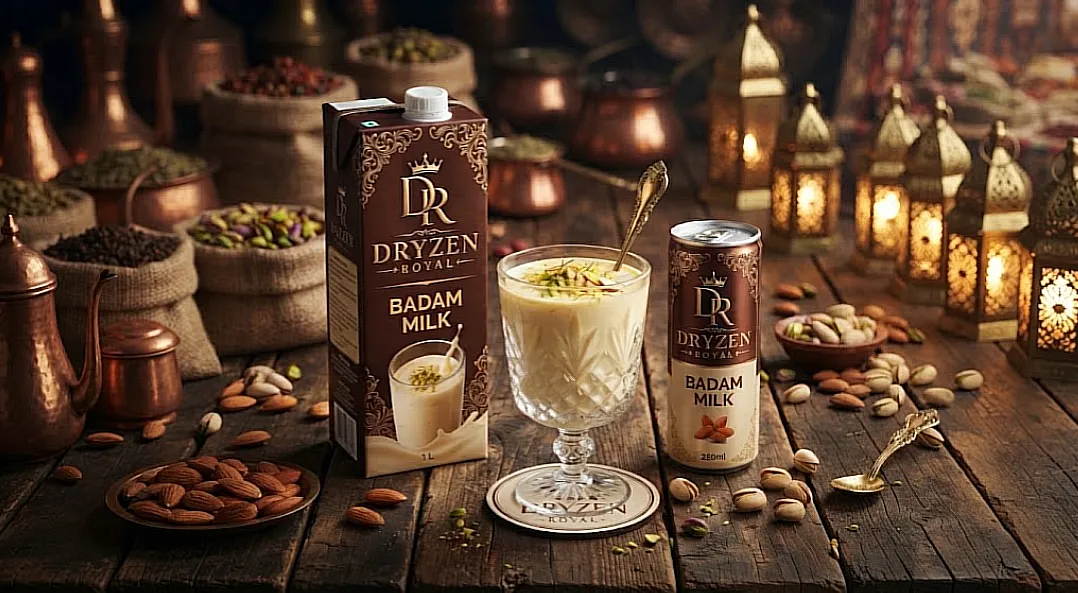
Badam milk is a traditional almond-based milk drink made by combining ground almonds with milk and sweetening and flavoring the mixture according to preference.
The name is straightforward:
Badam means almonds, and doodh means milk.
The simplest version may contain only:
A richer version can include:
The texture can also vary.
Some versions are thin enough to drink like ordinary milk. Others are thick, creamy, and almost dessert-like.
There is no need to treat one exact ratio as the only authentic version. Traditional Pakistani milk drinks vary between households and recipes, and badam milk is particularly easy to customize.
Packaged almond drinks and flavored milk products can be convenient, but homemade badam milk gives you much more control.
You can decide:
You also get the aroma of freshly ground almonds and cardamom.
That makes a noticeable difference.
For approximately 4 servings, you can use:
These quantities are flexible.
If you want a lighter drink, reduce the almonds.
If you want a richer version, increase the almonds slightly.
You can also add:
Don't add everything at once.
Badam milk tastes best when the almond flavor remains noticeable.
Almond quality matters because almonds are the foundation of the drink.
Look for almonds that:
A stale almond can affect the entire batch.
Because the almonds are ground and incorporated directly into the milk, there is nowhere for an unpleasant flavor to hide.
Yes, but peeled almonds usually produce a smoother and more refined drink.
Almond skins can contribute a slightly coarse texture and darker appearance.
If you're making badam milk for guests, peeling the almonds is worth the extra effort.
For a casual everyday drink, leaving some skins on isn't necessarily a problem.
Place the almonds in a bowl.
Cover them with enough water.
Leave them to soak until they soften.
For the smoothest texture, many people prefer soaking them for several hours or overnight.
Once softened, drain the water.
Rinse the almonds.
Then gently press each almond between your fingers to loosen the skin.
The skin should slide off relatively easily.
Soaking softens the almonds, making them easier to grind into a smooth paste.
It also makes the preparation process easier when you're using a household blender.
You don't need to soak the almonds if you're using almond flour or almond meal, but the resulting drink will have a somewhat different texture.
After soaking:
If the skins refuse to loosen, the almonds may simply need more soaking time.
Saffron is optional, but it gives badam milk a beautiful aroma and a subtle golden color.
Take a small pinch of saffron strands.
Place them in 2 tablespoons of warm milk.
Let them sit for several minutes.
The milk will gradually take on the saffron's color and aroma.
Don't use boiling milk for this step.
Warm milk is sufficient.
Pakistani saffron milk recipes commonly infuse saffron in milk alongside cardamom and serve the drink with almond and pistachio garnish.
Add the peeled almonds to a blender.
Add a small amount of milk.
Blend until you have a smooth paste.
Stop the blender occasionally and scrape down the sides if necessary.
The goal is a paste rather than a completely dry almond powder.
Start with a small amount.
You can always add more.
If you add too much liquid immediately, the almonds may take longer to grind smoothly.
A thick almond paste is easier to incorporate into the milk gradually.
Not necessarily.
A very smooth paste creates a creamy drink.
A slightly coarse paste creates more texture.
For a traditional premium-style presentation, aim for mostly smooth paste with only very fine almond particles remaining.
You don't want large pieces of almond floating throughout the glass unless that's specifically the texture you prefer.
Pour the milk into a heavy-bottomed saucepan.
Place it over medium heat.
Bring it gradually toward a simmer.
Stir occasionally to prevent the milk from sticking to the bottom.
Once it becomes hot, lower the heat.
If you want a richer drink, allow some of the milk to reduce gently.
Traditional Pakistani milk preparations often cook milk over low heat until some of the liquid evaporates, concentrating the flavor and creating a thicker drink.
Take a small amount of the hot milk and mix it into the almond paste.
Stir until smooth.
Then gradually add the loosened almond mixture back into the saucepan.
Stir continuously as you add it.
This helps prevent lumps.
Don't dump a thick almond paste directly into the pan all at once.
Crush the seeds from the green cardamom pods.
You can grind them into a fine powder or crush them more coarsely.
Add approximately ½ teaspoon of cardamom powder.
Cardamom should be noticeable but not overwhelming.
Its role is to complement the almonds and milk.
Almonds have a naturally rich, slightly sweet flavor.
Milk provides creaminess.
Cardamom adds aromatic freshness.
Together, they create the familiar flavor profile associated with many South Asian milk-based desserts and drinks.
Once the almond paste is fully incorporated, add your saffron-infused milk.
Stir gently.
The color should gradually become pale golden.
Don't use excessive saffron.
A small amount can provide plenty of aroma.
Too much can make the flavor unnecessarily strong and can also make the drink expensive without meaningfully improving it.
Traditional badam milk is commonly sweetened with sugar, but the amount is entirely adjustable.
Start with a modest quantity.
Stir.
Taste.
Then add more if needed.
This is especially important when using dates or other sweet ingredients.
Yes.
Jaggery can provide a deeper, more caramel-like sweetness.
However, if you add jaggery directly to very hot milk, the result can vary depending on the ingredients and acidity.
For a smooth, predictable badam milk, sugar is simpler.
If using jaggery, dissolve it separately and add it carefully after adjusting the heat.
Yes.
Dates are particularly useful if you want the drink to have a deeper dry-fruit flavor.
Remove the pits.
Soften the dates if necessary.
Blend them into a paste with a little warm milk.
Then incorporate the date paste into the badam milk.
This creates a more intensely fruity drink.
A Pakistani milk-based dessert recipe from Masala TV similarly combines dates with milk, almonds, walnuts, pistachios, raisins, cardamom, saffron, and clarified butter, showing how naturally dates and dry fruits pair with milk-based preparations.
Keep the heat low once the almond paste has been added.
Stir frequently.
Allow the milk to cook gently until it reaches your desired thickness.
Don't rush this stage.
A slow simmer gives the almonds time to blend into the milk.
It also helps develop a richer flavor.
That's completely up to you.
The drink remains close to the consistency of regular milk.
The almond paste is clearly noticeable and the drink feels richer.
The drink becomes almost dessert-like.
For drinking from a glass, creamy is usually the easiest consistency.
For serving in small cups at a gathering, you can make it slightly thicker.
Look for several signs:
You don't need to cook it until it becomes extremely thick.
Remember that it will continue to thicken slightly as it cools.
Pistachios are an excellent addition.
You can add finely ground pistachios to the milk or simply use sliced pistachios as garnish.
For a premium-looking drink, keep some pistachios aside.
Pour the badam milk into serving glasses.
Finish with:
Simple presentation often looks better than covering the entire glass with toppings.
Cashews make badam milk even richer.
If you want to add them, soak them briefly if necessary and grind them together with the almonds.
A combination of almonds and cashews produces a particularly creamy texture.
But don't let cashews completely overpower the almonds.
The drink is still supposed to be badam milk.
Walnuts bring a deeper flavor.
Because walnuts can have a stronger, slightly bitter character than almonds or cashews, use them in moderation.
A small amount can add complexity.
Too much can make the drink taste less delicate.
Rose water can transform the aroma.
Add only a small amount near the end of cooking.
Start with around ¼ teaspoon.
Taste.
Add more only if necessary.
Too much rose water can quickly dominate the drink.
Kewra is another option in Pakistani-style sweet dishes and milk preparations.
Use it sparingly.
A little can create an elegant floral aroma.
Too much can make the drink taste artificial or overly perfumed.
A tiny pinch of freshly grated nutmeg can work beautifully in a winter version.
Don't overdo it.
Nutmeg is strong, and the primary flavors should remain almond, milk, and cardamom.
Hot badam milk is ideal for winter.
Pour it into small cups while still warm.
Garnish with:
Serve immediately.
It pairs especially well with:
The drink itself is already rich, so you don't necessarily need a heavy dessert alongside it.
Badam milk can also be served cold.
After cooking:
Pakistani badam milk and almond-based sharbat recipes are commonly served chilled, especially when prepared as a refreshing drink. Food Fusion's Doodh Badam Sharbat, for example, is cooked briefly before being cooled and refrigerated until chilled.
Badam milk can make an elegant Ramadan drink.
For iftar, a chilled version can be served in small glasses.
For a more traditional presentation, combine it with:
For sehri, a warm or room-temperature version can also be served depending on personal preference.
If you're preparing it for Ramadan, avoid making the drink excessively sweet simply because it is being served at iftar.
A balanced sweetness is usually more enjoyable.
Eid is a perfect occasion for a premium version.
Use:
Serve it in small glass cups.
Garnish each glass individually.
This turns an everyday milk drink into something much more festive.
For larger gatherings, you can prepare the almond mixture in advance.
Cook the milk in a large heavy-bottomed pot.
Keep the heat low.
Stir regularly.
Serve in small glasses or cups.
For a more polished presentation, add the garnish immediately before serving rather than hours in advance.
This keeps the sliced nuts looking fresher.
For a richer version, use:
The khoya is optional but creates a significantly richer drink.
Pakistani milk recipes commonly use almonds, pistachios, khoya, cardamom and saffron together in richer milk-based preparations.
If using khoya, add it after the almond paste has been incorporated and cook gently until completely dissolved.
If you don't want refined sugar, you can rely on naturally sweet ingredients such as dates.
Blend softened dates with the almonds.
Add the mixture to the milk.
Taste before adding anything else.
Keep in mind that “no added sugar” does not mean the drink contains no sugars.
Dates naturally contain sugars.
Honey can be used as a sweetener.
However, there is little reason to boil honey aggressively.
Prepare the badam milk first.
Let it cool slightly.
Then stir in honey according to taste.
This also allows you to control the sweetness more precisely.
If you don't have time to soak and peel almonds, almond flour can be a convenient shortcut.
Use finely ground almond flour.
Whisk it into a small amount of warm milk first to form a smooth slurry.
Then add it gradually to the main milk mixture.
The result may not have exactly the same flavor as freshly soaked almonds, but it can still produce a pleasant drink.
Commercial badam powder can also be used.
However, check the ingredient list.
Some mixes contain:
If you're trying to control sweetness or ingredients, plain almond powder gives you more flexibility.
A slightly grainy texture isn't necessarily a problem.
Almonds naturally contain solids.
But large gritty particles usually indicate that the almonds weren't ground finely enough.
Try:
You can.
If you want an ultra-smooth drink, pass the finished mixture through a fine sieve.
But don't throw away the almond pulp.
You can use it in:
If you enjoy texture, simply leave the almond solids in the drink.
Several things can cause thin badam milk:
The easiest solution is to simmer it gently for longer.
You can also add more almond paste.
Avoid adding large amounts of thickener unless you're specifically trying to create a sharbat-style drink.
Add warm milk gradually.
Stir thoroughly.
Don't add cold milk directly to a very hot, thick mixture if you can avoid it.
Warm milk incorporates more smoothly.
The most common reason is under-seasoning.
Try adjusting:
Remember that chilled drinks taste less sweet than warm drinks.
If you're making a chilled version, taste it after refrigeration before deciding whether it needs additional sweetness.
Possible causes include:
If the bitterness is coming from the almonds themselves, there's little you can do to completely remove it.
Start with fresh, good-quality almonds.
Use a heavy-bottomed pan.
Keep the heat moderate while bringing the milk up to temperature.
Then reduce the heat.
Stir frequently.
Pay particular attention after adding the almond paste because the thicker mixture can settle at the bottom.
Always loosen the almond paste with milk before adding it to the main pot.
Add it gradually.
Whisk or stir continuously.
Avoid adding a thick ball of almond paste directly into hot milk.
Yes.
It can be prepared in advance and refrigerated.
This can actually be convenient when you're hosting guests.
Prepare it earlier.
Allow it to cool.
Refrigerate it in a clean, covered container.
Stir thoroughly before serving.
Because homemade badam milk contains fresh milk, refrigeration is important.
Keep it in a clean, sealed container.
Don't leave it sitting at room temperature for extended periods.
If you're serving it at a gathering, take out only the amount you need and keep the remainder refrigerated.
For a homemade milk drink, it's better to think in terms of freshness and safe refrigeration rather than assuming a long shelf life.
Prepare it fresh when possible.
Keep it refrigerated.
Use clean utensils.
If you notice:
Discard it.
Freezing isn't ideal if you want the smoothest texture.
Milk and nut mixtures can separate after freezing and thawing.
If you need to prepare something well ahead of time, it's usually better to prepare the almond paste separately and make the milk closer to serving.
One useful shortcut is preparing almond paste in advance.
Soak and peel the almonds.
Blend them into a thick paste.
Transfer the paste to a clean airtight container.
Refrigerate it.
Then use the paste as needed.
This can make weekday badam milk much faster to prepare.
For an everyday version, keep it simple:
That's enough.
You don't need saffron, pistachios, khoya, rose water, and every other ingredient to make good badam milk.
Sometimes the simplest version is the most satisfying.
For special occasions, use:
Blend the almonds, cashews, and a small amount of pistachios.
Cook them slowly with the milk.
Add saffron and cardamom.
Finish with rose water.
Garnish generously with sliced pistachios and almonds.
This version is rich enough to feel like a dessert.
Dates and almonds are a natural combination.
For a date version:
The dates will create a deeper color and a richer fruit flavor.
Pistachios can be added directly to the almond paste.
Use approximately ¼ cup for every ¾ cup almonds.
This produces a more luxurious nut profile.
You can also reserve some pistachios for garnish.
Cashews make the drink especially creamy.
Use a moderate amount.
Too many cashews can make the drink extremely rich and can mask the almond flavor.
If you're making badam milk for children, keep the recipe simple.
Use:
Avoid excessive spices or strong floral flavors.
Also consider individual food allergies before serving nuts.
When serving guests, presentation matters almost as much as the recipe.
Use small transparent glasses.
Pour the milk carefully.
Garnish with:
Serve warm in winter or chilled in warmer weather.
A small serving is usually enough because the drink is rich.
Want to go full shahi mode?
Add a small amount of:
Then serve in small dessert glasses.
You have essentially moved from a simple drink toward a spoonable milk dessert.
This style works especially well at weddings, Eid gatherings, and formal dinners.
Taste before adding more.
This can make the almond paste rougher.
Fresh almonds make a huge difference.
This can create lumps.
The milk can scorch.
More isn't necessarily better.
The almond flavor can disappear.
A floral drink can quickly become overpowering.
Remember that badam milk is still a drink.
Cold temperatures can change how sweetness and aroma are perceived.
The secret isn't one magic ingredient.
It's the combination of several small choices.
Use fresh almonds.
Soak them properly.
Peel them.
Grind them smoothly.
Use good milk.
Cook slowly.
Use freshly crushed cardamom.
Add saffron carefully.
Sweeten gradually.
And don't rush the cooking process.
Those details matter more than adding ten different ingredients.
Winter recipes in Pakistan often revolve around ingredients that make meals feel rich, warming, and festive.
Dry fruits naturally appear in:
Badam milk fits perfectly into this pattern.
The combination of milk, almonds, cardamom, and saffron gives it the same luxurious character found in many South Asian desserts while remaining simple enough to prepare at home.
If you're building a Ramadan or Eid food spread, badam milk can be part of a larger dry-fruit theme.
Serve it with:
For gifting, you can pair a premium selection of almonds and pistachios with a recipe card for homemade badam milk.
That turns the ingredients themselves into part of the experience.
Badam milk contains ingredients that provide nutrients, including almonds and milk, but it should not automatically be treated as a health drink.
The nutritional profile depends heavily on the recipe.
Sugar increases the carbohydrate and calorie content.
Large quantities of nuts increase calories and fat.
Khoya and cream make the drink even richer.
Dates provide natural sweetness but still contribute sugars.
So rather than labeling every version as “healthy,” it's more accurate to describe homemade badam milk as a nut-rich milk drink that can be enjoyed as part of a balanced diet.
Portion size matters, particularly for richer recipes.
People with diabetes, food allergies, kidney-related dietary restrictions, or other medical concerns should consider their individual dietary needs and seek appropriate professional advice.
For a rich homemade version, approximately 150–200 ml per serving is usually plenty.
For a lighter version, you can serve more.
For a wedding or formal gathering, smaller glasses often work better because guests may also be eating other foods and desserts.
For an easy reference:
Ingredients
Method
Keep these ten tips in mind:
They are the main ingredient.
Soft almonds blend more easily.
Especially when serving guests.
You want a concentrated almond paste.
Lower-fat milk produces a lighter drink.
This prevents lumps.
Low heat gives you better control.
Dates or sweetened ingredients may already provide enough sweetness.
Rose water and kewra should support, not dominate.
Freshly added nuts look and taste better.
Traditional badam milk is one of those recipes that proves you don't need an enormous ingredient list to create something special.
At its heart, the recipe is beautifully simple: almonds, milk, cardamom, and sweetness. Add saffron and pistachios and it becomes more luxurious. Add cashews, dates, khoya, or subtle floral flavors and you can turn it into a festive drink worthy of an Eid table, wedding gathering, or formal dinner.
The biggest difference between an ordinary batch and an excellent one comes from preparation.
Soak the almonds properly. Peel them if you want a smoother drink. Grind them into a fine paste rather than leaving large pieces. Add the paste gradually to warm milk and cook gently instead of rushing the process over high heat. Use cardamom carefully, add saffron sparingly, and adjust sweetness only after tasting.
The recipe is also remarkably flexible.
A simple version can become an everyday winter drink. A chilled version can work beautifully for Ramadan and summer gatherings. A richer combination of almonds, pistachios, cashews, saffron, and khoya can become a luxurious festive beverage. Dates can replace or reduce refined sugar, while rose water or kewra can add another layer of aroma when used carefully.
Most importantly, don't feel pressured to make every version identical.
Badam milk has plenty of room for family preferences and regional variations. One household may prefer it thin and lightly sweetened. Another may want a thick, creamy drink loaded with pistachios. Someone else may swear by saffron and cardamom while skipping everything else.
That's exactly what makes traditional recipes worth keeping alive.
Start with good-quality almonds, good milk, and a little patience. Once that foundation is right, the rest is easy.
And when that first glass comes out creamy, fragrant, lightly golden, and covered with fresh pistachios and almond slivers, you'll understand why this humble combination of milk and dry fruits has remained such a beloved part of South Asian food culture.
Traditional badam milk can be made with soaked almonds, creamy milk, cardamom, saffron, and pistachios. Ingredients such as dates, cashews, walnuts, khoya, or rose water can also be added for different variations.
The almonds are soaked and peeled before being processed into a smooth almond paste. Properly preparing the almonds helps create a smoother texture in the finished drink.
Cook the milk carefully and pay attention to the heat during preparation. Proper cooking can help prevent the milk from burning while allowing the almond paste and other ingredients to blend smoothly.
Yes, badam milk can be served either warm or chilled. The serving style can be chosen based on the occasion, season, or personal preference.
Badam milk can be prepared for Ramadan, Eid, weddings, winter gatherings, and when serving guests. It can also be enjoyed as a homemade drink at other times of the year, with storage practices helping maintain its quality.
Fasih Frankly
SEO Expert and eCommerce Specialist. Shopify, eBay and online selling.
Questions about this article?
Email us and we will get back to you.
Explore more
