- 100% Natural
- Premium Quality
- No Preservatives
- Fresh & Healthy
A measured French press coffee method that steeps crushed cacao nibs with coffee and explains filtration and flavour adjustments.
Cacao nib coffee adds a cocoa-like aroma to a familiar coffee brew without relying on a sweet chocolate syrup. The nibs steep alongside ground coffee, then remain behind when the drink is filtered. They do not dissolve into the water like an instant powder or melt like a chocolate bar.
This method uses a French press because the ingredients can share a controlled immersion step. It is a starting recipe for two small cups, not a claim that every coffee and nib combination tastes identical. Make one batch with measured quantities before changing the coffee strength, nib amount and steeping time together.
The starting water quantity is 400ml, with some liquid retained by the grounds and nibs. Allow around ten minutes for preparation and brewing. A scale and timer make adjustments easier to repeat than spoon estimates alone.
Use a clean French press with a working filter, a kettle and a separate mortar for the nibs. Check the press for cracked glass or damaged parts before pouring in hot water. Do not use equipment that is not designed for hot beverages.
Crush the cacao nibs separately in a mortar until the largest pieces are smaller but still coarse. Do not turn them into fine dust. They contain material that does not behave like coffee beans in every grinder.
Do not add nibs to an espresso hopper or machine simply because they look similar in size to other dry ingredients. Follow the equipment manufacturer’s instructions. Our cacao nib uses and buying guide explains the ingredient more broadly.
Use a coffee you already enjoy as a plain French press brew. A very dark or heavily flavoured coffee can make the nib contribution hard to distinguish. Begin with a familiar medium-strength cup rather than trying to repair an unpleasant coffee with extra additions.
Grind coarsely enough for your press filter. Very fine coffee can produce more sediment and make pressing harder. The nib crush should also remain coarse so the brew is practical to separate from the solid material.
Keep vanilla, cinnamon and flavoured creamers out of the first test. Once you know the basic balance, one small accent can be added later. Several strong flavours at once make it difficult to learn whether the nib quantity suits you.
Warm the press with a little hot water if the manufacturer allows it, then discard that water. Put the measured coffee and crushed nibs into the vessel. Set it on a stable heatproof surface, away from a counter edge.
Heat fresh drinking water and let a vigorously boiling kettle settle briefly before pouring. A starting water temperature around 92°C to 96°C is useful if you have a suitable thermometer, but your coffee and equipment may favour a different approach.
Pour carefully over the dry mixture, wetting it evenly. Stir gently with a utensil appropriate for the vessel so no large dry pockets remain. Avoid striking thin glass with a heavy metal spoon.
Use the full 400ml starting quantity rather than filling the press to a visual line that changes with foam. If your press is too small, halve every ingredient and brew one small serving instead.
Do not fill past the vessel’s safe limit. The plunger needs room to move, and an overfilled press can spill when the filter enters. A measured small batch is easier to handle than a crowded vessel.
Place the lid on with the plunger raised and steep for approximately four minutes as an initial reference. Keep the vessel stable and do not shake it. The solids should remain immersed rather than sitting as a dry mound above the water.
Press slowly and steadily, following the press instructions. If the filter resists strongly, stop rather than forcing it down. Excessively fine grounds, too much material or a damaged filter can make pressing difficult.
Pour the finished brew into cups or a separate warmed jug promptly. Leaving it on the grounds while you drink the first cup changes the extraction of the remaining liquid and makes the second serving less comparable.
A metal filter may allow a little fine sediment through. If you prefer a cleaner cup, pass the brewed liquid through a suitable paper coffee filter, using equipment designed for the temperature. Do not squeeze hot wet material by hand.
Additional filtering can change both body and aroma. Try it on one serving first rather than assuming clearer always means better. The goal is a cup you enjoy and can reproduce.
If the cocoa-like note is too faint, try increasing nibs from 8g to 10g on the next batch while leaving the other quantities unchanged. Keep the pieces coarse enough to filter. Longer steeping also affects the coffee, so it is not a neutral way to increase only the nib flavour.
If the cup is bitter, review the coffee roast, grind and steep time before adding a large amount of sugar. Taste a small portion diluted with hot drinking water to see whether concentration is part of the issue.
If the drink feels thin, check the coffee-to-water measurement. More milk or extra nibs will not necessarily correct an under-strength coffee base. Record the starting recipe and the single change you preferred.
Pour a little warm milk into one cup and compare it with the plain version. Dairy and different plant-based drinks change flavour and body in different ways. Follow their storage and heating instructions rather than treating all milk alternatives as identical.
If sweetness is wanted, add a small measured amount to the serving cup. There is no need to sweeten the full jug. Do not describe the drink as sugar-free if the milk or added ingredients make that statement inaccurate.
For a richer chocolate drink with a different structure, see our cacao nib hot chocolate recipe. It uses a milk infusion and melted chocolate rather than extracting coffee alongside nibs.
Serve soon after brewing, keeping hot cups away from children and unstable surfaces. Coffee and cacao can contain caffeine; this is not a caffeine-free drink. Avoid making unsupported claims about focus, weight management or other medical effects.
Discard the wet grounds and nibs appropriately and clean the press filter thoroughly. Never return used wet nibs to the dry product pack. Residue trapped in a filter can affect the flavour of a later brew.
For a simple comparison, label two cups before brewing and divide one measured batch between them. Add milk to only one. This lets you assess the serving change without confusing it with a different extraction time or another coffee quantity.
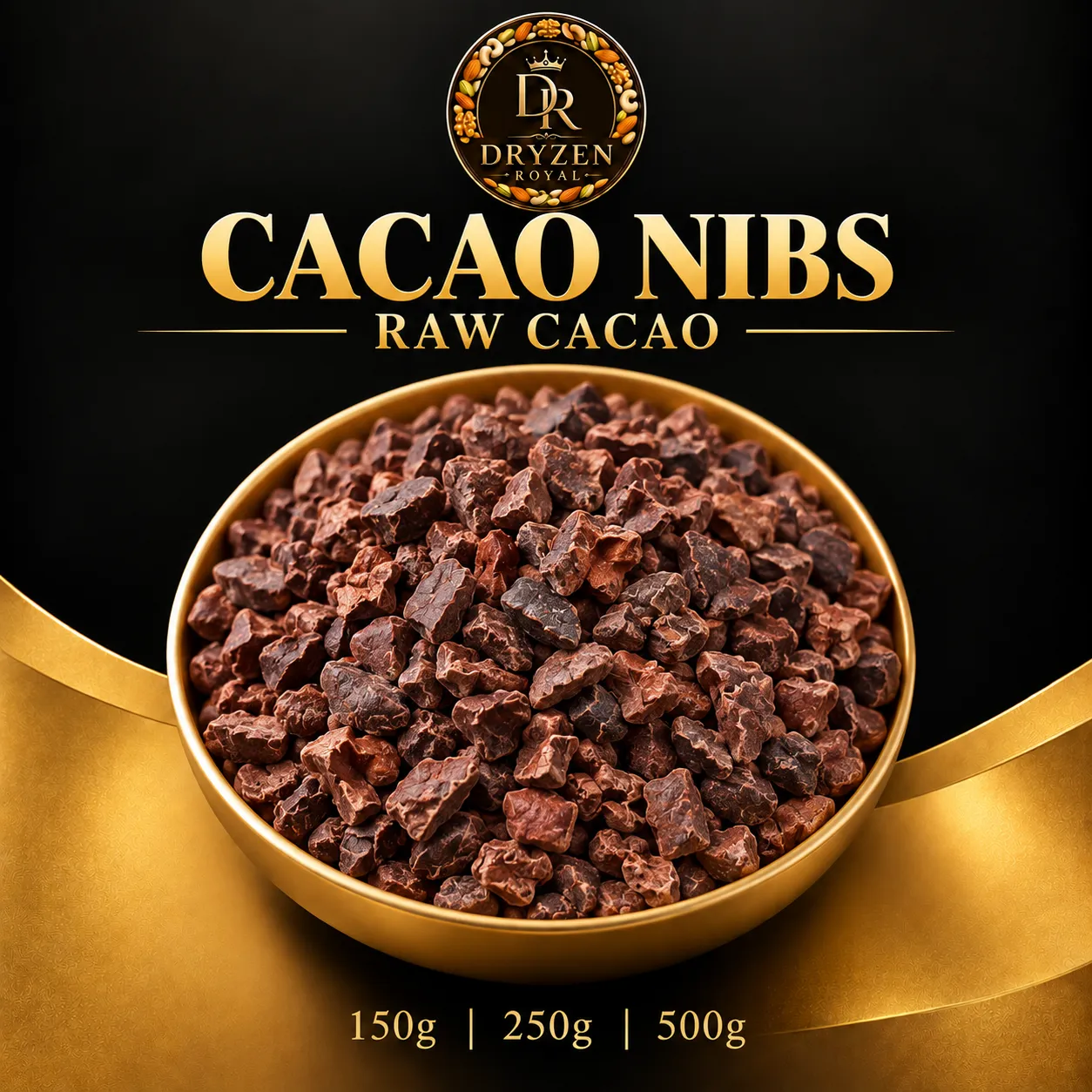
Explore Dryzen Royal Raw Cacao Nibs for your next cacao nib coffee. Check the current preparation, start with a small measured quantity and keep the remaining nibs sealed according to the pack guidance.
Not in this method. The nibs are a measured addition to ground coffee and do not create an identical drink when used alone.
Avoid adding them to a coffee grinder or espresso machine unless its manufacturer allows that ingredient. This recipe crushes them separately.
No. Plain nibs are unsweetened. The recipe produces a cocoa-like aroma alongside coffee, with sweetness added separately if wanted.
Fine coffee or cacao particles can pass through a metal press filter. Use a coarser crush, pour gently or filter a serving through suitable paper.
Questions about this article?
Email us and we will get back to you.
Explore more
