- 100% Natural
- Premium Quality
- No Preservatives
- Fresh & Healthy
Pears gently cooked in a strained cacao-nib infusion, with a spoonable sauce and simple plating.
Cacao nib poached pears use a strained cocoa infusion to flavour fruit without covering it in a thick chocolate sauce. The pears stay visible, with a pale-to-light-brown surface and a softly scented cooking liquid. This is a dessert for somebody who enjoys subtle cocoa aroma and tender fruit rather than a heavy layer of sweetness.
Choose firm pears that are beginning to ripen but still hold their shape. Very hard fruit takes longer and may soften unevenly, while very ripe pears can collapse before the liquid develops flavour. Cacao nib poached pears work best when the fruit in one pan is similar in size and ripeness, so the halves finish close together.
This makes four portions using two large pears. Allow 15 minutes to infuse the liquid and 15–30 minutes for poaching, depending on the fruit. You need a small saucepan, fine sieve, vegetable peeler and a shallow pan that holds four pear halves in a single layer. A pan much larger than the fruit requires more liquid to cover it.
A little sugar helps round the infusion, but this is not a syrup-heavy preserve. The fruit itself contributes sweetness. Do not describe the dessert as sugar-free or attach medical benefits to the cacao. Check the nibs' ingredient label and choose a product whose flavour you enjoy on its own.
Put 25 g nibs in the saucepan with 600 ml water and the optional orange peel. Bring just to a simmer, then cook very gently for five minutes. Turn off the heat, cover and leave for ten minutes. The liquid will be aromatic but not as dark or thick as hot chocolate made with cocoa powder.
Strain through a fine sieve into the poaching pan, pressing the nibs lightly. Remove the orange peel. The spent nibs will have given up some flavour and do not need to be returned to the dessert. Straining is important because hard nib pieces caught against the pears make it harder to check tenderness cleanly.
Peel the pears, halve them lengthways and remove the core with a teaspoon or melon baller. Keep the halves intact. Rub lightly with the measured lemon juice to limit surface browning while you work. A long decorative stalk is optional; it does not improve cooking and should not make the fruit awkward to portion.
Add sugar to the warm infusion and stir until dissolved. Lay the pears cut-side down. The liquid should come most of the way up their sides. If needed, add a small measured amount of water. Record this addition because it affects the concentration of the sauce later.
Bring the pan to a very gentle simmer. Small occasional bubbles are enough. Cover partly with a lid or a circle of baking paper that rests over the fruit without touching a flame or heating element. Cook for about 10 minutes, then turn the halves carefully with a spoon.
Continue for another 5–20 minutes, checking with the tip of a knife near the thickest part. The knife should slide in with little resistance, while the pear remains able to lift in one piece. Remove each half as it becomes tender rather than waiting for the firmest one and overcooking the others.
Lift the pears onto a plate. Simmer the liquid uncovered until it tastes pleasantly concentrated, usually 5–10 minutes. Taste a cooled spoonful before reducing further. A very strong infusion can become bitter rather than more chocolate-like. More reduction is not always better.
For a lightly coating sauce, stir in the optional cornflour slurry and simmer for a minute or two until it loses its raw appearance. Use only the amount needed. A thick pudding-like sauce hides the pear and changes the intended dessert. If you prefer a clear liquid, omit the cornflour and serve a small spoonful around the fruit.
Cacao nib poached pears can be served gently warm, with the sauce spooned around rather than over every surface. Plain yogurt or a small scoop of ice cream is optional. Add it only at the table, particularly if you plan to keep some pears for another day. Dairy should not be stirred into the storage liquid.
For a chilled version, cool the pears in a shallow container with a little sauce and refrigerate promptly. Serve in small bowls so the liquid stays contained. A tiny sprinkle of finely chopped fresh nibs adds crunch, but keep it modest: hard pieces can overwhelm the soft fruit and are not suitable for every diner.
If a pear half splits during cooking, slice it neatly and arrange the pieces in a fan. There is no need to discard sound cooked fruit because it lost its restaurant-style outline. For a family dessert, practical portions matter more than a tall stalk and elaborate decoration.
Orange peel can be omitted or replaced with a small piece of cinnamon stick. Avoid using several strong spices together on the first attempt. The cocoa infusion is subtle, and too much cinnamon or clove can make the nibs difficult to notice. Keep a record of one successful combination before adding more flavours.
Cacao nib poached pears will not look like fruit dipped in melted chocolate. Nibs infuse aroma into water, while chocolate adds cocoa solids, sugar and fat directly to a coating. If you want a thick chocolate dessert, choose a different recipe rather than trying to force this infusion to behave like melted chocolate.
A pale infusion is not automatically a failed infusion. Taste it after steeping and again after reducing. If the flavour is weak, check the freshness and quantity of the nibs next time. Adding cocoa powder at the last minute creates a different sauce and can introduce lumps unless mixed properly.
A rolling boil knocks the fruit about and can roughen the surface. A pan that is too wide leaves the upper side dry. Turning with tongs can mark soft flesh; use a spoon and support the pear from below. A tight lid may prevent the liquid reducing when you reach the sauce stage, so remove it then.
Cacao nib poached pears are a useful dessert to test in a small quantity. If one pear variety cooks in 15 minutes and another takes 30, note the variety or at least its firmness. Future timing should follow that observation rather than a fixed number printed beside every pear recipe.
Store cooked fruit and sauce covered in the refrigerator. For a conservative household plan, use within two days. This is not a canning method or a room-temperature preserve. Use clean serving spoons and avoid returning a partially eaten portion to the container.
If reheating, warm only the portions needed in their sauce until thoroughly hot, then cool briefly to a comfortable serving temperature. Avoid repeated heating of the full batch, which can break down the fruit. Cacao nib poached pears are at their best when the shape remains intact and the sauce tastes fresh rather than endlessly reduced.
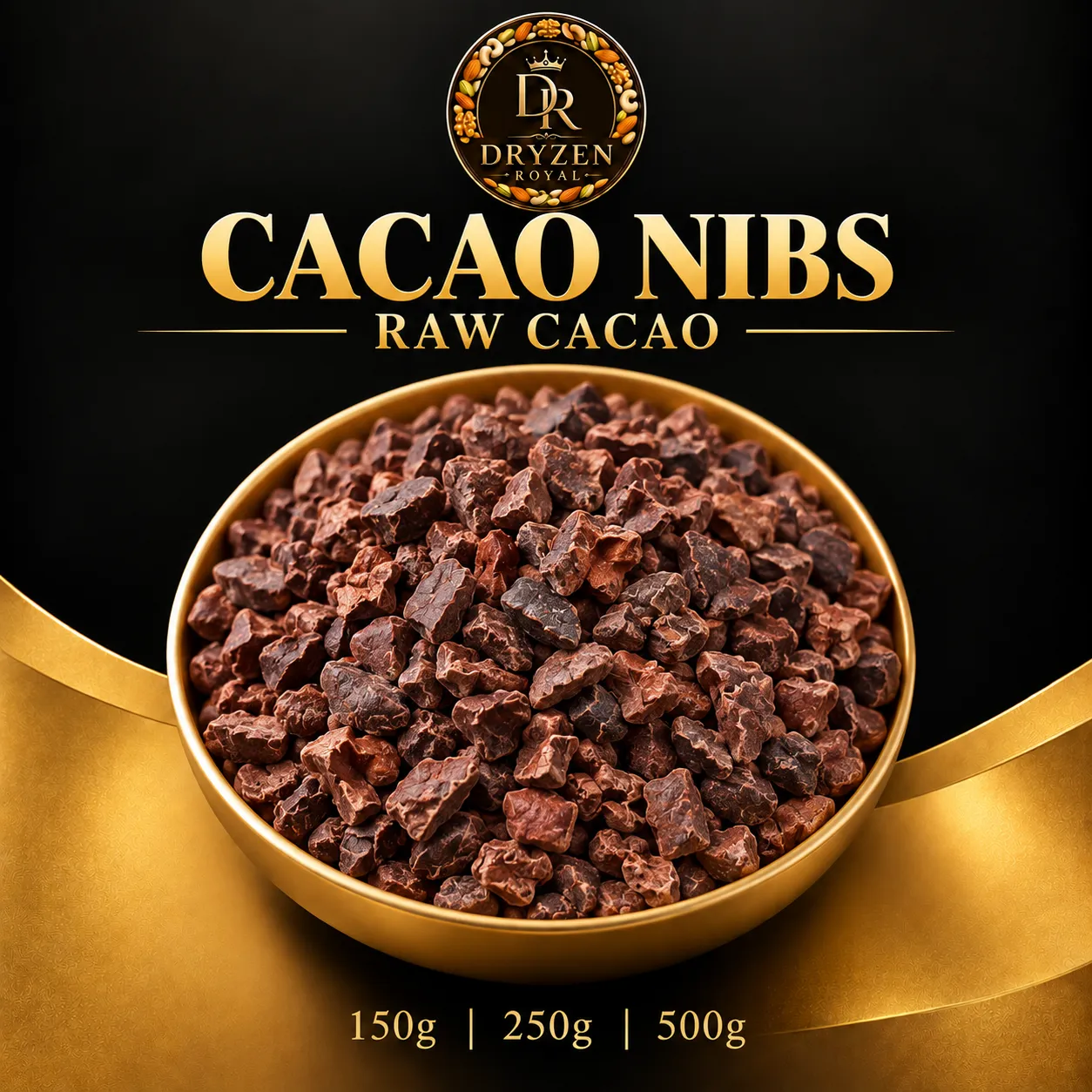
The method for a strained cacao infusion explains the steeping approach. Compare cacao nibs and chocolate chips before choosing a finishing ingredient.
Explore Cacao nibs at Dryzen Royal for infusions, baking and small dessert projects at home.
No. Expect a lighter cocoa-scented liquid and a subtle surface colour, not a melted-chocolate coating.
They may collapse. Choose firm-ripe fruit, and use very soft pears in a different preparation.
Strain them out after infusing so the cooking liquid is smooth and tenderness is easier to check.
If it is sound and properly cooked, slice it neatly and serve in a bowl with the sauce.
Questions about this article?
Email us and we will get back to you.
Explore more
