- 100% Natural
- Premium Quality
- No Preservatives
- Fresh & Healthy
Why do some dates taste surprisingly similar to caramel, toffee, or brown sugar? This guide explores how natural sugars, ripening, moisture loss, date varieties, texture, aroma, and storage create the rich sweetness found in premium dates. Learn why Medjool, Ajwa, Deglet Noor, and other varieties taste different and how to choose and store dates for the best flavor.
Some dates taste simply sweet. Others seem almost dessert-like, with flavors that remind people of caramel, toffee, brown sugar, honey, or even molasses.
That rich flavor can be surprising because high-quality dates do not necessarily contain added caramel or artificial flavoring. In many cases, the complex sweetness comes naturally from the fruit itself and develops through the way dates mature, lose moisture, and change during processing and storage.
So why can some dates taste so much like caramel?
The answer involves natural sugars, ripening, moisture, variety, texture, and the chemical changes that occur as dates mature. Different varieties can also have dramatically different flavor profiles. A soft Medjool date, for example, can taste intensely rich and caramel-like, while another variety may be lighter, firmer, or more subtly sweet.
Understanding these differences can make choosing and enjoying dates much more interesting. Instead of thinking of dates as one generic fruit, it helps to see them as a diverse category of foods with their own flavors, textures, and characteristics.
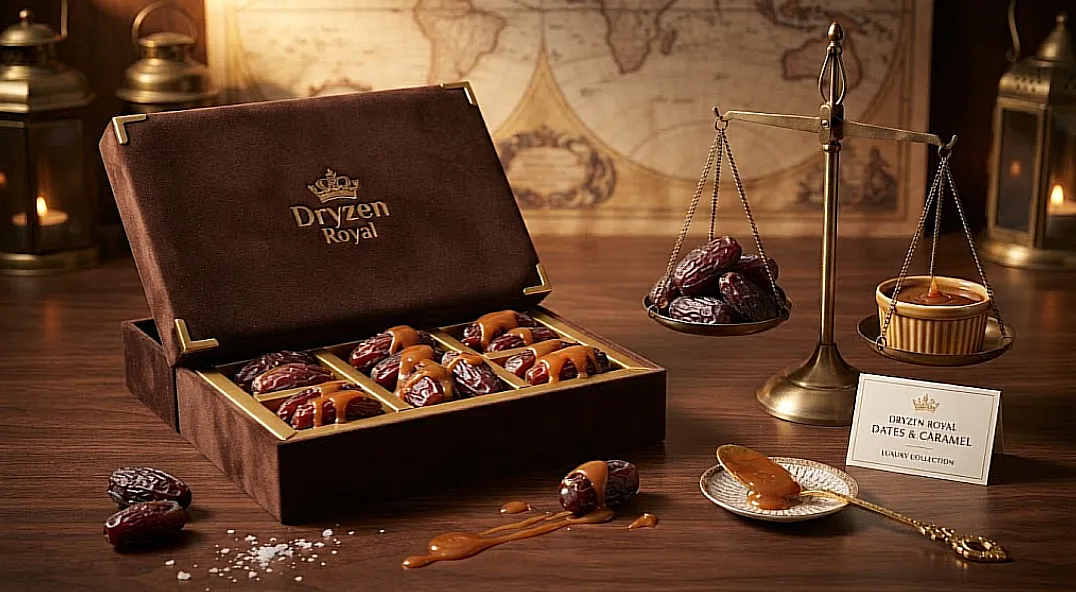
Dates are naturally rich in sugars.
As the fruit matures, carbohydrates are converted and concentrated into sugars that give dates their characteristic sweetness. The exact balance varies by variety and stage of ripeness, which is one reason different dates can taste so different.
The main sugars found in dates include glucose, fructose, and sucrose, although their proportions can vary.
These sugars contribute directly to sweetness, but sweetness alone does not explain why some dates seem to taste like caramel.
Flavor is more complicated.
The overall taste of a food is influenced by its sweetness, aroma, texture, acidity, moisture, and many other compounds. When these characteristics come together in a soft, rich date, the result can create a flavor impression that people describe as caramel-like.
In other words, the date does not necessarily contain caramel.
Its natural combination of sugars and flavor compounds can simply remind your palate of caramel.
Ripening plays an important role in the flavor of dates.
Dates develop through several stages, and their texture and chemical composition change as they mature.
During maturation, the fruit becomes progressively softer and sweeter. Some varieties remain relatively firm, while others become soft, moist, and almost jam-like.
As the fruit matures, changes in carbohydrates and other compounds contribute to its characteristic flavor.
The final result depends heavily on the variety and how the fruit is handled.
This is why a date picked or sold at a different stage can taste noticeably different from another date.
A less mature date may have a firmer texture and a milder flavor. A fully mature soft date may deliver a much more concentrated sweetness.
That concentrated sweetness is one of the characteristics people often associate with caramel.
One of the most important reasons dates can taste intensely sweet is moisture.
As dates mature and dry, some of their water content is lost. The sugars remain, but there is less water diluting them.
Think about what happens when fruit is dried.
A fresh grape tastes sweet, but a raisin tastes much more concentrated. The fruit has lost water while retaining much of its sugar.
Dates can undergo a similar concentration effect.
This does not mean every date is completely dehydrated. Many varieties are naturally soft and moist, while others are firmer and drier.
But as moisture decreases, the flavor can become more concentrated.
That is part of the reason a small date can deliver such a powerful burst of sweetness.
If all dates contain natural sugars, why don't all of them taste like caramel?
The answer is variety.
Different date varieties have different combinations of sweetness, moisture, texture, aroma, and flavor compounds.
Some varieties are known for rich, deep sweetness. Others are lighter and more delicate.
Some have a soft, almost creamy texture. Others are chewy or firm.
Some varieties have flavor notes that people describe as honey-like, while others can remind people of caramel, brown sugar, toffee, or dried fruit.
These differences are completely normal.
Just as different apples can taste tart, floral, honeyed, or intensely sweet, different dates can have very different flavor profiles.
Medjool dates are particularly famous for their large size, soft texture, and rich sweetness.
Their thick flesh gives them a satisfying chewiness, while their concentrated sweetness can produce flavors that many people associate with caramel or toffee.
The combination of size, moisture, softness, and intense sweetness makes Medjool dates especially popular as a snack.
They are also commonly used in desserts because their natural sweetness can complement nuts, chocolate, oats, nut butters, and other ingredients.
However, not every Medjool date will taste exactly the same.
Growing conditions, maturity, storage, and individual fruit quality can all influence flavor.
The term "Medjool" tells you the variety, but it does not guarantee that every individual date will have an identical flavor profile.
Ajwa dates are another well-known variety, but their flavor experience can be quite different from the rich caramel character associated with some Medjool dates.
Ajwa dates are generally smaller and have a distinctive texture and flavor.
Their taste can be described as deep and fruity, with a character that differs from the softer, more dessert-like sweetness of some larger varieties.
This is an important lesson when choosing dates.
There is no single definition of what a "good" date tastes like.
Someone who loves caramel-like sweetness may prefer one variety, while another person may enjoy a darker, fruitier flavor.
Deglet Noor dates are commonly known for a firmer texture and a lighter, more delicate sweetness compared with some softer varieties.
They can be used in cooking, baking, snacks, and a wide range of recipes.
Because their flavor and texture differ from very soft dates, they may not produce the same intense caramel-like impression.
This doesn't make them inferior.
They simply offer a different eating experience.
For someone looking for dates that can be chopped into salads, mixed into dishes, or used in recipes without overwhelming the other ingredients, a firmer variety may be particularly appealing.
Drying can make the flavor of dates more concentrated, but it is important to distinguish between concentration of natural sweetness and the formation of actual caramel.
Caramelization is a chemical process involving sugars under heat.
Dates can develop rich flavors without literally being caramelized.
When moisture decreases, the relative concentration of sugars and flavor compounds increases. That can make the fruit taste deeper and more intense.
If dates are heated during cooking, additional chemical reactions can occur and create new flavor compounds.
This is one reason baked or cooked dates can taste even more dessert-like.
But the rich flavor of a naturally mature date does not require the addition of caramel.
Caramelization is a chemical reaction that occurs when sugars are exposed to sufficiently high temperatures.
As sugars heat, they undergo complex changes that produce new compounds responsible for the characteristic color, aroma, and flavor associated with caramel.
This is different from simply having a fruit that tastes caramel-like.
A naturally sweet date may remind you of caramel because of its concentrated sweetness and flavor profile, even when it has never been heated enough for significant caramelization.
This distinction is useful because food descriptions often use familiar flavor comparisons.
When someone says a date tastes like caramel, they usually mean the flavor reminds them of caramel.
They are not necessarily saying that caramel has formed inside the fruit.
Taste and texture are closely connected.
A soft, sticky date can seem sweeter than a firmer date even when the actual sugar content is not dramatically different.
Why?
Texture affects how quickly the fruit breaks down in your mouth and how its sugars and flavor compounds are released.
A soft date can feel almost like a natural confection.
Its thick, moist flesh coats the palate, allowing its sweetness to remain noticeable.
A firmer date may require more chewing and provide a different flavor experience.
This is why texture should be considered alongside sweetness when choosing dates.
Flavor is not just what happens on the tongue.
Aroma plays a major role in how people experience food.
Dates contain volatile compounds that contribute to their aroma. These compounds can create impressions ranging from fruity and floral to nutty, earthy, or rich.
When aroma combines with intense sweetness, the overall experience can remind people of familiar foods such as caramel, toffee, honey, or brown sugar.
This is one reason two dates with similar sweetness can still taste completely different.
The aroma can change the entire experience.
Storage can also influence the way dates taste.
Over time, moisture can move within the fruit, and the texture may change.
Some dates can become firmer or develop a more concentrated flavor as they lose moisture.
In certain circumstances, natural sugars can crystallize on the surface, creating a slightly different texture and sweetness perception.
Storage conditions matter as well.
Excessive heat, moisture, or poor packaging can negatively affect quality.
If dates are stored properly, their desirable texture and flavor can be preserved for longer.
If they are exposed to unsuitable conditions, the fruit may develop undesirable odors, texture changes, or signs of spoilage.
Softness is partly related to moisture content and variety.
Some dates naturally retain more moisture and have a soft, sticky texture.
These varieties can feel almost like a fruit-based caramel when eaten.
The stickiness also makes them useful for recipes.
Dates can be blended into energy bites, pressed into snack bars, mixed with nuts, stuffed with fillings, or used as a natural sweetening ingredient in certain recipes.
Their soft texture allows them to bind other ingredients together.
Dates can certainly serve as an alternative to many highly processed sweet snacks, but it is important not to confuse "natural" with "sugar-free."
Dates are naturally sweet because they contain significant amounts of naturally occurring sugars.
That is one of their defining characteristics.
The advantage of choosing dates over some confectionery products may be that dates are a whole fruit and also contain fiber and other naturally occurring nutrients.
However, portion size still matters.
Eating several dates at once can provide a substantial amount of natural sugar and calories.
The fact that the sweetness comes from fruit does not make unlimited consumption appropriate for everyone.
The caramel-like sweetness of dates pairs particularly well with nuts.
Almonds, walnuts, pistachios, pecans, and cashews can provide contrasting textures and flavors.
The combination works because the sweetness of the date balances the richness of the nuts.
This is one reason stuffed dates have become such a popular snack and gifting option.
For example, a soft date filled with an almond or walnut creates a combination of chewy sweetness and crunchy texture.
Nut butter can create an even creamier result.
The natural sweetness of the date can make the combination taste almost like a dessert without requiring a complicated recipe.
Dates are particularly useful in desserts because they already have a concentrated sweet flavor.
They can be chopped into cakes, blended into fillings, incorporated into energy bites, or used in no-bake recipes.
Their sticky texture can also help bind ingredients.
Instead of relying entirely on refined sugar, some recipes use dates to provide both sweetness and body.
This does not mean dates make every dessert automatically healthy.
A dessert containing dates can still contain substantial calories, fats, sugars, or other ingredients depending on the recipe.
The real advantage is their versatility.
If you specifically want dates that taste rich and caramel-like, start by looking for varieties known for soft texture and concentrated sweetness.
Large, plump dates are often a good starting point, although size alone does not determine flavor.
Look for fruit that appears fresh and well preserved.
Depending on the variety, desirable dates may have a soft or chewy texture rather than being excessively hard or dry.
If possible, tasting before purchasing a large quantity is ideal.
Descriptions such as "rich," "caramel-like," "toffee-like," "honeyed," or "deeply sweet" can provide clues, but taste remains personal.
Freshness is more important than fancy marketing.
When choosing dates, consider:
A natural surface appearance is not automatically a sign of poor quality.
However, dates with obvious mold, an unpleasant fermented smell, or other clear signs of spoilage should not be consumed.
Premium pricing does not protect a product from poor storage.
Premium dates can sometimes taste better because several quality factors come together.
The variety may naturally have a richer flavor.
The fruit may have been harvested at a desirable stage.
The dates may have been carefully sorted and handled.
Storage may have been better controlled.
The final product may also contain more uniform fruit, making the eating experience more consistent.
But premium does not always mean "best for everyone."
Taste is subjective.
Some people prefer large, soft dates. Others prefer smaller, firmer fruit.
Some enjoy intense sweetness. Others prefer a more subtle flavor.
The right choice depends on your personal preference.
The availability and quality of dates can vary throughout the year.
Harvest seasons differ by region and variety, and dates may be stored and sold for extended periods.
Seasonal changes in supply can affect freshness, variety availability, and pricing.
During periods of particularly high demand, such as Ramadan, shoppers may also encounter a wider selection of premium dates.
This can be a good opportunity to explore varieties rather than automatically purchasing the most expensive option.
No.
Price does not directly measure sweetness.
A premium date may be expensive because of its variety, size, origin, packaging, scarcity, or reputation.
Another date may be sweeter but less expensive because it is produced in larger quantities or sold in simpler packaging.
If sweetness is your main priority, tasting different varieties is more useful than relying on price alone.
Once you've found dates with the flavor you love, proper storage matters.
Keep them sealed in a clean container and protect them from excessive heat and moisture.
Follow the storage instructions on the packaging, particularly for soft or moist varieties.
In hot climates, appropriate storage becomes even more important.
Avoid leaving dates exposed to heat for long periods.
If refrigeration is recommended for the product, follow that guidance.
Good storage helps preserve texture and can prevent unwanted changes in flavor.
The caramel-like flavor of some dates isn't caused by one magical ingredient.
It is the result of several characteristics working together.
Natural sugars provide sweetness.
Ripening changes the fruit's composition.
Moisture loss concentrates flavor.
Variety determines the balance of sweetness, texture, aroma, and other characteristics.
Storage can change texture and flavor over time.
Cooking can create additional flavor compounds.
Together, these factors can produce a fruit that tastes surprisingly similar to familiar dessert flavors.
That is what makes dates so interesting.
They are naturally sweet, but their flavor can be far more complex than simple sugar.
Some dates taste like caramel because their natural combination of sugars, flavor compounds, moisture, aroma, and texture creates a rich and concentrated sweetness that can remind people of caramel, toffee, honey, or brown sugar.
The effect is especially noticeable in certain soft, naturally sweet varieties. Medjool dates, for example, are often associated with a rich, dessert-like flavor, while varieties such as Ajwa and Deglet Noor offer distinctly different taste experiences.
Ripening and moisture loss play important roles by concentrating the fruit's natural sweetness. Texture and aroma also influence how that sweetness is perceived, which helps explain why two varieties of dates can taste dramatically different.
Importantly, a caramel-like taste does not mean caramel has been added to the fruit. Dates can develop these rich flavor characteristics naturally.
For consumers, the best way to explore this is to try different varieties and pay attention to texture, aroma, sweetness, and freshness. A soft, plump date may provide the dessert-like experience you're looking for, while a firmer variety may be better suited to cooking or everyday snacking.
Dates may look simple on the outside, but their flavor tells a much more interesting story. What tastes like nature's candy is actually the result of variety, maturity, moisture, and chemistry coming together in one remarkably sweet fruit.
Some dates have a rich combination of natural sugars, concentrated flavor, aroma, and soft texture that can remind people of caramel or toffee. Ripening and moisture loss can further intensify these naturally sweet flavors.
Not necessarily. Dates can naturally develop a caramel-like flavor without added caramel or artificial flavoring because of their natural sugars and other flavor compounds.
Different date varieties have their own combinations of sweetness, moisture, texture, aroma, and flavor characteristics. Medjool dates are often associated with rich, soft sweetness, while Ajwa and Deglet Noor offer different flavor and texture profiles.
Fasih Frankly
SEO Expert and eCommerce Specialist. Shopify, eBay and online selling.
Questions about this article?
Email us and we will get back to you.
Explore more
