- 100% Natural
- Premium Quality
- No Preservatives
- Fresh & Healthy
Use a simple unit-price calculation to compare dry-fruit packs in Pakistan without confusing packaging weight, delivery charges or mixed assortments.
Calculating dry fruit price per 100g lets you compare different pack sizes on the same basis. A lower packet price can hide a smaller quantity; a larger bag can offer a lower unit price but still be more than you need. Start with the net food weight and compare like-for-like products.
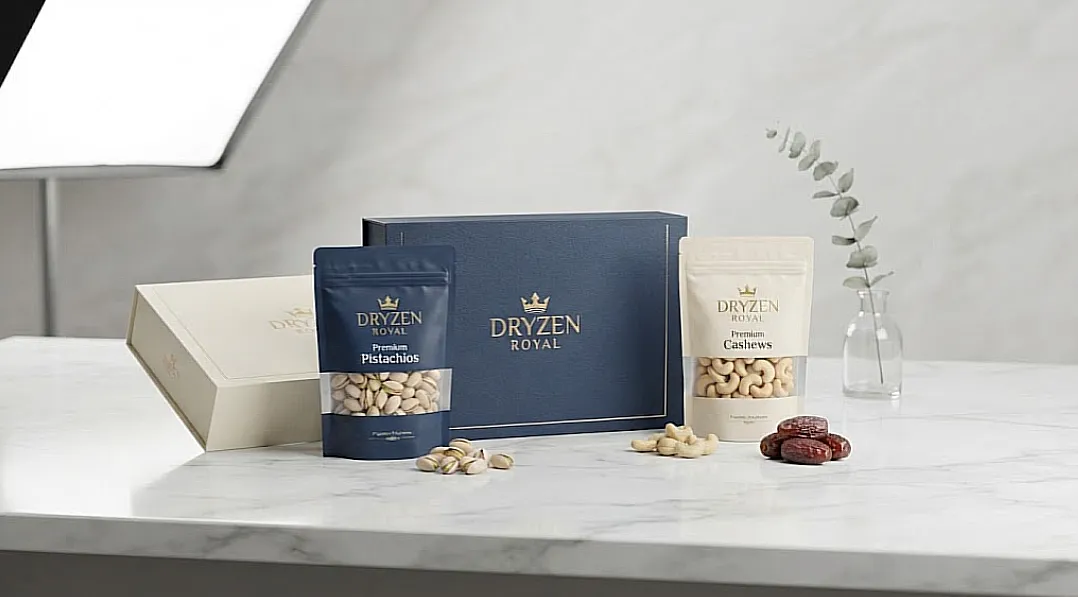
This is a calculation guide, not a live market-rate list. Every rupee amount below is a hypothetical example. Use the current product and checkout prices for an actual purchase.
Price per 100g = pack price ÷ net weight in grams × 100.
If a 250g bag costs Rs 900, divide 900 by 250 and multiply by 100. The result is Rs 360 per 100g. To convert a kilogram price to a per-100g price, divide it by 10 because 1kg contains ten 100g units.
The principle is called unit pricing: expressing prices in a common unit helps compare different quantities. NIST’s consumer unit-pricing resource explains this approach. We use grams and Pakistani rupees here for a practical shopping example, not to describe a local legal labelling requirement.
| Hypothetical pack | Pack price | Calculation | Price per 100g |
|---|---|---|---|
| 250g | Rs 900 | 900 ÷ 250 × 100 | Rs 360 |
| 500g | Rs 1,650 | 1,650 ÷ 500 × 100 | Rs 330 |
| 1kg | Rs 3,400 | 3,400 ÷ 1,000 × 100 | Rs 340 |
In this example, the 500g pack has the lowest unit price. The 1kg pack is larger but is not the cheapest per 100g. That is why “bulk” or “family pack” should not replace doing the calculation.
For a one-item order, add its delivery charge to the product price before calculating the delivered cost per 100g. A hypothetical 250g pack costing Rs 900 plus Rs 200 delivery works out at Rs 440 per 100g delivered: 1,100 ÷ 250 × 100.
For a basket containing several different products, compare the total baskets rather than assigning the entire delivery charge to each item. Check whether discounts actually apply to your order. Do not add products you do not need solely to reach a shipping threshold without comparing the final spend.
Whole cashews and pieces, salted and unsalted nuts, or plain and chocolate-coated products may serve different purposes. The lower unit price is one fact, not a complete quality judgment. Match the food, form, ingredients and intended use before deciding which offer suits you.
Shell weight matters too. A bag of in-shell pistachios contains hard shells that you will discard. Compare kernel cost if you are buying for a recipe. The same caution applies when comparing dates with stones against pitted dates. Use actual usable weight where that distinction affects your purchase.
Ask whether the stated weight is the food alone or the complete package including the wooden box, jars or basket. For a food comparison, use the net content weight. A heavy decorative box should not be treated as extra dry fruit.
A gift also has presentation value, so a cost-per-100g calculation cannot describe every reason to choose it. Keep the two questions separate: how much food is included, and is the packaging worth the additional spend to you?
Mixed boxes require a contents breakdown for a fair comparison. Two assortments can weigh the same yet contain different proportions of dates, raisins, almonds and pistachios. If quantities are not listed, ask before concluding that the cheaper box is equivalent.
Use these checks with the current Dryzen Royal product listings. For presentation and contents questions, see the gift-box buying guide; for the broader factors behind prices, read our dry-fruit price guide.
Divide the pack price by five. Alternatively, divide by 500 and multiply by 100. Use the net food weight.
No. Calculate the unit price for each option, compare equivalent products and consider how much you will actually use.
For comparing the amount of food, use the net content weight excluding the packaging. Ask the seller if the stated weight is unclear.
Questions about this article?
Email us and we will get back to you.
Explore more
