- 100% Natural
- Premium Quality
- No Preservatives
- Fresh & Healthy
Makhana, also known as fox nuts or phool makhana, is gaining attention as a crunchy snack in Pakistan. Learn about its nutritional value, potential benefits, carbohydrate content, and how plain roasted varieties compare with salted or flavored products. Discover practical advice for choosing quality makhana, controlling portions, and keeping it fresh.
Makhana, commonly known as fox nuts or phool makhana, is becoming an increasingly recognizable snack among health-conscious consumers. Its light, crunchy texture, mild taste, and versatility make it an appealing alternative to conventional packaged snacks. In Pakistan, where almonds, raisins, chickpeas, peanuts, and other dry snacks are familiar household choices, makhana offers another option for people looking to diversify their everyday eating habits.
Interest in makhana has grown alongside the popularity of roasted snacks and social media discussions about healthier eating. A March 2026 report from Islamabad described increasing demand for makhana among local consumers, with dry-fruit sellers reporting greater interest in the product. However, popularity alone does not establish that every health claim made about a food is accurate. Read the report on makhana's growing popularity in Islamabad.
Makhana is often promoted as a low-calorie snack that supports weight management, bone health, digestion, and blood sugar control. Some of these claims have a reasonable nutritional basis, while others require more careful interpretation. Its benefits depend on the portion consumed, the way it is prepared, the rest of a person's diet, and individual nutritional needs.
For Pakistani consumers, understanding what makhana actually contains is particularly useful because the product may be sold plain, roasted, salted, flavored, or mixed with oil and spices. These variations can make a meaningful difference to its nutritional profile.
This guide explains what makhana is, its nutritional composition, the potential benefits of eating it, how it compares with familiar snacks, and how to select and store a good-quality product.
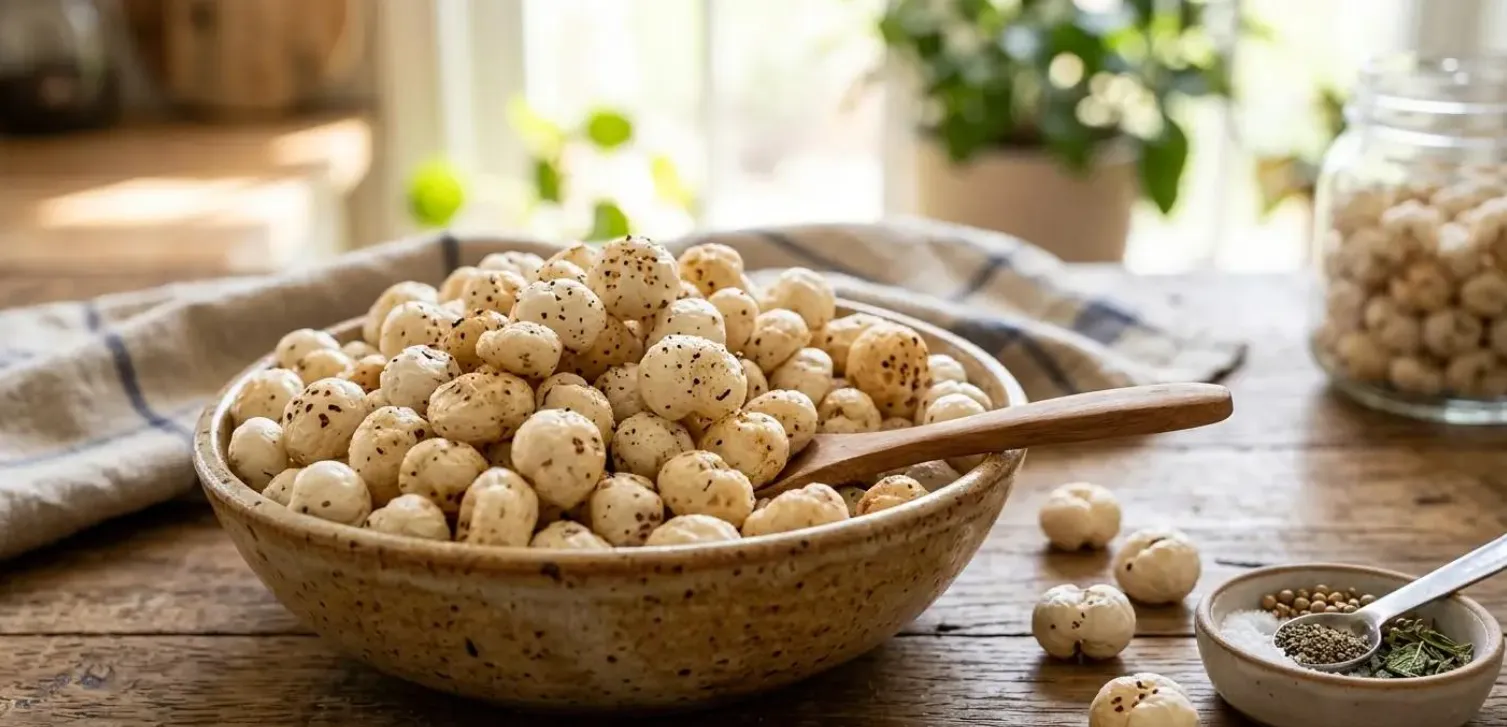
Makhana is the edible, popped seed of Euryale ferox, an aquatic plant commonly associated with freshwater cultivation in parts of Asia. The seeds are processed using drying, heating, and popping techniques to produce the familiar white, lightweight pieces sold as snacks.
The product is also called fox nuts, gorgon nuts, and phool makhana. Despite the name fox nuts, makhana is not a conventional tree nut like almonds, cashews, or walnuts. It is a popped seed from an aquatic plant.
The processing method gives makhana its airy texture. The finished pieces are generally crisp, mild in flavor, and suitable for eating plain or with seasonings. Their relatively neutral taste also makes them useful in both sweet and savory recipes.
In South Asian cooking, makhana may be roasted for snacking or used in milk-based desserts such as kheer. It can also be added to selected curries and other dishes, depending on regional cooking preferences.
For consumers in Pakistan, makhana may be available through specialist dry-fruit sellers, larger grocery stores, and online food retailers. Availability and price can vary according to product grade, packaging, origin, and demand.
An important point is that makhana is primarily a carbohydrate-rich food. It contains some protein and small amounts of fat in its plain form, but it should not be treated as a high-protein substitute for eggs, lentils, beans, dairy products, or other substantial protein sources.
Makhana's nutritional profile makes it an interesting addition to a varied diet, particularly when it is eaten without excessive added oil, sugar, or salt.
Published analyses commonly describe makhana as rich in carbohydrates, with moderate protein and very little fat in the plain product. The precise values can vary depending on the sample, processing method, moisture content, and whether the product has been seasoned.
A study published in Food Production, Processing and Nutrition examined the effects of roasting fox nuts and reported changes in protein concentration, minerals, and antioxidant-related measurements. These findings suggest that processing can affect the nutritional characteristics of the finished food. <Cite refs={["turn644615search1"]}/>
The following table provides a general overview rather than a guaranteed nutrition label for every commercial product.
Nutritional component | What it means |
|---|---|
Carbohydrates | Provide energy for daily activities |
Protein | Contributes to normal tissue maintenance and repair |
Dietary fiber | Supports digestive health when consumed as part of an adequate-fiber diet |
Fat | Naturally very low in plain makhana, but may rise considerably after oil is added |
Minerals | Makhana contains minerals such as phosphorus, magnesium, and potassium, with amounts varying by sample |
Plant compounds | Contains phenolic compounds and other substances studied for antioxidant activity |
Makhana is also naturally gluten-free, making plain, uncontaminated products an option for people who need to avoid gluten. However, flavored varieties may contain ingredients or be processed in facilities that introduce cross-contact risks.
Plain makhana is frequently marketed as a low-calorie snack, but this description needs context.
Because it is lightweight and expands into a relatively large volume, a bowl of makhana can look substantial without weighing very much. That can make it easier to enjoy a crunchy snack while keeping the portion manageable.
Nevertheless, the popped seeds contain a considerable amount of carbohydrate and provide energy. Eating large quantities can still contribute meaningfully to total calorie intake.
Preparation also matters. Dry-roasted makhana generally contains less added fat than a version roasted generously in ghee or oil. Commercial flavors may include additional fats, sugar, and sodium.
Consumers interested in managing their calorie intake should compare nutrition information per serving and pay attention to the actual serving weight rather than judging the product by bowl size alone.
Makhana can contribute useful nutrients to an everyday diet, but no single snack provides every nutrient the body needs. Its benefits should be understood in relation to the overall eating pattern rather than as guaranteed medical outcomes.
Makhana contains carbohydrates, which the body uses as an energy source. This makes it suitable as part of a snack between meals or as an ingredient in a balanced meal.
For someone who wants an alternative to sugary confectionery, plain roasted makhana may offer a crunchy option without the large amounts of added sugar found in many sweets.
The advantage depends on the product chosen. Sweetened makhana and varieties coated with sugary flavorings may contain considerably more added sugar than the plain version.
A sensible approach is to choose a preparation that fits the person's nutritional needs and to avoid assuming that a food is automatically healthy simply because it is plant-based.
Protein is necessary for maintaining muscles and other tissues. It also participates in numerous processes involved in normal growth, repair, and everyday body function.
Makhana provides some plant-based protein, although the amount in an ordinary snack serving is relatively modest.
This means it can contribute to daily protein intake, but it should not be relied upon as the main protein source in a meal. Foods such as lentils, chickpeas, beans, eggs, yogurt, milk, fish, and meat can provide additional protein, depending on individual dietary preferences.
For Pakistani households, makhana can be combined with other foods to create a more balanced snack. For example, a modest serving alongside plain yogurt or another suitable protein-containing food may be more substantial than eating makhana alone.
Dietary fiber supports normal digestive function and can help improve the overall quality of a person's diet.
Makhana contains some fiber, although its exact amount varies across published analyses and commercial products. It should not be described as an exceptionally high-fiber food without checking the specific product's nutritional information.
People who want to increase fiber intake can combine a variety of foods, including vegetables, fruits, pulses, whole grains, seeds, and other fiber-containing ingredients.
Eating a balanced range of these foods is generally more useful than depending on one snack to meet all digestive health needs.
Makhana contains minerals such as phosphorus, magnesium, and potassium. These nutrients perform several functions in the body, including roles in normal muscle function, energy metabolism, and the maintenance of bones and other tissues.
However, the presence of a mineral does not automatically make a food a rich source of that nutrient. The quantity consumed and the amount of the mineral in the particular product both matter.
Makhana should therefore be viewed as one contributor to dietary mineral intake rather than a replacement for a varied diet.
People concerned about a specific deficiency should seek appropriate medical advice instead of relying on a snack to correct it.
Research on fox nuts has examined phenolic compounds, flavonoids, and laboratory measurements of antioxidant activity.
A published study found that roasting changed the concentrations of several measured compounds and increased certain antioxidant-related measurements in the samples studied. The researchers also examined the glycemic response associated with roasted fox nuts. <Cite refs={["turn644615search1"]}/>
These findings are scientifically interesting, but their meaning should not be exaggerated.
Laboratory measurements of antioxidant activity do not prove that eating a particular food prevents a disease, reverses aging, or treats inflammation in humans. The effects of an entire diet are more complex than the activity of individual compounds measured under research conditions.
For consumers, the reasonable conclusion is that makhana contains plant compounds worth studying and can be included in a varied diet. Claims of guaranteed disease prevention are not justified by these findings alone.
One of makhana's practical advantages is its versatility.
Plain roasted makhana can provide a crunchy snack without the deep-frying commonly used for some potato chips and other packaged foods. It may therefore be a useful alternative for someone who wants to reduce the frequency of eating heavily fried snacks.
However, the comparison depends on the products being compared. Makhana roasted with substantial amounts of oil, coated with sugar, or heavily salted may lose some of its nutritional advantages.
Rather than treating makhana as automatically superior to every other snack, compare ingredients, portion sizes, added fats, sodium, and total energy.
Weight management involves several factors, including total energy intake, physical activity, sleep, health conditions, and long-term eating habits.
Makhana can fit into a weight-management plan when it replaces a less suitable snack and is eaten in an appropriate portion.
Its light, crunchy texture may appeal to people who want something to nibble on while working, studying, or relaxing. Still, its airy appearance can make it easy to underestimate how much is being eaten.
Measuring a serving into a small bowl instead of repeatedly eating from a large packet can help with portion awareness.
Makhana is not a fat-burning food, and eating it does not guarantee weight loss. Its value comes from how it fits into a person's broader diet.
This question deserves particular care because makhana is often promoted as suitable for people with diabetes.
Makhana contains substantial carbohydrates, which can affect blood glucose. The body's response depends on the amount eaten, the preparation method, the rest of the meal, and individual factors.
A research study published in Food Production, Processing and Nutrition reported a low glycemic index for the roasted fox nuts tested. The researchers also examined changes associated with roasting. <Cite refs={["turn644615search1"]}/>
A glycemic index result from a particular study should not be interpreted as proof that every makhana product has the same effect or that unlimited portions are appropriate for everyone with diabetes.
Different brands and preparations may have different nutritional compositions. Added sugar and other ingredients can also change the overall product.
People managing diabetes can consider the following practical steps:
Makhana does not replace diabetes medication or an individualized diabetes-management plan.
Makhana is sometimes promoted as a food that strengthens bones because it contains minerals involved in normal body function.
Bone health depends on several factors, including adequate calcium and vitamin D, sufficient protein, physical activity, age, hormonal changes, and overall nutrition.
Although makhana contains some minerals, its calcium content is not necessarily high enough to make it a primary calcium source. Consumers should not assume that eating makhana alone will prevent osteoporosis or reverse bone loss.
People who want to support bone health can focus on an overall dietary pattern that supplies adequate calcium, vitamin D, protein, and other essential nutrients. Depending on individual needs and local availability, suitable foods may include dairy products, calcium-fortified alternatives, and other nutrient-containing foods.
Anyone concerned about osteoporosis or a diagnosed nutrient deficiency should discuss appropriate assessment and treatment with a healthcare professional.
The preparation method is one of the most important considerations when buying makhana.
The plain product is naturally very low in fat, but roasting and seasoning can change its nutritional profile. The Indian Council of Agricultural Research's Central Institute of Post-Harvest Engineering and Technology has specifically discussed how flavoring processes can add substantial amounts of oil to makhana products. <Cite refs={["turn644615search3"]}/>
Here is how common varieties compare.
Plain makhana has a mild taste and can be roasted at home without adding much oil. This option gives consumers greater control over the ingredients and seasoning.
It can be eaten as a snack or incorporated into suitable recipes.
Dry-roasting helps produce a crisp texture without requiring a large amount of oil. A simple preparation can include gentle roasting in a suitable pan, followed by cooling before storage.
The result is a convenient snack that can be seasoned lightly if desired.
Ghee or oil can add flavor and improve the texture of roasted makhana. However, added fat increases the energy content.
This does not make the product inherently unsuitable for a balanced diet. It simply means the amount of fat used should be considered when comparing products or managing calorie intake.
Seasonings can make makhana more appealing, especially for people who prefer savory snacks.
However, heavily salted products can contribute more sodium to the diet. People who have been advised to limit sodium should pay attention to seasoning and label information.
Home roasting with a modest amount of spices can offer a practical alternative to heavily seasoned packaged varieties.
Sweetened or dessert-style makhana may contain sugar, syrups, or other sweet ingredients. These additions can substantially change the nutritional profile.
Consumers who want to limit added sugar should examine the ingredient list rather than assuming that all products made from makhana have the same nutritional characteristics.
Makhana is best understood as another option within a varied snack selection, not a universal replacement for every traditional food.
Makhana and roasted chana: Roasted chickpeas are familiar in Pakistan and provide protein and fiber. Makhana offers a lighter, starch-rich crunch, but it should not automatically be considered a superior source of protein or fiber.
Makhana and peanuts: Peanuts generally provide more fat and protein per weight than plain makhana. Their fat content contributes energy, but it also makes them nutritionally different rather than simply less healthy.
Makhana and potato chips: Plain roasted makhana can be prepared with less added oil than many fried chips. However, the actual comparison depends on portion size, cooking method, and the ingredients in the products.
Makhana and biscuits: Plain makhana may be a useful alternative to certain biscuits, particularly those containing substantial added sugar or fat. But biscuits vary widely, so a product-specific comparison is more informative than a blanket judgment.
The best choice depends on what a person needs from a snack. Someone seeking protein may prefer chickpeas or yogurt, while someone looking for a light, crunchy option may enjoy plain roasted makhana.
A varied diet can accommodate different foods without declaring one snack the healthiest for everyone.
There is no single portion size that is ideal for every adult. Individual energy needs, activity levels, dietary goals, and the nutritional composition of the product all matter.
As a practical starting point, some consumers may find a small bowl or approximately 20–30 grams of plain makhana convenient for one snack occasion. This is a portion suggestion, not a medical recommendation or a universally established serving requirement.
Packaged products may specify different serving sizes, so the label should guide product-specific comparisons where reliable information is available.
A few simple habits can make portion management easier:
Children, older adults, and people with specific dietary requirements may need different approaches to portions and preparation.
Product quality matters because makhana may be sold in loose quantities, sealed packets, and flavored retail packaging.
When buying from a dry-fruit shop or grocery store, look for the following characteristics.
Good-quality popped makhana is generally light in color and reasonably uniform for its grade. Avoid products showing obvious mold, unusual discoloration, insect contamination, or extensive foreign material.
Natural variations in shape and size do not automatically mean that a product is poor quality.
Makhana should generally feel crisp rather than damp or rubbery. Excessive moisture can reduce crispness and may increase storage concerns.
If a shop allows customers to inspect an open sample, check that it does not appear unusually soft or have signs of contamination.
A clean, mild smell is preferable. A musty, rancid, or otherwise unpleasant odor may indicate poor storage, contamination, or deterioration.
Do not taste a product that appears spoiled simply to determine whether it is safe.
For packaged products, examine the ingredient list, manufacturing information, expiry or best-before date, and storage instructions.
Choose sealed packaging that is intact and free from signs of damage or moisture exposure.
A short ingredient list can make it easier to understand whether the product contains added oil, salt, sugar, flavorings, or other ingredients.
The cheapest packet is not always the best purchase. Compare the actual quantity, product condition, packaging, and ingredient quality.
If a flavored product costs more than plain makhana, consider whether the seasoning and preparation justify the difference for your needs.
Choose sellers who maintain clean storage conditions and can provide basic information about the product.
When buying loose makhana, look for covered containers and good stock-handling practices. Avoid purchasing products that appear exposed to dust, moisture, insects, or other contamination.
Makhana's crisp texture can deteriorate when it absorbs moisture from the air. Appropriate storage helps maintain quality and reduce the risk of contamination.
After opening a packet, follow these practices:
Use an airtight container. Transfer the product into a clean, completely dry container if the original packaging cannot be resealed properly.
Keep it in a cool, dry place. Avoid locations near steam, cooking areas, sinks, or other sources of moisture.
Keep it away from direct sunlight. Excessive heat and light can affect food quality over time.
Use clean, dry utensils. Wet spoons or hands can introduce moisture into the container.
Follow the manufacturer's storage guidance. Shelf life depends on the processing method, packaging, moisture content, and ingredients.
Check before eating. Discard makhana that shows mold, an unusual smell, evidence of pests, or other clear signs of spoilage.
Re-roasting may restore some crispness to a product that has become slightly soft, but it cannot make spoiled or contaminated food safe. If there is any doubt about the product's condition, discard it.
One reason makhana is convenient is that it can be prepared in several ways without requiring complicated cooking.
Place makhana in a dry pan over low to medium-low heat and stir regularly until it becomes crisp. Allow it to cool before storing it in an airtight container.
Cooking time varies with the pan, quantity, and starting condition of the product. Avoid excessive heat that may scorch the pieces.
After roasting, add a modest amount of spices such as black pepper, cumin, or chili powder according to taste.
If the spices do not adhere well, a small quantity of oil may be used. The amount added will affect the snack's total energy content.
Makhana can be incorporated into a milk-based preparation or dessert. Milk contributes additional nutrients, including protein and calcium, while sugar or other additions may increase the overall energy content.
For a less sweet version, consider using little or no added sugar, depending on personal preference and dietary needs.
Makhana can be combined with other ingredients to create a varied snack. For example, a mix may include a measured amount of roasted chana or seeds.
Keep in mind that ingredients such as nuts, seeds, and oil contribute additional energy. Portioning the mix before eating makes it easier to understand how much is being consumed.
Makhana is a food rather than a treatment, but certain considerations may matter for individual consumers.
People managing diabetes should account for its carbohydrate content and follow their individualized meal plan.
People who need to restrict sodium should examine salted and flavored products carefully.
Anyone with a known allergy to makhana or a suspected reaction should avoid the product and seek appropriate medical advice. Although makhana is not a conventional tree nut, that fact does not guarantee that every person with a food allergy can safely consume it.
People with swallowing difficulties or particular dietary restrictions may need to consider its dry, crisp texture and preparation.
Finally, consumers should be cautious about online claims promising rapid weight loss, improved stamina, stronger bones, or treatment of chronic diseases from eating makhana. A food can have useful nutritional properties without providing guaranteed medical benefits.
Makhana, also known as fox nuts or phool makhana, is a versatile popped seed that can offer Pakistani consumers another option for everyday snacking. Its carbohydrate-rich composition, modest protein content, low natural fat content, and mild flavor make it suitable for a variety of simple preparations.
Plain or lightly seasoned makhana can be a useful alternative to some heavily fried or sugary snacks, especially when consumers pay attention to portion sizes and added ingredients. However, it is not a miracle food, a guaranteed weight-loss aid, or a substitute for protein-rich foods and a balanced diet.
Choosing a good-quality product means checking its appearance, smell, texture, packaging, and ingredients. Storing it in an airtight container in a cool, dry place helps preserve its crispness, while careful handling reduces contamination risks.
For readers interested in more practical food and nutrition guidance, Dryzen Royal explores dry fruits and related foods, while Jurnza provides legal information and Finiuo covers personal finance and money-related topics.
Ultimately, makhana is best enjoyed as one part of a varied eating pattern. Choosing a suitable preparation, eating a reasonable portion, and evaluating health claims critically will help consumers make more informed decisions about this increasingly popular snack.
Questions about this article?
Email us and we will get back to you.
Explore more
