- 100% Natural
- Premium Quality
- No Preservatives
- Fresh & Healthy
Why are pistachios everywhere in 2026? The green nut has moved far beyond traditional snacks and desserts, becoming one of the year's biggest food and flavor trends. From Dubai-style chocolate and pistachio cream to ice cream, coffee, bakery products, spreads, and everyday snacks, pistachios are appearing in more foods than ever. This guide explores why pistachios became so popular, how social media and premium food trends fueled demand, whether the trend is likely to last, how pistachios fit into a balanced diet, how to choose quality nuts, and delicious ways to enjoy pistachios at home.
Pistachios have always had a place in desserts, ice cream, sweets, and traditional dry-fruit mixes. But in 2026, the green nut has taken on a much bigger role.
Walk through a bakery, browse a dessert menu, scroll through social media, or look at new snack launches and you are increasingly likely to see pistachio. Pistachio chocolate, pistachio cream, pistachio croissants, pistachio ice cream, pistachio coffee drinks, pistachio cookies, and pistachio-filled desserts have become part of a much broader food trend.
The rise of Dubai-style chocolate played a major role in putting pistachio at the center of global food culture. But the trend has grown beyond one viral chocolate bar. Food companies are now using pistachio across confectionery, bakery, snacks, beverages, spreads, cereals, and frozen desserts.
That raises an interesting question: Why has pistachio suddenly become so popular?
The answer is a combination of flavor, appearance, premium appeal, social media, texture, versatility, and changing consumer interest in foods that can feel both indulgent and distinctive.
For Pakistani consumers, the trend is particularly interesting because pistachios are not a completely new ingredient. They have long been used in traditional sweets, kulfi, kheer, halwa, sheer khurma, barfi, cakes, and dry-fruit assortments. What is changing is the way pistachios are being presented and combined with modern foods.
This guide explores why pistachios are everywhere in 2026, how the trend developed, the foods driving it, how to enjoy pistachios beyond traditional recipes, and what to look for when buying quality pistachios.
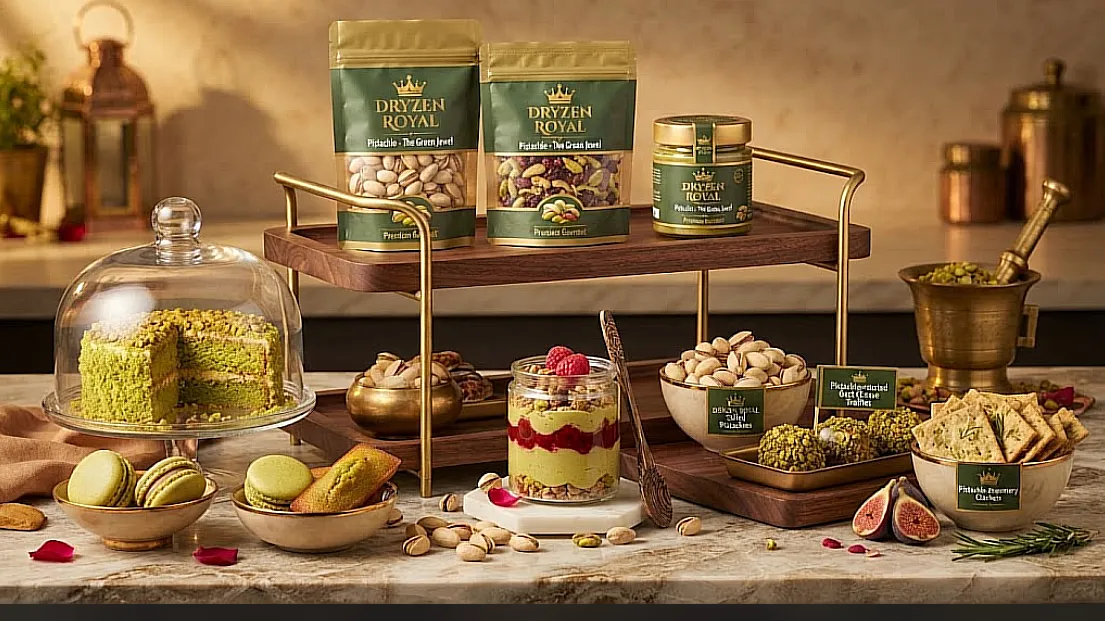
Pistachios are not a new food. Their popularity comes from a combination of old familiarity and new presentation.
For decades, pistachios have been associated with premium desserts and South Asian, Middle Eastern, Mediterranean, and Persian-inspired cuisines. They are recognizable, flavorful, colorful, and relatively easy to incorporate into both sweet and savory foods.
The recent trend gave those characteristics a new platform.
The popularity of Dubai-style chocolate helped introduce pistachio-filled desserts to consumers who may previously have thought of pistachios mainly as a snack or ice-cream topping. From there, food brands began experimenting with pistachio in other products.
The result has been a wider pistachio ecosystem.
Instead of seeing pistachios only as whole nuts, consumers now encounter:
Industry data reflects this expansion. Food and beverage launches featuring pistachio ingredients grew strongly between 2021 and 2026, with confectionery, snacks, and bakery among the leading categories.
Pistachio has therefore evolved from a traditional ingredient into a recognizable flavor trend.
One of the biggest catalysts was the viral popularity of Dubai-style chocolate.
The combination of chocolate, pistachio cream, and crunchy kataifi became highly recognizable on social media. Videos showing the chocolate being cut open and revealing a bright green pistachio filling created a visually appealing product that was easy to share online.
The appeal was not only taste.
The dessert had several characteristics that work particularly well on social media:
Once the combination became popular, other companies began creating their own pistachio-based products.
The trend spread into cookies, croissants, ice cream, chocolate bars, spreads, drinks, and other desserts.
This is an important reason pistachios became more than a traditional ingredient. Consumers began associating pistachio with novelty and premium indulgence.
Pistachio has a distinctive flavor that can work with many other ingredients.
Its flavor is nutty, slightly sweet, rich, and earthy without being overwhelmingly heavy. That makes it useful in both simple and complex desserts.
Pistachio also pairs well with ingredients such as:
This versatility helps explain why chefs and food manufacturers can continue creating new pistachio products without simply repeating the same dessert.
For example, pistachio and chocolate can create a rich combination, while pistachio and rose water can produce a more traditional South Asian or Middle Eastern flavor profile.
Pistachio and cardamom can work beautifully in milk-based desserts, while pistachio and coffee can create a more modern café-style combination.
There is another reason pistachio has become so popular: it looks good.
The natural green color of pistachio can make desserts visually distinctive.
Food trends are increasingly influenced by presentation. A dessert that looks unusual or recognizable in a photograph can attract attention before someone even tastes it.
Pistachio's color gives products an immediate visual identity.
That can be particularly valuable for:
However, consumers should remember that not every bright-green pistachio product necessarily contains a large amount of real pistachio. Some products may rely on flavorings or coloring.
When buying pistachio-based foods, checking the ingredient list can help you understand what you are actually getting.
Chocolate may have helped accelerate the trend, but pistachio is no longer dependent on chocolate.
Food companies are increasingly using pistachio in other categories.
Pistachio ice cream has existed for generations, but the current trend has brought renewed attention to it.
The combination of creamy dairy, pistachio flavor, and pieces of nuts creates a texture that appeals to consumers looking for something richer than ordinary vanilla.
Some modern versions combine pistachio with chocolate, white chocolate, caramel, or other ingredients.
Pistachio-flavored coffee drinks have also become part of the trend.
Pistachio can be combined with espresso and milk to create sweet, nutty café drinks.
This is another example of how pistachio has moved from being a standalone nut to becoming a recognizable flavor.
Croissants, cookies, cakes, pastries, muffins, and other baked products increasingly feature pistachio.
Pistachio cream can be used as a filling, while chopped pistachios can add crunch and visual appeal.
For home bakers, this also makes pistachios surprisingly versatile.
A small amount of chopped pistachio can turn a familiar cake or cookie into something that feels more premium.
Pistachio spreads have also gained attention.
They can be used on toast, pancakes, waffles, pastries, desserts, or fruit.
However, not every pistachio spread is nutritionally equivalent to eating whole pistachios. Some commercial spreads may contain substantial amounts of sugar, oils, or other ingredients.
Reading the label remains important.
The pistachio trend is largely driven by flavor and indulgence, but pistachios also have a nutritional profile that makes them useful as part of a balanced diet.
Pistachios provide protein, dietary fiber, unsaturated fats, and several vitamins and minerals.
They can be a convenient snack because they combine energy, texture, and flavor in a relatively small serving.
However, "healthy" does not mean unlimited.
Pistachios are calorie-dense, like other nuts. Large portions can add substantial calories to the diet.
Salted pistachios can also contain significant sodium, depending on how they are prepared.
For everyday snacking, unsalted or lightly salted pistachios can be a practical option for people who want to keep sodium intake lower.
The bigger picture matters more than labeling a single food as either good or bad.
Pistachios can fit comfortably into many balanced eating patterns when portions and the rest of the diet are considered.
This distinction is important in the middle of a pistachio trend.
A product labeled "pistachio" is not necessarily nutritionally equivalent to eating whole pistachios.
Consider the difference between:
These foods can all contain pistachio or pistachio flavor, but their nutritional profiles can be completely different.
Whole pistachios provide the nutritional characteristics of the nut itself.
Desserts may combine pistachios with sugar, butter, cream, chocolate, refined flour, or other ingredients.
There is nothing wrong with enjoying those foods occasionally. The important thing is understanding what you are eating.
The pistachio trend should not turn every pistachio-flavored dessert into a supposed health food.
Pistachios have long been associated with premium foods.
Their relatively distinctive appearance, recognizable shells, flavor, and use in luxury desserts contribute to that perception.
The current trend has strengthened the connection.
A dessert topped with chopped pistachios can look more sophisticated. A box of premium pistachios can make an attractive gift. Pistachio-filled chocolate can feel more special than an ordinary chocolate bar.
This is part of a larger consumer trend toward premium ingredients.
People increasingly want foods that offer more than calories. They want interesting textures, recognizable ingredients, attractive presentation, and flavors that feel distinctive.
Pistachio fits that demand extremely well.
Pistachios are also practical as a snack.
They require little preparation and can be eaten directly from the packet or combined with other foods.
Some easy ideas include:
Enjoy a small portion of pistachios alongside fresh fruit.
The combination provides contrasting textures and flavors without requiring a complicated recipe.
Chopped pistachios can be added to plain or lightly sweetened yogurt.
Add fruit, cinnamon, or a small amount of honey for additional flavor.
Chopped pistachios can be mixed into oatmeal or overnight oats.
They add crunch to an otherwise soft breakfast.
A small amount of pistachio combined with dark chocolate can make a simple dessert-style snack.
Combine pistachios with almonds, walnuts, pumpkin seeds, or raisins for a homemade dry-fruit mix.
The key is to keep the combination balanced rather than turning a simple snack into a heavily sweetened mixture.
The pistachio trend may be new in some international markets, but pistachios have been familiar in Pakistan for generations.
They appear in traditional desserts and festive foods, including:
Pistachios are also commonly used as a decorative topping.
A small amount of finely sliced pistachio can add color and texture to desserts.
This creates an interesting opportunity for modern Pakistani food culture: combining traditional pistachio uses with newer global trends.
For example, classic flavors such as cardamom, saffron, rose, and pistachio can work alongside modern chocolate and bakery combinations.
The result does not have to be completely traditional or completely international.
With pistachios becoming more popular, consumers may encounter a wider range of products.
Quality can vary depending on freshness, variety, processing, storage, and packaging.
When buying pistachios, consider several factors.
Fresh pistachios should generally have a natural, appealing appearance.
Avoid products showing obvious signs of moisture damage, mold, or unusual discoloration.
Fresh nuts should smell pleasant and nutty.
A strong stale, paint-like, or unpleasant odor can be a warning sign of rancidity.
Pistachios should generally have a satisfying crunch when fresh.
If they taste unusually soft, damp, or stale, they may not have been stored properly.
Packaging should protect the nuts from moisture, air, heat, and contamination.
Resealable packaging can be particularly useful if you do not plan to consume the entire quantity quickly.
A reputable seller should provide clear information about the product and packaging.
For premium dry fruits, consistency in sourcing, grading, packing, and storage can make a noticeable difference in the overall experience.
Both can have a place in the kitchen.
Raw pistachios provide a more natural, mild nut flavor and can be used in cooking, baking, desserts, or eaten as a snack.
Roasted pistachios develop a deeper toasted flavor and a more pronounced crunch.
Salted roasted pistachios are popular for snacking, while unsalted versions can be easier to incorporate into recipes where you want greater control over the final flavor.
The best option depends on how you plan to use them.
If you are baking or making desserts, unsalted pistachios can provide more flexibility.
If you want a ready-to-eat snack, roasted pistachios may provide the stronger flavor and crunch you prefer.
Pistachios contain fats that can deteriorate over time when exposed to heat, oxygen, light, and unfavorable storage conditions.
For everyday storage, keep pistachios in an airtight container in a cool, dry, dark place.
If your home is particularly warm, refrigeration can help extend freshness.
For longer storage, freezing can also be useful when properly packaged.
Always protect pistachios from moisture and strong odors because nuts can absorb surrounding smells.
If pistachios develop an unpleasant rancid smell, strange taste, visible mold, or other obvious signs of spoilage, they should not be eaten.
Good storage is especially important in warm climates, where kitchen temperatures can become considerably higher during summer.
This is perhaps the most interesting question.
Some pistachio products are clearly connected to short-term viral food culture.
Food trends can move extremely quickly. A product becomes popular on social media, brands copy it, consumers try it, and interest eventually declines.
However, pistachio itself is different from a single viral product.
The nut was already established in traditional cuisine, confectionery, ice cream, bakery, and snacking before the recent trend.
The current wave has simply expanded the number of ways it is being used.
Industry data suggests that pistachio-containing product development has expanded across multiple food categories rather than remaining limited to one viral dessert.
That makes it more likely that pistachio will remain an important flavor even after individual viral products disappear.
The specific "Dubai chocolate" format may eventually become less fashionable, but pistachio itself has much deeper staying power.
Several factors are working together.
Visual food products can spread extremely quickly online.
Pistachio's green color and creamy texture make it particularly suitable for food photography and video.
Consumers are willing to pay more for foods that feel distinctive or luxurious.
Pistachio has naturally developed that association.
Pistachios can provide both creaminess and crunch depending on how they are prepared.
Modern consumers increasingly enjoy foods with multiple textures in one product.
Pistachios work in sweet foods, savory foods, drinks, snacks, and desserts.
That gives food manufacturers many opportunities to experiment.
Unlike completely unfamiliar ingredients, pistachios already have a long history of use in many cultures.
That makes the trend easier for consumers to adopt.
Potentially.
Pistachios are an agricultural product, so supply depends on harvests, weather, production conditions, trade, and global demand.
Recent industry reporting has highlighted pressure on pistachio supply from a combination of strong demand, weather-related issues, and geopolitical disruption.
That does not mean consumers should assume that pistachios are permanently heading toward a shortage.
Agricultural markets change from season to season.
However, strong global demand combined with lower-than-expected production can contribute to tighter supply and price pressure.
This is another reason quality and value should be considered together when buying pistachios.
The cheapest product is not necessarily the best value if freshness and quality are poor.
You do not need to recreate an elaborate viral dessert to enjoy the current pistachio trend.
Try simple ideas such as:
Pistachio yogurt bowl: Add chopped pistachios, fruit, and a little honey to yogurt.
Pistachio oatmeal: Sprinkle chopped pistachios over warm oats with cinnamon and fruit.
Pistachio topping: Use finely chopped pistachios over homemade kheer, firni, halwa, or ice cream.
Pistachio chocolate: Mix chopped pistachios into melted chocolate and allow it to set.
Pistachio smoothie: Blend a small amount of pistachio with milk, yogurt, banana, or another preferred smoothie base.
Pistachio salad topping: Add chopped pistachios to salads for crunch.
Pistachio baking mix: Add chopped nuts to cookies, cakes, muffins, or homemade granola.
Pistachio snack bowl: Keep a small serving ready for an afternoon snack.
These options demonstrate why pistachios have such strong staying power. You do not need a complicated recipe to use them.
There is no universal amount that is right for everyone.
A practical serving of nuts is often around a small handful, but individual nutritional needs vary depending on age, activity, overall diet, and health goals.
The important point is portion awareness.
Because nuts are nutrient-dense and calorie-dense, eating directly from a large packet can make it easy to consume more than intended.
For everyday snacking, placing a reasonable portion into a bowl or container can make it easier to keep track.
People with specific dietary requirements, allergies, or medical conditions should follow advice from an appropriately qualified healthcare professional.
The biggest lesson from the pistachio boom is that traditional dry fruits do not have to remain limited to traditional uses.
Almonds can become smoothie ingredients.
Walnuts can become salad toppings.
Pumpkin seeds can become breakfast ingredients.
Cashews can become sauces and creamy desserts.
Pistachios can move from a simple snack bowl into chocolate, coffee, bakery products, spreads, and modern desserts.
That creates an exciting opportunity for people who already enjoy dry fruits.
Instead of thinking of pistachios as something you eat only during winter, Eid, weddings, or special occasions, you can use them throughout the year.
The modern trend simply provides more inspiration.
Every nut has its own strengths, but pistachios have an unusual combination of characteristics.
They have a recognizable appearance, a distinctive flavor, a satisfying crunch, and enough versatility to work in both traditional and contemporary foods.
They can feel casual when eaten directly from a bowl and luxurious when used in a premium dessert.
That flexibility is difficult to replicate.
A pistachio can be the star ingredient or simply a finishing touch.
It can be roasted and salted, ground into a paste, chopped over a dessert, blended into a drink, baked into a pastry, or combined with chocolate.
That versatility is one of the strongest reasons the current trend has lasted beyond a single viral product.
The next stage of the pistachio trend may be less about one specific viral dessert and more about continued experimentation.
Food companies are already using pistachio in categories that go well beyond traditional confectionery.
More products may combine pistachio with coffee, chocolate, cereals, spreads, frozen desserts, bakery products, and savory snacks.
At the same time, consumers are likely to continue looking for versions that balance indulgence with recognizable ingredients and convenient snacking.
The trend may eventually become less visible on social media, but that does not necessarily mean pistachio will disappear.
Instead, pistachio could settle into the mainstream as a familiar premium flavor.
That would be the ultimate sign that a food trend has succeeded.
Pistachios are having a major moment in 2026, but their popularity is about more than a viral dessert.
The recent explosion of Dubai-style chocolate helped push pistachio into the global spotlight, introducing the nut to new audiences and inspiring food companies to experiment with pistachio across chocolate, bakery products, ice cream, drinks, spreads, and snacks.
Pistachios have several qualities that make them particularly well suited to modern food culture. They have a distinctive flavor, attractive natural color, satisfying texture, premium image, and remarkable versatility.
For Pakistani consumers, the trend is also a reminder that pistachios are already part of a rich culinary tradition. From kheer and sheer khurma to barfi, kulfi, halwa, cakes, and dry-fruit mixes, the ingredient has been familiar for generations.
The difference today is the range of new ways people can enjoy it.
Whether you prefer a simple handful of roasted pistachios, chopped nuts over yogurt, a traditional Pakistani dessert, or a modern pistachio-and-chocolate creation, there are plenty of ways to bring this increasingly popular nut into everyday eating.
The viral food trend may eventually move on to something else. Pistachios, however, are likely to remain right where they have been for generations: in the kitchen, in the snack bowl, and on the dessert table.
Pistachios have expanded beyond traditional snacks and desserts because of their distinctive flavor, color, and premium appeal. Social media trends and products such as Dubai-style chocolate and pistachio cream have also helped drive their popularity.
Pistachios are appearing in ice cream, coffee, bakery products, spreads, chocolate, and everyday snacks. Their versatility allows them to be used in both sweet and savory foods.
Social media has helped make pistachio-based products highly visible and shareable, particularly visually appealing foods such as Dubai-style chocolate and pistachio desserts. This exposure has helped turn pistachios into a broader food and flavor trend.
The trend may continue if consumer interest in premium flavors, creative desserts, and pistachio-based products remains strong. However, its long-term popularity will depend on changing food trends, consumer demand, and how widely pistachios continue to appear in new products.
Questions about this article?
Email us and we will get back to you.
Explore more
Pistachios can be enjoyed as a simple snack or incorporated into desserts, spreads, ice cream, coffee, and other homemade foods. Choosing quality nuts and including them as part of a balanced diet can make them a versatile addition to everyday eating.
