- 100% Natural
- Premium Quality
- No Preservatives
- Fresh & Healthy
Discover how to choose and enjoy dry fruits during Ramadan, from traditional dates for iftar to almonds, walnuts, pistachios, cashews, raisins, figs, and seeds for sehri and evening snacks. This guide explains how to build a practical Ramadan dry-fruit pantry, create beautiful iftar platters, choose dry fruits for Pakistani families, use nuts in traditional desserts, store dates and dry fruits during warm weather, and select elegant dry-fruit gift boxes for Ramadan and Eid. It also covers portioning, buying fresh dry fruits, hosting guests, corporate gifting, and building a thoughtful selection without buying more than you need.
Ramadan changes the rhythm of the entire day.
Meals move into the evening and early morning, family gatherings become more frequent, and the simple act of breaking a fast often becomes a special part of the day. In Pakistani homes, dry fruits and dates naturally find their way onto the Ramadan table, whether they are served at iftar, added to drinks and desserts, eaten at sehri, or presented to guests as part of a thoughtful gift.
But choosing dry fruits for Ramadan does not have to mean buying every expensive nut you can find.
A well-planned selection can be much simpler.
Dates are the obvious starting point for iftar. Almonds, walnuts, pistachios, cashews, raisins, dried figs, and seeds can then be used in different ways throughout the evening and at sehri. The key is choosing ingredients based on how you actually plan to eat them rather than simply building the largest possible dry-fruit collection.
The World Health Organization's Eastern Mediterranean office recommends breaking the fast with dates, eating a balanced iftar, having a light and nutritious suhoor, and drinking plenty of water between iftar and suhoor. It also advises avoiding excessive fried and processed foods and eating slowly to reduce overeating.
This guide explains how to choose dry fruits for Ramadan, which varieties work well for iftar and sehri, how to build a family selection, how to serve dry fruits to guests, how to prepare a Ramadan dry-fruit platter, and how to choose dry-fruit gifts for Ramadan and Eid.
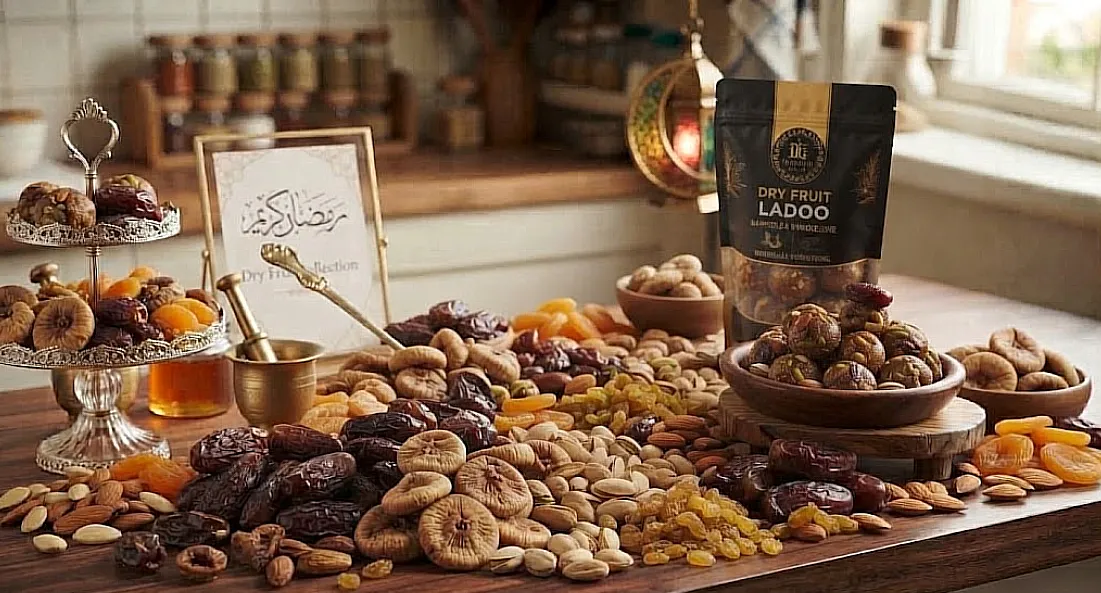
Dry fruits have long been part of food traditions across South Asia and the Middle East.
In Pakistan, khajoor, badam, akhrot, pista, kaju, anjeer, and kishmish are familiar ingredients in homes and bazaars. During Ramadan, dates have an especially important place because they are traditionally used to break the fast.
The nutritional characteristics of nuts and dried fruits also make them convenient foods to keep available during the eating window.
Nuts can contribute:
Dried fruits can contribute:
However, dry fruits are concentrated foods, so portions still matter. A handful of nuts and several pieces of dried fruit can add up quickly.
The goal is not to eat unlimited quantities simply because the food is considered nutritious.
Instead, dry fruits can be one part of balanced Ramadan meals and snacks.
If you're buying only one dry fruit for Ramadan, dates are the natural starting point.
Dates are traditionally used to break the fast, and WHO guidance specifically recommends dates as an iftar food.
There is also a practical reason they work so well.
Dates are:
But “dates” isn't a single product.
Different varieties can have very different textures, sizes, sweetness levels, and appearances.
The right variety depends on your taste and how you plan to serve it.
Ajwa dates are particularly familiar in Ramadan settings and are commonly associated with Madinah and traditional gifting.
They tend to have a darker appearance and a distinctive flavor.
They can work well when you're looking for a date that feels traditional and suitable for a Ramadan serving tray or gift box.
If purchasing Ajwa, pay attention to packaging and origin information rather than relying solely on a label.
Medjool dates are large and soft, with a rich, dessert-like texture.
Because of their size, they can feel more substantial than smaller dates.
They're especially attractive for:
Mabroom dates are typically elongated with a chewy texture and darker appearance.
They can work particularly well in premium date selections because their shape looks elegant when arranged on a serving tray.
Sukkari dates are known for their soft texture and sweet flavor.
They can be enjoyed directly at iftar or incorporated into desserts and date-based recipes.
Zahidi dates tend to be firmer and less soft than varieties such as Medjool.
They can be a practical choice when you prefer a firmer bite or want a date that holds its shape well.
Current Pakistani date guides commonly distinguish varieties such as Ajwa, Medjool, Mabroom, Sukkari, Mazafati, and Zahidi by texture and intended use rather than treating all dates as interchangeable.
This depends entirely on household size and how frequently you serve dates.
Consider:
Instead of automatically buying a large bulk quantity, estimate your household's actual consumption.
For example, a family that serves a small number of dates at every iftar may need much less than a household that also uses dates in milkshakes, desserts, ladoos, smoothies, stuffed dates, and gift boxes.
Buying according to consumption also helps preserve freshness.
Almonds are among the most versatile dry fruits you can keep at home.
They can be:
Some families also soak almonds overnight and remove their skins before eating them.
Soaking is a preparation preference rather than a requirement.
You do not need to soak almonds for them to be nutritious.
For Ramadan, almonds can be particularly useful because they work across both iftar and sehri meals.
Walnuts have a richer, more pronounced flavor than almonds.
They're excellent when you want a dry-fruit selection with more variety in texture.
You can serve walnuts:
Because walnuts contain natural oils, freshness matters.
A stale or rancid walnut can have a noticeably unpleasant flavor.
Keep walnuts sealed and protected from excessive heat, especially in warm climates.
Pistachios are one of the easiest ways to make a Ramadan dry-fruit platter look premium.
Their green color immediately adds visual contrast.
They're especially useful for:
If presentation matters, reserve some whole or neatly chopped pistachios for garnishing.
You don't need a huge quantity.
A relatively small amount can make a platter look much more elaborate.
Cashews have a naturally creamy flavor and softer crunch.
They work particularly well in:
They're also a good choice if you want to balance stronger flavors such as walnuts or intensely sweet dates.
Raisins are small, sweet, and easy to incorporate into dishes.
They can be used in:
Because they're sweet and concentrated, you don't need large quantities.
A small portion can add plenty of sweetness and chewiness to a dish.
Dried figs can bring something different to a Ramadan dry-fruit selection.
They have a chewy texture and visible seeds, which makes them interesting both as a snack and as a recipe ingredient.
Use them in:
If your figs are particularly firm, you may need to soften them before incorporating them into recipes.
Dry fruits don't have to mean nuts only.
Seeds can add variety to your Ramadan pantry.
Consider:
They're useful for:
Lightly roasting seeds can bring out their flavor, but be careful because small seeds can burn quickly.
Iftar doesn't need to be complicated.
Dates should be the foundation if you follow the traditional practice of breaking the fast with them.
After that, you can build a small selection around them.
A simple iftar dry-fruit plate could include:
WHO recommends a balanced iftar that includes vegetables, whole grains, and protein, while limiting heavily fried and processed foods.
That means dry fruits should complement the meal rather than replace it.
For a family table, arrange:
Section 1: Dates
Section 2: Almonds
Section 3: Pistachios
Section 4: Walnuts
Section 5: Fresh fruit
You don't need a huge platter.
A small, neatly arranged plate often looks better than an oversized tray filled with too many ingredients.
Dates and milk are a familiar combination in many households.
You can serve dates alongside milk or use dates in a homemade date shake.
If preparing a date shake, remember that dates already provide considerable sweetness, so additional sugar may not be necessary.
For a richer version, blend dates with milk and a small amount of almonds or pistachios.
Plain or unsweetened yogurt can provide a creamy contrast to sweet dates.
Try:
This can work as a simple evening snack.
Sehri has a different purpose from iftar.
You are preparing for a long fasting period, so a balanced meal is more important than simply eating a large amount of sweet food.
WHO recommends having suhoor and describes it as a light, nutritious meal, with foods such as vegetables, whole grains, and protein-rich foods.
Dry fruits can be part of that meal.
Good options include:
But combine them with other foods rather than relying on dry fruits alone.
A simple sehri bowl could contain:
The combination gives you different textures and flavors without requiring a complicated recipe.
Another easy option is:
You can prepare the ingredients beforehand and assemble the bowl quickly before sehri ends.
For something different, try whole-grain toast with a thin layer of nut butter and chopped dates.
Pair it with:
This provides a more complete meal than simply eating handfuls of nuts.
The same dry fruit can be used at both meals, but the purpose is different.
Dry Fruit | Iftar Use | Sehri Use |
|---|---|---|
Dates | Breaking the fast | Small addition to oats or yogurt |
Almonds | Snack or platter | Oats, milk, yogurt |
Walnuts | Snack or dessert | Oats, yogurt |
Pistachios | Garnish or snack | Yogurt or breakfast bowls |
Cashews | Desserts | Small portion with breakfast |
Raisins | Dessert or mix | Oats or yogurt |
Dried figs | Snack or dessert | Chopped into breakfast |
Seeds | Mixes and toppings | Oats, yogurt, breakfast bowls |
The important point is balance.
A bowl of dates and nuts by itself isn't automatically a complete sehri.
Combine dry fruits with appropriate sources of protein, carbohydrates, vegetables, fruit, and fluids.
Instead of buying everything at once, divide your shopping into categories.
Choose one variety that your family enjoys.
This is your daily iftar supply.
Choose two or three:
These can be used throughout the week.
Add:
These are useful for desserts and homemade snacks.
Keep a smaller quantity of premium nuts or dates specifically for guests.
This prevents the entire premium selection from disappearing during everyday snacking.
If you're preparing Ramadan or Eid gifts, keep those purchases separate.
This makes it easier to control quantities and presentation.
For a medium-sized family, your shopping list might look something like:
One or two preferred varieties.
Almonds, walnuts, pistachios, and cashews.
Raisins and dried figs.
One or two varieties if you use them.
Coconut, cardamom, or other ingredients you regularly use.
Separate premium dates or mixed dry-fruit boxes.
You don't have to buy every category.
The best shopping list is the one that matches your household's actual habits.
Portion size depends on the person, the meal, and the rest of the diet.
Avoid treating dry fruits as unlimited simply because they are natural foods.
Dates and dried fruits are concentrated sources of carbohydrates and naturally occurring sugars, while nuts are energy-dense.
A practical approach is to serve small portions and combine them with other foods.
For example:
This is often easier than putting a huge bowl of dry fruits on the table and eating directly from it.
Ramadan meals can become very social.
Guests arrive.
Family members bring food.
There are samosas, pakoras, rolls, chaat, desserts, drinks, fruit, dates, nuts, and several main dishes.
It becomes incredibly easy to eat more than intended.
WHO specifically advises eating slowly and avoiding overeating during Ramadan.
Pre-portioned dry fruits can help.
Instead of leaving a giant bowl available all evening, divide nuts into small serving bowls.
This makes the table look better and makes portions easier to manage.
Presentation doesn't have to be expensive.
Start with a clean serving tray.
Place dates in the center.
Then create small sections around them.
For example:
Center: Medjool or Ajwa dates
Side 1: Almonds
Side 2: Pistachios
Side 3: Walnuts
Side 4: Cashews
Small section: Raisins
Add a few dried figs for height and texture.
You can also use small bowls inside a larger tray.
This keeps different textures separate and makes the platter easier to refill.
For a more familiar local presentation, use:
The combination looks abundant without requiring dozens of ingredients.
You can serve the tray alongside:
The dry fruits become one component of a larger spread.
If you're expecting guests regularly, buy ingredients differently from someone shopping only for their immediate family.
Prioritize variety.
A guest tray might include:
You don't necessarily need large quantities of each.
Guests are more likely to notice variety and presentation than whether you have several kilograms of every nut.
Children who are fasting or eating family meals can enjoy age-appropriate dry-fruit portions, but whole nuts can be a choking hazard for young children.
For younger children, use age-appropriate preparation and follow pediatric food-safety guidance.
You can incorporate suitable textures into:
Also remember that tree nuts are common allergens.
If someone in the family has a known allergy, keep their food preparation separate and avoid cross-contact.
Ramadan is practically a festival of desserts.
Dry fruits work beautifully in many traditional preparations.
Use almonds, pistachios, cashews, walnuts, and raisins in:
Pistachios and almonds are especially useful as finishing garnishes.
A small amount can make a simple dessert look much more festive.
Sheer khurma is one of the most recognizable Eid and Ramadan desserts in Pakistani households.
Depending on the recipe, it can include:
Dry fruits provide both texture and visual appeal.
For the best presentation, reserve some sliced almonds and pistachios for the top rather than mixing everything into the pot.
Date-based dry fruit ladoos are another useful Ramadan preparation.
A basic combination can include:
The dates help bind the nuts, so you don't necessarily need a traditional sugar syrup.
Make small ladoos and keep them refrigerated if your kitchen is warm.
They can be served as an evening treat or packaged for gifting.
You can also make small date-and-nut balls using:
Process the ingredients, shape them into small balls, and refrigerate.
These are convenient for families who prefer preparing several small snacks in advance.
But remember that a homemade energy bite is still a concentrated food.
Small portions are enough.
This is one of the most important Ramadan points.
Dry fruits can be useful foods, but they do not replace water.
WHO recommends drinking plenty of water between iftar and suhoor and including hydrating foods.
This becomes particularly important during hot weather.
A Ramadan dry-fruit platter should therefore be accompanied by a proper hydration routine.
Drink water regularly during the non-fasting hours rather than relying entirely on one large amount immediately before fasting begins.
Dates are traditionally used to break the fast, but they are not a substitute for fluids.
A good iftar routine can include:
The exact amount of water someone needs varies with body size, weather, activity, diet, and health circumstances.
Pakistan's climate can make Ramadan fasting more demanding when temperatures rise.
WHO specifically notes that high temperatures can increase fluid losses and recommends drinking water and eating hydrating foods between iftar and suhoor.
During hotter periods:
Heat affects both people and food.
Ramadan often means repeatedly opening the same containers.
That can expose dry fruits to:
Use airtight containers.
Keep nuts away from direct sunlight.
For softer dates, especially in warm conditions, refrigeration can help preserve quality.
Current Pakistani storage guidance notes that soft and semi-soft dates such as Medjool and Mabroom can benefit from sealed refrigerated storage in hot conditions, while drier dates may be more suitable for cool cupboard storage.
You don't always need to put everything into one container.
Keeping nuts and dried fruits separately helps preserve their individual textures.
It also makes it easier to control portions and identify what needs to be used first.
Look for:
There shouldn't be obvious mold, excessive moisture, insects, or contamination.
Fresh nuts should smell clean and nutty.
A strong paint-like, bitter, or rancid smell can indicate deterioration.
Dates should match the texture expected from their variety.
Nuts shouldn't feel damp unless they're intentionally sold as a moist product.
Choose packaging that protects the contents from moisture and contamination.
For packaged products, check the variety, net weight, origin information where relevant, and dates or storage instructions.
Both can work.
The more important issue is the quality of the product and the conditions under which it has been stored and handled.
Packaged dry fruits can make it easier to check:
Loose dry fruits can be convenient when you want to select quantities yourself.
Whichever option you choose, pay attention to cleanliness, freshness, turnover, and storage conditions.
For larger families, don't automatically buy the most expensive varieties.
Instead, divide the budget.
For example:
Everyday: Almonds and dates
Variety: Cashews and raisins
Premium: Pistachios or walnuts
Special: Premium dates
This gives you a more balanced selection.
Current Pakistani buying guides similarly recommend matching the grade and purchase quantity to the intended use rather than treating the most expensive dry fruit as the best option for every purpose.
Ramadan is also a major gifting season.
A simple gift box can include:
You can choose three or four varieties rather than filling the box with everything.
The quality of presentation matters.
Use:
Current Pakistani dry-fruit gift collections commonly position dates, mixed nuts, and multi-compartment boxes for Ramadan, Eid, weddings, and other occasions.
Simple and familiar.
This focuses entirely on variety within dates.
A classic combination for families.
Use fewer varieties but higher-quality presentation.
For example:
The box doesn't need to contain ten different products to feel luxurious.
Businesses often need gifts that look polished without being overly personal.
Dry-fruit boxes work well for:
For corporate gifting, prioritize:
A simple premium date-and-nut selection can feel more professional than an oversized box containing too many unrelated items.
Ramadan shopping often continues into Eid.
For Eid, presentation becomes especially important.
You can choose:
Then place them in a decorative box or basket.
A well-presented dry-fruit gift can work for:
Bulk buying can seem economical, but quality declines if products sit around too long.
A low price isn't useful if the nuts are stale or poorly stored.
You don't need premium nuts for every daily snack.
Use premium products strategically.
Heat and humidity can damage dry fruits.
Different ingredients have different textures and storage needs.
Decide whether each product is for:
Then buy accordingly.
If you want variety without buying too many products, rotate them.
Dates + almonds
Dates + pistachios
Dates + walnuts
Dates + cashews
Dates + raisins
Dates + dried figs
Mixed nuts and dates
You can repeat the cycle throughout the month.
This keeps the pantry interesting without requiring a huge selection.
You could structure your dry-fruit use like this:
A few dates with water, followed by the main meal.
Small serving of mixed nuts or fruit if desired.
Water regularly.
A balanced meal with a small amount of almonds, walnuts, seeds, or dates.
This approach keeps dry fruits integrated into the overall meal pattern rather than turning them into the main food source.
It's worth repeating because this is where many “healthy Ramadan” articles get carried away.
Dry fruits are not magic foods.
They don't compensate for an unbalanced diet.
Dates are an important traditional iftar food and are recommended by WHO as part of breaking the fast, but a balanced Ramadan eating pattern should also include vegetables, whole grains, protein-rich foods, and adequate fluids.
Think of dry fruits as useful ingredients within that bigger picture.
People with certain medical conditions may need individualized Ramadan nutrition and fasting advice.
This is particularly important for people managing conditions such as diabetes, kidney disease, or other illnesses affected by fasting, hydration, medication timing, or carbohydrate intake.
Pregnant and breastfeeding women should also discuss fasting with an appropriate healthcare professional based on their individual circumstances. WHO's Ramadan guidance specifically recommends individualized medical consultation for pregnancy and emphasizes adequate nutrition and hydration where fasting is undertaken.
This article is general food and shopping information, not personalized medical advice.
You don't need an enormous collection.
For many households, a practical starting point is:
Dates + almonds + walnuts + pistachios + one or two optional dried fruits.
From there, add cashews, figs, raisins, or seeds according to your family's preferences.
If you're hosting frequently, increase the variety.
If you're gifting, focus more on premium presentation.
If you're preparing desserts, buy the ingredients you actually use.
If you're watching your budget, prioritize everyday varieties and reserve premium products for guests or gifts.
The goal is to build a selection that fits your Ramadan rather than buying products simply because they're available.
Dry fruits can have a natural place in Ramadan, especially in Pakistani households where dates, nuts, and dried fruits are already part of familiar food traditions.
Dates are the obvious starting point for iftar and are specifically recommended by WHO as a traditional way to break the fast. Almonds, walnuts, pistachios, cashews, raisins, dried figs, and seeds can then add variety to snacks, breakfasts, desserts, guest platters, and homemade recipes.
The smartest approach is not to buy everything.
Choose dates based on how you like to break your fast. Pick a few nuts that your family actually eats. Keep smaller quantities for guests and premium varieties for gifting. Store everything properly, especially during warm or humid weather.
For sehri, combine dry fruits with a balanced meal rather than relying on nuts and dates alone. For iftar, let dates be part of a measured, balanced meal rather than turning the entire table into a feast of fried and sweet foods. And throughout the evening, prioritize regular hydration.
For Ramadan gifting, a thoughtfully assembled box of quality dates and dry fruits can be simple, elegant, and genuinely useful.
Ultimately, the best Ramadan dry-fruit selection isn't the biggest one or the most expensive one.
It's the one that fits your family's meals, traditions, budget, storage conditions, guests, and gifting plans.
That is what turns a pantry full of dry fruits into a Ramadan selection that actually works.
Dates are a traditional choice for iftar, while almonds, walnuts, pistachios, cashews, raisins, figs, and seeds can also be included. These dry fruits can be enjoyed at sehri, in evening snacks, or as part of meals and desserts.
Choose a practical selection of dry fruits based on your family's preferences and expected consumption. Buying appropriate quantities can help you have a useful variety without purchasing more than you need.
Dry fruits can be arranged attractively on an iftar platter for family and guests. Dates and other selected nuts or dried fruits can also be incorporated into traditional desserts and other Ramadan foods.
During warm weather, proper storage is important for maintaining the freshness and quality of dates and dry fruits. Keep them protected from heat and unsuitable storage conditions, and use appropriate containers when needed.
Fasih Frankly
SEO Expert and eCommerce Specialist. Shopify, eBay and online selling.
Questions about this article?
Email us and we will get back to you.
Explore more
Choose fresh, high-quality dry fruits and consider the recipient's preferences and the quantity needed. Elegant dry-fruit gift boxes can be prepared for Ramadan or Eid, including for family, guests, and corporate gifting.
