- 100% Natural
- Premium Quality
- No Preservatives
- Fresh & Healthy
Thin cabbage ribbons and sunflower kernels in small savoury pancakes that are easy to turn.
Sunflower seed cabbage pancakes combine fine cabbage ribbons, eggs and flour in small savoury pan rounds. Shelled kernels add a mild nutty taste without making a heavy coating. The pancakes are useful for a light lunch, especially when you have part of a cabbage left and want something warmer than a raw salad.
The most important preparation choice is cutting the cabbage thinly. Thick strips stay firm while the outside browns, making the pancake difficult to turn and less pleasant to eat. This version uses modest individual rounds rather than one large pan-sized pancake. Sunflower seed cabbage pancakes are easier to cook through when each one stays thin.
The quantities make about eight small pancakes, enough for two as a light meal or four as a side. Allow 20 minutes for preparation and about 20 minutes for cooking in batches. You need a sharp knife, board, mixing bowl, nonstick or well-seasoned frying pan and a broad spatula.
Use kernels without the striped shells. Sunflower seeds sold as a snack can come in-shell, heavily salted or flavoured. Those formats do not work in the same way here. Check the label and inspect a small handful. If using salted kernels, reduce the added salt and keep any extra seasoning for the table.
Remove damaged outer cabbage leaves and the thick core. Cut into wedges, then slice across into ribbons no more than a few millimetres wide. Wash if needed and drain thoroughly, using a salad spinner or clean cloth to remove excess water. Wet cabbage changes the batter and can make the pan spit.
Slice the spring onions finely, keeping the tougher root end out. If the green tops are very thick, cut them smaller than the white section. Do not add a large handful of other raw vegetables in the first batch. Carrots, courgettes and onions release different amounts of water and can make it hard to understand the basic mixture.
Whisk eggs with water in the mixing bowl. Add flour, baking powder, pepper and salt and whisk just until smooth. Fold in cabbage, spring onions and sunflower kernels. The batter should coat the ribbons rather than completely submerge them. At first it may look vegetable-heavy; that is intentional.
Leave for five minutes, then stir once. If dry flour remains at the bottom, add a teaspoon or two of water. If liquid gathers in a large puddle, add a teaspoon of flour and reassess. Avoid big adjustments before the cabbage has had a short chance to settle into the mixture.
Heat a teaspoon or two of oil in the pan over medium heat. Add a small scoop of mixture and flatten it to about 10 cm wide and no more than 1 cm thick. Cook for 3–4 minutes until the bottom is set and golden, then turn with a broad spatula and cook the other side.
The centre should be cooked through, with no wet egg batter. A thermometer can help; an egg mixture should reach 71°C. Taste the cooked test piece to judge seasoning. Never taste the raw mixture because it contains uncooked flour and eggs. Adjust the remaining bowl in small amounts based on the finished pancake.
If the outside browns in a minute while the cabbage is still tough, lower the heat. A brief cover can help steam the middle, but remove it for the final minute so the surface dries. If the rounds remain pale and greasy, the pan may not be hot enough or you may be adding too much oil.
Cook two or three pancakes at a time with space between them. Crowding makes it difficult to get the spatula underneath and can tear a half-set round. Add a little oil between batches only as needed. Wipe out burnt loose seeds carefully with the pan off the heat before continuing.
A pancake that bends and breaks during turning usually needs more time on the first side. Slide the spatula well beneath it and turn in one controlled movement. Pressing hard with the spatula after turning squeezes out moisture and can make the middle dense. A light flattening at the beginning is enough.
Stir the bowl gently before each new batch so kernels do not settle at the bottom. The cabbage will continue releasing moisture while it waits. If the last portion becomes noticeably looser, use a slightly smaller scoop rather than making one thick final pancake.
Put finished pancakes on a rack over a tray rather than stacking them on a plate. A stack traps steam between the layers. If needed, hold briefly in a low oven while the final batch cooks, but serve soon; thin vegetable pancakes lose their contrast during a long wait.
Sunflower seed cabbage pancakes are best plated with sauce beside them. Spoon yogurt into a small dish and add herbs or lemon to taste. Do not coat the full batch with sauce before serving. A cabbage pancake that is meant to have a crisp edge quickly becomes soft under a wet topping.
Add a small pinch of cumin or mild chilli powder if your family enjoys it. Keep strongly flavoured sauces optional. A little chopped coriander works, but a large quantity of wet herbs changes how the rounds hold together. Begin with one tablespoon rather than a full bunch.
This is not a tested egg-free recipe. Replacing eggs with an arbitrary seed gel can change both binding and cooking time. If you need an egg-free version, use a separate recipe developed for that purpose. Likewise, wheat flour alternatives absorb differently and should not be swapped without a trial batch.
Look for sound packaging and a clear ingredient list. Kernels should smell fresh rather than stale or oily. Store the unused dry seeds sealed, away from heat and light, following the pack. A kitchen shelf directly beside the cooker is less suitable than a cool cupboard or refrigerator when recommended.
Use a dry measure when taking seeds from the pack. The batter spoon should never go back into the seed container. Portion the 40 g before mixing so the rest remain clean and dry. This small habit protects the next recipe from accidental moisture and raw-egg contact.
Cool and refrigerate leftovers promptly in a shallow covered container. For a conservative household plan, eat them within two days. Reheat in a lightly oiled pan or oven until hot through the centre; 74°C is a useful reheating target. A microwave warms them but gives a softer surface.
Do not store unused raw batter for a long period while repeatedly frying single portions. Make the planned batch and refrigerate cooked leftovers instead. If you want half the quantity, use one egg and halve all the other measurements from the beginning.
Sunflower seed cabbage pancakes reward thin slicing, moderate heat and patient turning. Keep the first test piece small, adjust based on its cooked texture and serve the finished rounds before steam softens them. Those practical steps make a partial cabbage and a handful of kernels into a meal with a clear purpose.
Use leftover cabbage for sunflower seed coleslaw. For a separately prepared sauce option, explore sunflower seed lemon dressing.
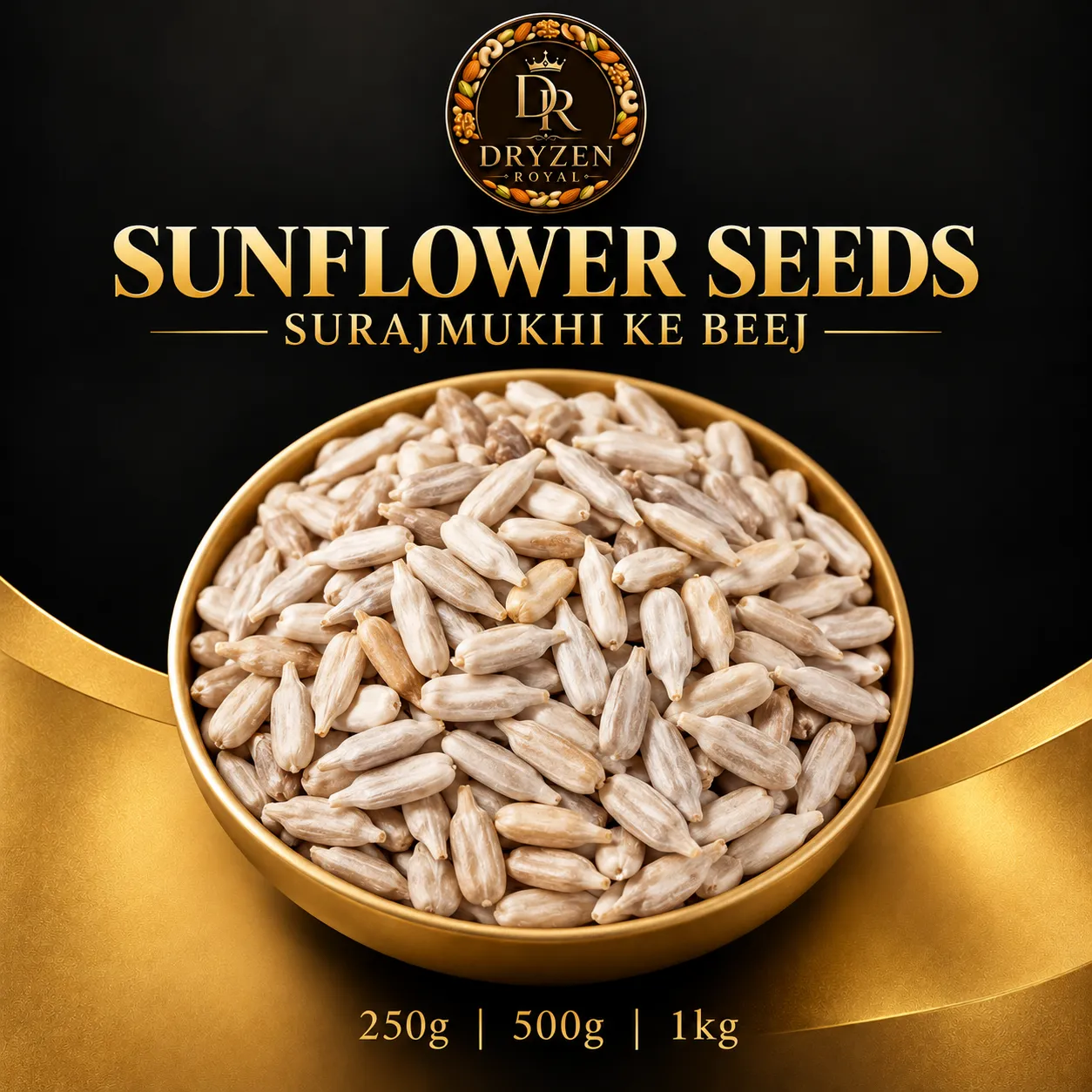
Explore Sunflower seeds at Dryzen Royal, and check for edible kernels when selecting the format for this recipe.
Keep sunflower seed cabbage pancakes small enough for your widest spatula. If you double sunflower seed cabbage pancakes, cook a fresh second bowl rather than letting raw batter wait beside a hot stove.
No. Use edible hulled kernels; the shells are not part of the pancake.
It may be too thick or not set on the first side. Make smaller rounds and wait for a firm golden base.
No. Cook a small test pancake first because the raw mixture contains eggs and flour.
Place cooked rounds on a rack without stacking and serve promptly with sauce on the side.
Questions about this article?
Email us and we will get back to you.
Explore more
