- 100% Natural
- Premium Quality
- No Preservatives
- Fresh & Healthy
A savoury lentil-and-walnut loaf bound with eggs, with vegetables cooked dry before baking.
Walnut lentil terrine is a savoury loaf with cooked lentils, chopped mushrooms and akhrot, bound with eggs and breadcrumbs. It is baked in a lined tin and rested before slicing. This home version is a practical vegetable-centred main rather than a meat terrine or a claim to reproduce a particular traditional formula.
The filling needs enough moisture to stay pleasant but not so much that it collapses into a wet heap. Mushrooms and onions are cooked before mixing, and lentils are drained thoroughly. Walnut lentil terrine becomes easier to slice when those preparation stages are complete before the eggs enter the bowl.
Use a loaf tin around 20 by 10 cm with sides high enough for the mixture. Line base and long sides with baking paper, leaving overhang for lifting. Allow thirty minutes for preparation and forty-five to fifty-five minutes for baking, plus at least fifteen minutes of resting.
You need a frying pan, large bowl, scales and a food thermometer. A broad server helps with the first slices. Tin dimensions vary, so check internal measurements rather than relying only on a label such as one-pound loaf tin.
Use lentils that hold some shape rather than a fully smooth red-lentil purée. If cooking from dry, follow the packet and measure the drained cooked weight. Eggs and breadcrumbs add their own allergens, while walnuts remain present throughout the loaf.
Heat oil in a wide pan and soften onion and carrot for eight to ten minutes. Add mushrooms and cook until their released liquid evaporates. Add garlic and herbs for the final minute. The pan should look moist but not contain a pool of water.
Spread the vegetables on a plate to cool. A steaming hot mixture can partially cook eggs when combined and makes consistency harder to judge. Do not skip the pan stage by adding raw mushrooms directly to the loaf; they release water during baking.
Put cooked lentils in a sieve and let excess liquid drain. Mash about half with a fork, leaving the rest whole. The mashed portion helps bind the loaf while the whole grains give texture.
Do not process everything into a smooth paste unless you deliberately want a different style. A completely puréed mixture can feel dense. Walnut lentil terrine should have visible pieces while still holding together after baking and resting.
Cut walnuts into pieces around 3–4 mm. Large halves can pull through a slice and break the edge, while powder disappears into the lentils. Inspect for shell fragments before chopping, especially when using pieces from a large pack.
Combine cooled vegetables, lentils, walnuts, crumbs and tomato purée. Taste this cooked-ingredient stage for seasoning before adding raw eggs. Then stir in beaten eggs until evenly distributed. Do not taste the uncooked egg-bound mixture.
The mixture should hold a loose mound when pressed with a spoon. If very dry and crumbly, add water or stock one tablespoon at a time. If wet, let the crumbs absorb for five minutes before deciding whether a small extra amount is needed.
Avoid adding a large unmeasured handful of crumbs to every problem. Too many make a heavy dry loaf. The better correction is usually draining lentils and cooking vegetables properly on the next batch.
Heat the oven to 180°C conventional or about 160°C fan. Spoon mixture into the lined tin and press lightly into corners. Level the top, but do not pound or squeeze out every air gap. A little structure is needed without turning the loaf dense.
Cover loosely with foil for the first twenty-five minutes, then uncover for the remaining bake. The centre should become thoroughly hot and set; 74°C is a useful target for the assembled mixed loaf. The surface can be lightly browned without forming a hard crust.
Leave in the tin for fifteen to twenty minutes after baking. The binding sets further and the loaf becomes easier to support. Lifting immediately can break a correctly cooked terrine while it is still fragile.
Use the paper overhang to raise it onto a board, supporting the base. Do not hold a heavy loaf by one narrow paper corner. Walnut lentil terrine is sliceable, but its vegetable structure still needs a broad surface underneath.
Use a sharp knife and wipe between cuts. Make slices around 2 cm thick for a first serving, adjusting to the rest of the meal. A very thin slice may crumble even when the loaf is properly prepared.
Support each slice with a broad server rather than lifting by the upper edge. Walnut lentil terrine can be served warm with tomato sauce or a fresh salad. Keep wet sauce beside the slice until eating so the base does not soften prematurely.
Roasted vegetables, potatoes or a crisp cabbage salad can accompany the loaf. It already contains lentils, nuts and crumbs, so another dense filling is optional. Offer a small portion first and let diners choose more according to the meal.
This recipe uses eggs as a binder. Replacing them with a seed gel or another ingredient needs a separate test and should not be called an identical swap. Be clear about the measured version rather than attaching a dietary label that does not match it.
Cook the vegetable mixture ahead and refrigerate promptly if needed. Keep lentils, vegetables and dry ingredients separate until assembly for a simple next-day plan. A fully mixed raw-egg loaf should remain refrigerated and be baked promptly according to safe household practice.
A cold assembled tin may need longer in the oven. Check the centre rather than relying only on the original time. Avoid moving a glass dish directly between very different temperatures unless its manufacturer permits it; the specified metal loaf tin is simpler here.
Refrigerate cooked leftovers promptly in shallow portions and use within two days as a conservative household schedule. Reheat covered with a small splash of water until thoroughly hot, using 74°C as a useful thermometer check.
Freezing individual slices can be practical, though texture may change on thawing. Thaw in the refrigerator and support the slices during reheating. Do not repeatedly warm and cool the whole loaf for separate meals.
Walnut lentil terrine becomes dependable when the cooked vegetables are dry, the lentils are partly mashed and the loaf rests before cutting. The savoury loaf rewards those small preparation choices more than a thick decorative glaze or extra crumbs added without measuring.
For a loose pasta sauce using similar ingredients, explore walnut lentil bolognese. Some principles from supporting delicate slices also help when lifting a cooled savoury slice.
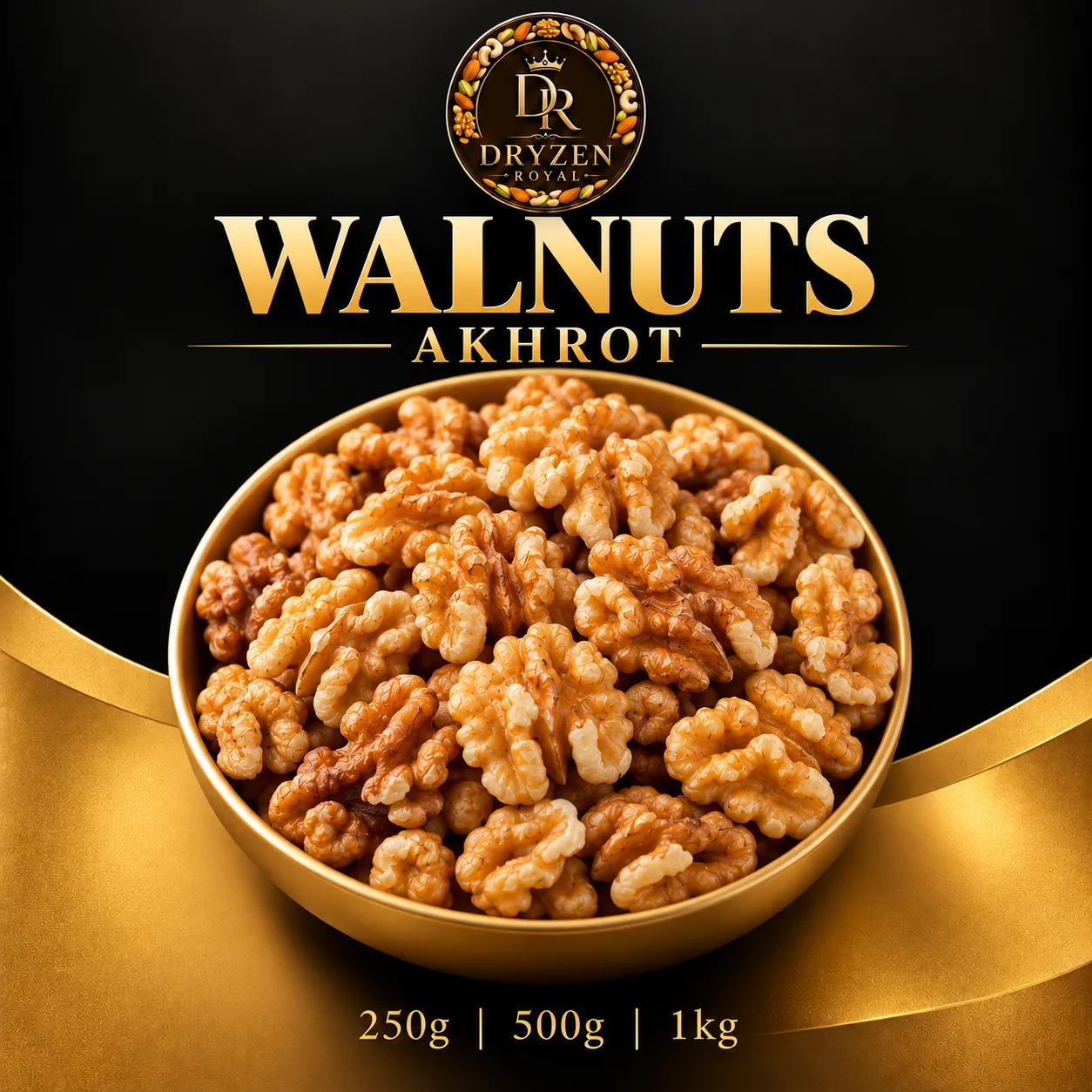
Explore Walnuts at Dryzen Royal and choose akhrot for substantial savoury dishes as well as baking.
Cook them first until excess liquid evaporates so they do not release water inside the loaf.
The mashed portion helps bind while whole lentils preserve a more varied texture.
No. Rest fifteen to twenty minutes so the binding can settle and the base is easier to support.
Not reliably. This version uses eggs as a binder; an egg-free loaf needs a tested alternative method.
Questions about this article?
Email us and we will get back to you.
Explore more
