- 100% Natural
- Premium Quality
- No Preservatives
- Fresh & Healthy
White spots on raisins, figs, apricots, and other dried fruit may be caused by sugar crystallization, surface residue, or mold. Learn why these changes occur, which warning signs matter, when to discard questionable fruit, and how proper storage can help prevent spoilage.
You open a packet of raisins, dried apricots, figs, or dates and notice something unusual: tiny white spots, a dusty coating, or pale patches covering parts of the fruit. The fruit looks different from when you bought it, and suddenly a simple snack raises an uncomfortable question. Is it still safe to eat?
Sometimes, a pale coating may be related to naturally occurring sugars or other harmless surface deposits. In other situations, white or gray patches can be a sign of mold or spoilage. The difficulty is that these changes can look similar, and dried fruit does not always provide an obvious warning when its quality has deteriorated.
This matters because dried fruit is often considered a long-lasting pantry staple. Removing much of a fruit's water helps preserve it, but it does not make the product immune to moisture, contamination, or mold. Poor drying, damaged packaging, humid storage conditions, and repeated exposure to air can all affect its condition.
The good news is that you can reduce the risk of spoilage with a few practical habits. Learning how to inspect dried fruit, recognizing warning signs, and storing opened packages correctly can help you avoid unnecessary food waste while making safer choices.
This guide explains what white spots on dried fruit might mean, how sugar crystals differ from possible mold, why dried fruit sometimes spoils despite its long shelf life, and what to do when you find a suspicious piece in your pantry.
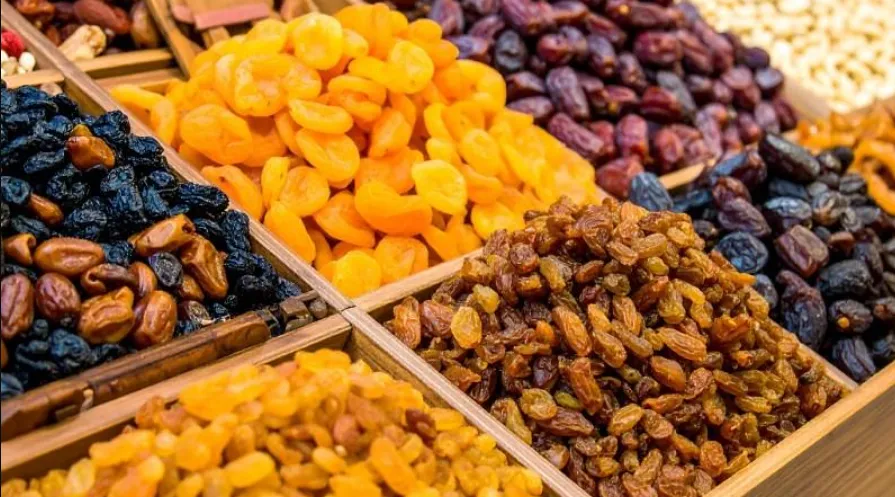
White spots do not have one universal explanation. Their cause depends on the type of fruit, how it was processed, the ingredients used, and how the product has been stored.
Some dried fruits have a naturally sugary surface. Others may develop pale deposits during storage. Mold can also appear as white or gray growth, particularly when moisture has entered a package.
The important distinction is that you cannot reliably confirm that a white coating is harmless just by looking at it. Appearance is useful for identifying a possible problem, but it is not a definitive safety test.
Fruit contains natural sugars, including glucose and fructose. During drying, much of the water is removed, leaving sugars and other components concentrated in a smaller amount of fruit.
Under certain conditions, sugar can form visible crystals on the surface. Depending on the fruit and its processing history, these crystals may appear as tiny pale grains, a whitish film, or a slightly sparkling coating.
Crystallization is not the same process as mold growth. However, not every white deposit on dried fruit is sugar, and a sugary appearance should not automatically be treated as proof that the product is safe.
Mold is a type of fungus that can grow on food when suitable conditions are present. On dried fruit, it may appear as fuzzy, cotton-like, powdery, or irregular patches. The color can be white, gray, green, blue, or another shade.
Some mold is visible only after growth has progressed. Other contamination may not be obvious to the naked eye.
Dried fruit can develop mold if it was not dried sufficiently, absorbed moisture after drying, or was stored in a humid environment. A damaged seal can also allow moisture and contamination to affect the product.
Because certain molds can produce substances called mycotoxins, visibly moldy dried fruit should not be eaten.
Some dried fruit products contain added ingredients, such as sugar, oils, or preservatives. Depending on the product and how it has been handled, surface deposits may not necessarily be mold.
Residue alone cannot establish whether a product is safe, however. If the appearance is unusual, the product has changed since opening, or you cannot determine what the coating is, do not assume it is harmless.
A package may look perfectly normal when purchased and develop problems later. Moisture can enter through damaged packaging, a poorly sealed container, condensation, or contact with wet utensils.
As moisture levels increase, the conditions that originally helped preserve the fruit may no longer be sufficient to prevent spoilage. Pieces can become unusually sticky, clump together, soften, or develop visible growth.
These changes deserve attention, especially when several pieces are affected or the fruit has been stored in a warm, humid place.
Although no visual checklist can guarantee food safety, a few observations can help you recognize when dried fruit needs closer attention.
Feature | Possible sugar crystals or surface deposits | Possible mold or spoilage |
|---|---|---|
Appearance | May look granular, crystalline, or like a thin coating | May appear fuzzy, cotton-like, powdery, or irregular |
Distribution | May be relatively uniform, depending on the product | May appear in isolated patches or spread unevenly |
Texture | Crystals may look grainy rather than fuzzy | Growth may appear raised, fuzzy, or thread-like |
Smell | May retain the fruit's usual smell | May have a musty, sour, fermented, or otherwise unusual odor |
Other changes | Fruit may otherwise resemble its usual condition | Unusual softness, dampness, discoloration, or deterioration may accompany it |
These are clues, not definitive tests. Mold does not always smell bad or appear fuzzy, and some harmless deposits can be uneven. The absence of a strange smell does not prove that dried fruit is safe.
Do not taste suspicious fruit to identify the coating. Do not deliberately sniff suspected mold closely, either. If there is visible growth or a combination of unexplained changes, the safer choice is to discard the affected fruit.
Different fruits have different natural textures, colors, and sugar profiles. A coating that is familiar on one product may look unusual on another, so it helps to consider the fruit itself without relying on appearance alone.
Raisins are naturally sweet and may have a slightly glossy or sticky surface. Depending on their variety, processing, and storage, they can also develop pale deposits.
However, white patches that appear suddenly, especially alongside dampness, clumping, an unusual odor, or fuzzy growth, should raise concern.
Check whether the raisins have changed since the package was opened. Also inspect the surrounding pieces and the container. If you cannot confidently establish that the coating is a normal feature of the product, discard the questionable batch rather than taking a chance.
Dried figs can have a naturally sugary exterior, and pale crystals may sometimes appear on them. Their textured surface and small openings can make close inspection more difficult.
Not every white area on a fig is sugar, though. Fuzzy patches, suspicious discoloration, an off odor, or signs of internal deterioration are reasons to reject the fruit.
Do not assume that a white coating on every dried fig is normal simply because some figs can develop sugar crystals. When the cause is unclear, follow the safer option and throw the questionable fruit away.
Dried apricots vary in color and texture according to the fruit and the processing methods used. Some are bright orange, while others are brown or amber.
A pale coating on an apricot may have more than one explanation. Look for other warning signs, including damp areas, unusual softness, an off smell, or visible growth.
If the product was recently opened and already has unexplained patches, check the package condition and storage information. When spoilage is suspected, do not simply wipe the surface and eat the remaining fruit.
Dates can have a naturally wrinkled exterior and may develop a sugary-looking surface. Their softness and stickiness vary by variety and moisture content.
Nevertheless, dates can spoil, particularly when exposed to moisture or stored incorrectly. An unusual coating, unexpected dampness, or signs of mold should not be dismissed as normal sugar.
If you buy dates in bulk, inspect the pieces before transferring them into a storage container. Keep questionable fruit separate from the rest and avoid eating it until the cause of the change is clear.
Dried mango, pineapple, apples, and mixed fruit products differ in their moisture content, texture, and added ingredients. Some products are sweetened, while others contain only fruit.
Added sugar does not make a product immune to mold. Likewise, a product labeled unsweetened can still deteriorate if moisture enters the package.
Follow the manufacturer's storage instructions, examine the product when opening it, and pay attention to changes that develop over time.
Yes. Drying helps preserve fruit by reducing its available moisture, but it does not guarantee that mold can never develop.
Mold spores are present in the environment. They can reach food through air, handling, packaging, or contact with contaminated surfaces. If the conditions become suitable, some spores can grow.
Moisture is particularly important. Fruit that was inadequately dried may retain too much water. Properly dried fruit can also absorb moisture from humid air or through an imperfect seal.
Warm conditions can make storage problems worse, although mold is not limited to hot environments.
People sometimes assume that sweet foods cannot develop mold. That is not true. Some molds can grow in foods with high sugar concentrations, and dried fruit can contain enough available moisture under certain conditions to support spoilage.
The relevant issue is not simply whether the fruit tastes sweet. Its water activity, processing, storage conditions, and exposure to moisture all affect how well it keeps.
Mold is not always confined to the visible surface. Depending on the food and the type of growth, fungal threads can extend into the product beyond what can be seen.
Certain molds can also produce mycotoxins. These substances are a food-safety concern because some can cause illness when present at high enough levels.
You cannot reliably determine whether mold has produced toxins by looking at its color, smelling the fruit, or removing the visible patch. This is why scraping, washing, or cutting off a suspicious area is not a reliable way to rescue moldy dried fruit.
If you notice what appears to be mold, treat it as a food-safety problem rather than a cosmetic defect.
Do not taste the fruit to check whether the coating is sugar. If you suspect mold, set the product aside and avoid serving it to anyone else.
The safest practical approach is to discard dried fruit showing visible mold or clear signs of spoilage. Do not try to save it by washing, scraping, or removing only the visible patch.
If one piece in a container is moldy, inspect the other pieces carefully. Fruit that has been in direct contact with the affected piece may also be contaminated. When a container has widespread growth, moisture, or uncertain storage conditions, discarding the entire batch is the prudent choice.
If the problem appears limited to one piece, separate it without spreading contamination. Examine the remaining fruit for visible growth, unusual dampness, discoloration, or other changes.
Food-safety guidance for fruit generally emphasizes caution because contamination may extend beyond the visible area. If there is any doubt about the condition of the remaining dried fruit, discard it.
Empty the container and clean it thoroughly using hot water and dishwashing detergent, following the container manufacturer's instructions. Dry it completely before using it again.
Check the lid, seal, corners, and any crevices where moisture or food particles may have collected. If the container is damaged or cannot be cleaned properly, replace it.
Look at other dried fruit and pantry items that were stored beside the affected package. Pay attention to damaged packaging, moisture, or similar signs of deterioration.
You do not need to discard every food in your pantry simply because one item has mold. Instead, inspect potentially affected products and follow safe handling practices.
An expiration or best-before date is not a guarantee that a product will remain in good condition regardless of how it is stored.
Dried fruit may deteriorate before the date on the package if it is exposed to conditions that reduce its quality or compromise its preservation.
Fruit intended for long-term storage needs to be dried appropriately. If too much moisture remains, mold can develop during storage.
This is particularly important for homemade dried fruit. Pieces can vary in size, and moisture may not be distributed evenly throughout a batch.
Humid environments can make it harder to preserve dried foods. In places with hot, humid weather, opened packages may need extra attention.
Leaving fruit exposed on a counter, storing it beside a source of steam, or handling it with wet utensils can introduce moisture. A sealed container helps protect the fruit, but only if the fruit was dry when packed and the container is clean and dry.
Torn bags, damaged seals, and loosely closed containers can allow moisture and contaminants to reach the fruit.
Packaging also matters during transport and storage before the product reaches the consumer. Check the seal and packaging condition when buying dried fruit.
Reaching into a container with wet or dirty hands can transfer moisture and contaminants. Using a clean, dry spoon or portioning the fruit into a small bowl can reduce unnecessary handling.
Dried fruit does not remain at its best indefinitely. Heat, light, air exposure, and moisture can affect its quality over time.
Follow the manufacturer's instructions, and do not assume that an unopened or refrigerated product will remain safe forever. Storage recommendations depend on the specific product and packaging.
Good storage is one of the simplest ways to reduce waste and help dried fruit maintain its quality.
Store dried fruit away from direct sunlight, ovens, stovetops, and other heat sources. A cool, dry cupboard is often suitable for products whose labels recommend pantry storage.
In a humid home, take particular care to keep the package tightly sealed and away from steam or other moisture sources.
After opening a package, transfer the fruit to a clean, completely dry, food-safe container if necessary. Airtight containers help limit moisture exposure, although they cannot correct fruit that was already damp or spoiled.
Glass containers can make it easier to spot moisture collecting inside. Whatever material you choose, ensure the lid closes properly.
Always use dry utensils and hands when handling dried fruit. Do not put wet fruit back into a storage container, and avoid storing freshly washed fruit with dried fruit unless the product is being used immediately in a suitable recipe.
Some products may be suitable for pantry storage, while others may recommend refrigeration after opening. Follow the label rather than assuming that every dried fruit requires the same conditions.
If you refrigerate dried fruit, keep it in a well-sealed container to reduce exposure to moisture and odors from other foods. Avoid repeated temperature changes that cause condensation to form inside the package.
If you dry fruit at home, record the type of fruit and the date it was prepared. Use tested food-preservation guidance for drying, conditioning, packaging, and storage.
Do not package fruit while it is still warm, and pay attention to condensation during storage. If moisture appears or mold develops, do not assume that additional drying will make moldy fruit safe to eat.
Washing may remove some surface residue, but it is not a dependable way to determine whether a coating is harmless.
If the white material is sugar, washing may dissolve some of it. But if it is mold, washing does not guarantee that the fruit is free from fungal growth or any toxins that may be present.
The same caution applies to wiping, brushing, or scraping the surface. These methods may change what you can see without resolving the underlying safety issue.
If you have a strong reason to believe a product is simply showing normal sugar crystallization, check the manufacturer's information or ask the seller about the product's expected appearance. If the coating is unexplained or the fruit shows other warning signs, discard it.
For food safety, it is better to lose a small quantity of dried fruit than to take a risk with a product that may be contaminated.
You can reduce the chances of moisture-related spoilage, but you cannot prevent every harmless surface change. Natural sugars, processing methods, and the fruit's characteristics can affect how it looks over time.
The most useful approach is to keep the product dry and follow the storage instructions.
Buying quantities you can reasonably use is also helpful. Large bags may offer a lower price per unit, but they are not a bargain if the fruit sits open long enough to deteriorate.
Discovering that you may have eaten a moldy piece can be worrying. A small accidental exposure does not automatically mean you will become ill, but it is not possible to assess the risk accurately from appearance alone.
Stop eating the product and discard the questionable batch. Do not try to compensate by eating or drinking something else, and do not induce vomiting unless a qualified medical professional specifically instructs you to do so.
Monitor how you feel. If you develop concerning symptoms, seek medical advice. Get urgent help for severe symptoms, such as difficulty breathing or a serious allergic reaction. People who are especially vulnerable to foodborne illness or who have relevant medical conditions should seek individualized advice if they are concerned.
If you are unsure what was in the product or whether it may have been contaminated, a healthcare professional or local poison-information service, where available, can help you decide what to do.
False. Sugar crystals are one possible explanation, but mold and other deposits can also appear white. You cannot confirm the cause by color alone.
False. Some moldy food may have a musty or unusual smell, but the absence of an off odor does not prove that a product is safe.
Not reliably. Mold can extend beyond the visible area, and some molds may produce toxins. Do not scrape, wash, or cut away suspected mold to rescue dried fruit.
False. Reduced moisture helps preservation, but fruit can absorb water during storage or be inadequately dried in the first place. Mold can develop when conditions become suitable.
False. A date does not compensate for damaged packaging, improper storage, or moisture exposure. Inspect the product and follow storage guidance.
False. Refrigeration may be appropriate for certain products, but it does not make moldy fruit safe. Discard fruit that shows signs of mold or spoilage.
White spots on dried fruit can have several explanations, including sugar crystallization, surface residue, and mold. Although some harmless deposits may resemble spoilage, appearance alone cannot reliably distinguish them.
The safest approach is to consider the whole picture. Look for changes in texture, moisture, smell, and color, but do not rely on any single sign to establish safety. Never taste suspicious fruit to identify a coating, and do not try to rescue visibly moldy dried fruit by washing or scraping it.
Prevention is straightforward: buy well-sealed products, store dried fruit in clean and dry containers, protect it from humidity, and use clean utensils when handling it. If you prepare dried fruit at home, follow tested drying and storage instructions.
Most importantly, remember that dried fruit is a preserved food, not an indestructible one. Proper storage helps maintain quality, but it cannot reverse spoilage once it occurs.
For more practical food and nutrition reading, visit Dryzen Royal. You can also explore Finiuo for personal-finance topics and Jurnza for legal information.
When you find an unfamiliar coating on your dried fruit, take a moment to inspect it carefully. If you cannot establish that the product is in good condition, choosing to discard it is the safer decision.
They may be sugar crystals, surface residue, or mold. Sugar crystals can appear as a pale, grainy coating, while mold may look fuzzy or irregular. However, appearance alone cannot reliably distinguish them. If the coating is unexplained or the fruit shows other signs of spoilage, discard it.
No. Washing, wiping, or scraping suspected mold off dried fruit does not reliably make it safe. Mold may extend beyond the visible area, and some molds can produce toxins. Discard dried fruit that shows visible mold rather than trying to salvage it.
Keep dried fruit in a clean, dry, airtight container in a cool, dry place away from direct sunlight and moisture. Use clean, dry utensils, seal packages after opening, and follow the manufacturer's storage instructions. Check homemade dried fruit carefully for condensation and signs of spoilage.
Questions about this article?
Email us and we will get back to you.
Explore more
