- 100% Natural
- Premium Quality
- No Preservatives
- Fresh & Healthy
Fold puff pastry into crisp almond-filled hearts with a controlled filling and a cool kitchen workflow.
Almond palmiers bring together puff pastry, finely chopped badam and a light sugar crust in small, heart-shaped biscuits. Their appeal is the contrast: a crisp outside, visible pastry layers and a modest nut filling that does not overwhelm the dough. You can prepare them with ready-made puff pastry, making this an approachable weekend project for a Pakistani tea table without mixing laminated dough from scratch. For almond palmiers, keep the sliced log firm until it enters the oven.
The most useful skill here is managing temperature. Warm pastry stretches, sticks and loses definition; cold but flexible pastry folds neatly. This guide explains how to keep the filling thin, cut even slices and judge the bake by colour underneath as well as on top. The timings are starting points because pastry brands, sheet thickness and home ovens vary.
This recipe makes approximately 18–22 pieces from one 250 g pastry sheet. Allow about 25 minutes for preparation, 30 minutes for chilling and 18–25 minutes for baking. Have a rolling pin, ruler, sharp knife, baking paper and two flat trays ready. A wire rack helps the finished biscuits release steam rather than soften against a warm tray.
Choose commercial puff pastry intended for baking, following its thawing instructions. Some sheets contain butter and others contain vegetable fats; either can work, but the flavour and browning will differ. Check the ingredient label for wheat, milk or other allergens. Almonds remain an allergen even when they are finely ground and difficult to see.
A restrained filling is deliberate. Too many nuts prevent the pastry surfaces from touching and make the spirals unfold. Grind in short pulses so the almonds stay loose rather than turning oily. Pieces around the size of coarse sand are easier to distribute than large slivers. If your nuts were refrigerated, let the closed container lose its chill before opening to reduce condensation.
Lightly dust the work surface, then roll the pastry to roughly 24 by 30 cm and around 3 mm thick. Work from the middle outward using gentle pressure. Lift and rotate the sheet occasionally so it does not stick. Stop if the dough becomes shiny, limp or difficult to lift; a short return to the refrigerator is more useful than adding more flour.
Brush away excess flour before adding the filling. A thick flour coating makes the surface dusty and stops the sugar adhering. Spread the softened butter very thinly across the rectangle, leaving a narrow clean edge. Mix 20 g sugar with the almonds and optional cinnamon, then scatter evenly. Press lightly with your palm rather than rolling hard over the nuts.
Imagine a line down the centre of the rectangle. Fold each long edge toward that line, leaving a small gap between the two folded strips. Fold each side toward the centre again. Finally bring the two halves together like closing a book. The cut ends should show two joined spirals rather than a single tight cinnamon-roll shape.
Wrap the folded log without compressing it and chill for about 30 minutes, until firm enough to cut cleanly. If your refrigerator is crowded, place it on a narrow tray so it stays straight. Chilling does more than make slicing convenient: it gives the pastry fat a chance to firm up after handling in a warm kitchen.
Heat the oven to 200°C conventional or about 180°C fan, unless the pastry manufacturer recommends otherwise. Line a tray with baking paper. Sprinkle the remaining sugar on a small plate. Cut the log into slices about 8–10 mm thick with a straight downward motion. Avoid sawing repeatedly, which can drag the folded edges out of shape.
Press each cut face lightly into the sugar. Lay the pieces cut-side up, leaving at least 4 cm between them. They spread sideways as the folds open. Use a second tray rather than crowding the first. Return unused slices to the refrigerator while the first tray bakes; a warm waiting batch can spread differently from the first one.
Bake for 10–12 minutes, then check underneath one piece with a spatula. Once the lower side is golden and set, turn the pieces carefully and bake for another 8–12 minutes. Use colour and dryness as the final guide. The centre should look baked through, with no damp, doughy band between the folds. Lower the temperature slightly if sugar darkens before the pastry cooks.
Sugar can colour quickly where it touches the hot metal. A pale top does not guarantee a pale base. Position the tray near the middle of the oven and check before the suggested finishing time. If one corner browns faster, rotate the tray once. Let hot sugar settle for several minutes before moving the biscuits; it can burn skin even after the pastry feels firm.
If the folds separate during slicing, press the base together lightly and chill the slices again. Do not squeeze the spirals shut across their full height, because the layers need space to expand. If filling falls out, remove loose nuts from the tray before baking so they do not scorch and make the whole batch smell burnt.
Very flat pieces often start with pastry that became too warm or was rolled too thin. Thick, soft centres usually mean the slices were too large or the oven was not fully heated. Make a note of the pastry brand, thickness and successful baking time. Those details are more useful for your next batch than assuming every supermarket sheet behaves identically.
Almond palmiers are especially pleasant after they have cooled enough for the sugar crust to set. Serve them alongside plain chai, black tea or coffee. Keep the portions small on a mixed biscuit plate; their buttery pastry makes a little filling go a long way. Avoid placing them beside wet fruit or a steaming kettle, where the crisp edges quickly absorb moisture.
Cool completely before sealing in an airtight container. Separate layers with baking paper and keep away from heat and direct sunlight. For a short texture-focused plan, bake the amount you expect to enjoy within a couple of days. This is a quality target rather than a tested shelf-life guarantee. Follow the pastry pack's storage instructions where they are more specific.
For a future batch, freeze the unbaked slices on a lined tray, then transfer them to a labelled freezer container. Bake from frozen if your pastry packaging permits it, allowing extra time and watching the base carefully. Do not leave a chilled pastry log on the counter all afternoon while preparing other food. Work in short stages and return it to the refrigerator between them.
A little orange zest can replace cinnamon without changing the filling's moisture. A teaspoon of cocoa would make the centres darker, so judge doneness at the exposed pastry edges. Avoid adding jam, honey or a generous layer of nut butter to this measured version: they change how the folds stick and how the centre bakes.
If you halve the recipe, use half a pastry sheet but keep the same rolling thickness and slice width. A smaller rectangle produces fewer pieces, not necessarily a shorter bake. Almond palmiers reward consistency more than decoration: thin filling, cool dough, even slices and enough tray space are the four decisions that most directly shape the result.
For another pastry project, explore almond croissant filling; for a different finish, compare almond cuts for different bakes.
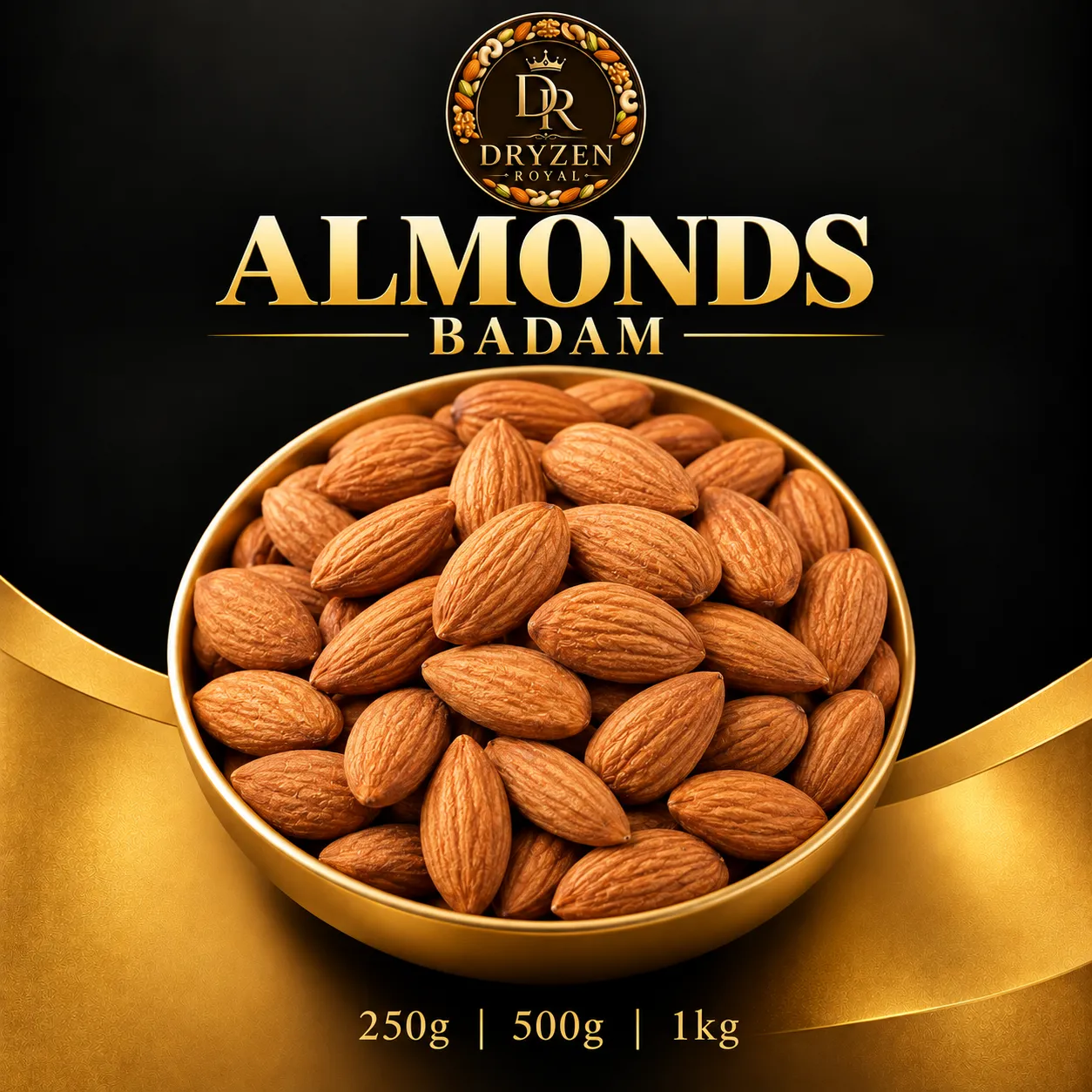
Planning your next tea-time bake? Explore Almonds and the wider Dryzen Royal collection, and choose the format that suits your kitchen.
Bake almond palmiers on two uncrowded trays if your oven is small. Store almond palmiers only after they have cooled completely.
Yes. Grind it finely enough to distribute evenly; the skins add brown flecks but do not need to be removed.
The folds may have been loose or warm. Press the base gently together and chill before baking.
A light coating on both faces helps create the crust. Avoid a thick pile that can burn underneath.
Keep it covered in the refrigerator and follow the puff-pastry pack's handling guidance. Slice it while firm.
Questions about this article?
Email us and we will get back to you.
Explore more
