- 100% Natural
- Premium Quality
- No Preservatives
- Fresh & Healthy
Understand almond flakes, slivers, chopped almonds and ground almonds so you can choose the right texture for desserts and everyday cooking.
When comparing sliced vs slivered almonds, look at the shape first. Sliced almonds are thin flakes; slivered almonds are narrow sticks. Both can add crunch, but they sit differently on a cake, in granola or over a bowl of kheer. Choosing the right cut is mostly about texture, presentation and how the recipe cooks.
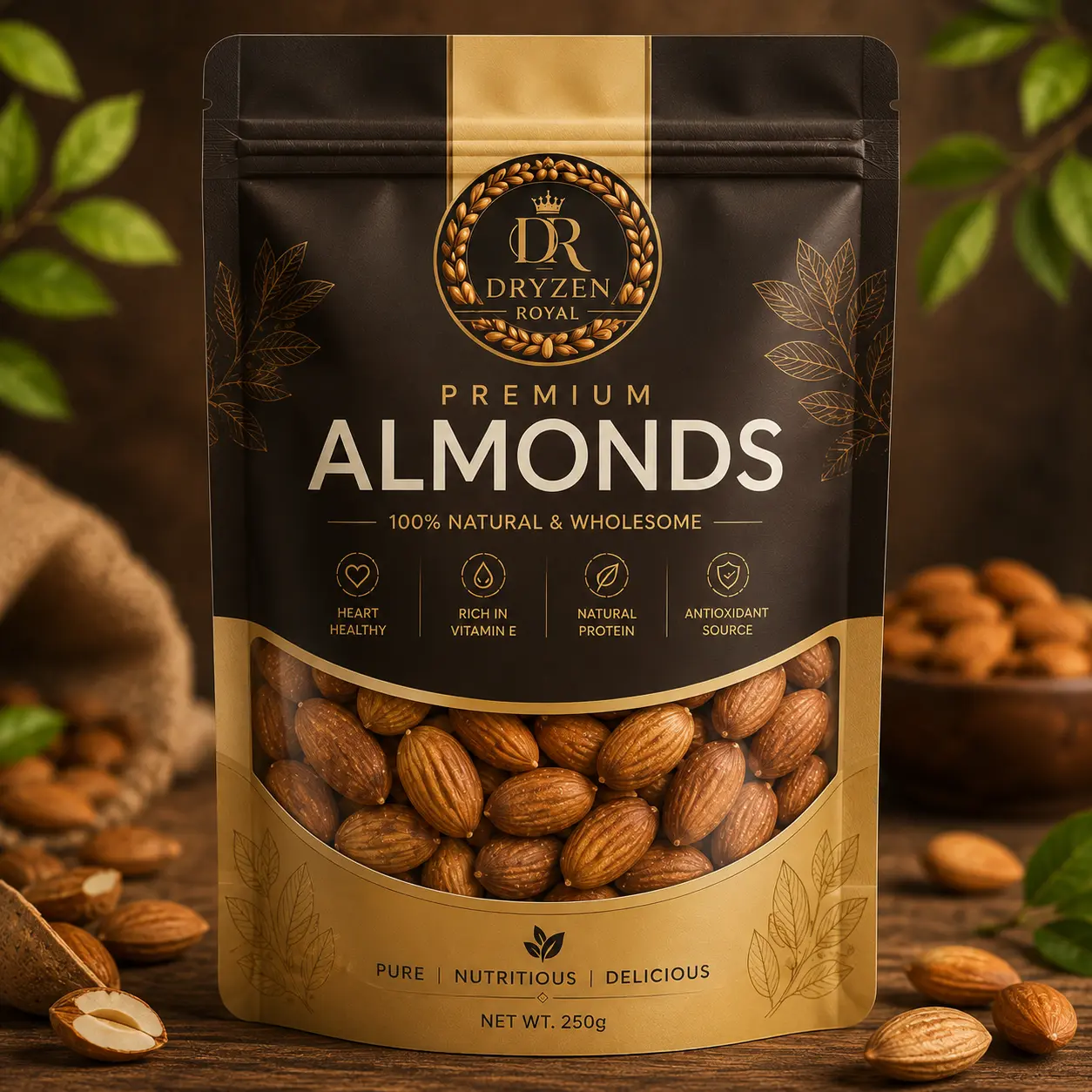
The Almond Board’s guide to almond forms distinguishes slices or flakes from slivers and other cuts. Use these names when reading a recipe or asking a seller what is inside a packet.
| Form | Appearance | Useful starting point |
|---|---|---|
| Sliced or flaked | Thin, flat pieces | Cake tops and delicate garnish |
| Slivered | Narrow sticks | Granola and toppings needing a more noticeable bite |
| Chopped | Irregular small pieces | Cookie dough and mixed fillings |
| Ground | Fine particles | Recipes specifically designed for ground almonds |
| Whole | Intact kernels | Snacking or preparing a chosen cut |
These are suggestions, not rigid rules. A recipe’s instructions take priority, especially when almonds form part of the batter rather than a finishing garnish.
Blanched almonds have the brown skin removed. Natural or skin-on almonds retain it. You can encounter more than one cut in either style, so “blanched” does not automatically mean sliced or ground.
Skin-on slices have a brown edge that stands out against pale desserts. Blanched pieces give a more uniform pale appearance. Neither is automatically the correct choice for every dish. Think about whether you want the contrast to be visible, and check the form specified in the recipe.
Kheer and sheer khurma: thin flakes make a light finishing garnish, while slivers produce a more distinct bite. If the nuts cook in the milk, their texture changes; decide whether you want that softer texture or prefer adding a small amount at serving time. See our sheer khurma guide for a complete dish.
Barfi and halwa: chopped nuts distribute easily through a mixture. A few flakes on top can create a different appearance without requiring whole kernels in every serving. Avoid assuming that a topping amount can replace the ground nuts used as a recipe’s base.
Cakes: flakes can cover a surface with relatively thin pieces. Watch exposed nuts during baking because they can darken before the middle of a cake finishes cooking. Follow the recipe’s temperature and placement instructions, and check your oven rather than relying only on a timer.
For a loose garnish, slices and slivers are often interchangeable if you accept a different appearance and bite. For a filling or batter, a change can affect distribution and texture. Ground almonds are not a direct replacement for flakes in every recipe, and almond flour is not a universal substitute for wheat flour.
Where possible, substitute by weight rather than by cup. Thin flakes and thicker pieces occupy space differently, so two cups of different cuts need not weigh the same. If the recipe lists only volume, use the specified form or choose a recipe with weights rather than inventing a precise conversion.
Check whether a pack is plain, roasted, salted or sweetened. A salty snack product may be unsuitable for a delicate dessert even if the cut looks right. Handle flakes gently if you need an attractive finish, since stirring and transport can break them.
Buying pre-cut almonds is useful when a uniform, thin finish matters. Do not try to shave small, hard kernels against an unstable surface merely to imitate a commercial cut. A coarser chopped garnish may suit the dish, or you can buy the specified form.
Check the current almond listing for the form actually sold; availability of sliced or slivered almonds should not be assumed. If the recipe involves soaking rather than a particular cut, our soaked and raw almond comparison addresses that separate question.
The terms generally describe thin, flat almond slices. Check the packet for skin-on or blanched form and whether seasoning has been added.
Yes, as a garnish if you prefer their more noticeable bite. The appearance and texture will differ.
No. Blanched refers to skin removal. Roasting is a separate processing step.
Questions about this article?
Email us and we will get back to you.
Explore more
