- 100% Natural
- Premium Quality
- No Preservatives
- Fresh & Healthy
Explore chocolate and dry fruit pairing with almonds, cashews, figs and apricots. Build a balanced tasting plate and choose a gift assortment with confidence.
Chocolate and dry fruit pairing is easiest when you balance sweetness, intensity and texture. You do not need a large hamper or expert tasting vocabulary to begin: one chocolate and two contrasting nuts or dried fruits can make an interesting plate. Use this guide to choose combinations, compare flavours without overwhelming your palate and plan a gift that matches the recipient's preferences.
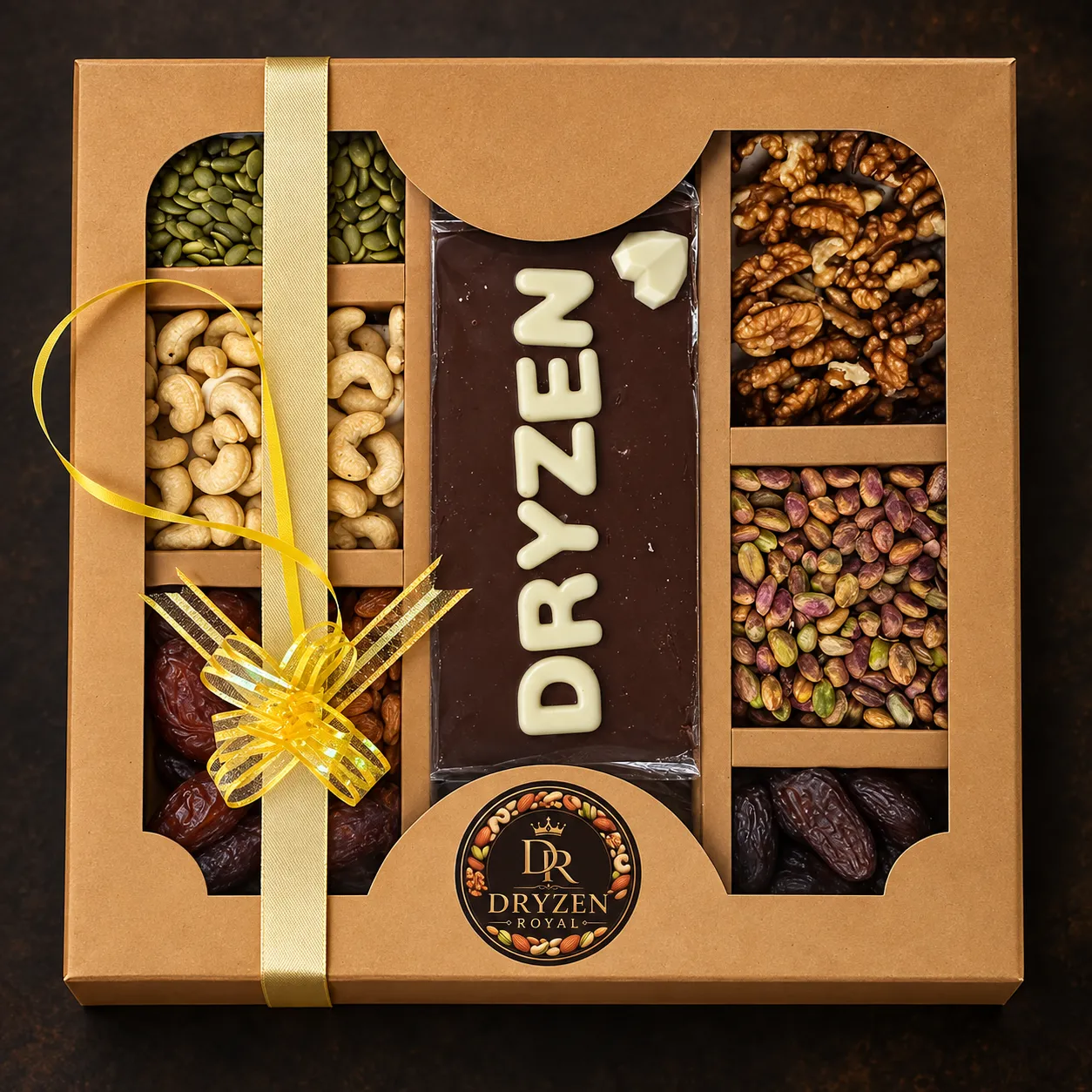
Choose a familiar chocolate first. Milk chocolate usually offers a sweeter, creamier starting point, while many dark chocolates taste more intense and less sweet. White chocolate gives a sweet, milky profile without the cocoa-solids flavour of dark chocolate. Read the ingredients because fillings, coatings and flavourings can change the experience. Cocoa percentage is useful context, but it does not tell you everything about sweetness or quality. A chocolate you enjoy on its own is a more sensible base than one chosen only for a fashionable label.
First, compare intensity: a delicate cashew can disappear beside a very bitter chocolate, while a toasted almond may remain noticeable. Second, choose a texture contrast, such as a smooth chocolate square with a crisp nut or chewy dried apricot. Third, think about sweetness. Pairing sweet chocolate with very sweet dried fruit can be pleasant in small bites, but a plain nut provides a useful break. These are starting ideas, not rules. Taste a small combination before assembling a large board or ordering an assortment for someone else.
Almonds offer a firmer crunch and a more assertive nut flavour, particularly when roasted. Cashews usually give a softer bite and milder taste. Put a small piece of milk chocolate next to one nut and try them separately before tasting them together. Unsalted nuts make a clear first comparison; lightly salted varieties can provide a different balance. Avoid heavily spiced nuts for the initial experiment because the seasoning can overshadow both ingredients. This chocolate and dry fruit pairing works well for people who prefer familiar, gently contrasting flavours.
A small piece of dried fig adds chew and tiny seed texture beside smooth dark chocolate. Dried apricot offers a different fruit character that may seem brighter or more tangy, depending on the variety and processing. Cut fruit into bite-sized pieces with clean utensils and check for any hard stems or pits before serving. Start with less fruit than chocolate, then adjust. Explore dried figs and dried apricots to compare available pack options rather than assuming all dried fruit has identical sweetness.
Plain pistachio kernels offer colour and texture against white chocolate. Because the chocolate is usually quite sweet, use modest amounts of any additional dried fruit. A little chopped apricot can be a more manageable starting point than a large pile of raisins. Taste the individual ingredients first, particularly if the pistachios are salted. Choose kernels for easy serving and keep any shell-on nuts in a separate bowl. The goal is a clean, enjoyable bite, not a competition to include the greatest number of ingredients.
Choose two chocolate styles and three accompaniments. Set out small portions in separate groups so ingredients do not lose their identity. Taste the milder chocolate first, followed by the stronger one, with water available between combinations. Then ask each person to choose one favourite combination and one they would change. You can make a simple note such as creamy with crunch or dark with chewy fruit. This turns chocolate and dry fruit pairing into a useful comparison instead of a crowded plate where every bite tastes similar.
Plan around the occasion. A short tasting after dinner needs less food than a snack table that is the main attraction. Start with small bowls and refill from covered packs instead of putting everything out at once. Use separate spoons or tongs for different components. Keep decorative ribbons and non-food materials away from exposed ingredients. If serving wrapped chocolates, leave the original wrapper information accessible. A tidy tray with room between the ingredients usually shows the assortment more clearly than a densely stacked arrangement that hides what is included.
Ask whether the recipient prefers creamy, dark, fruity or nut-focused flavours. Then check the product's actual assortment, net contents and packaging rather than judging only by the photograph. A compartment box makes the components visible and easy to share, but it does not by itself guarantee separation from allergens. See the chocolate and dry fruit combo gift box or chocolate gift box, and confirm current fillings before ordering. Availability, personalisation and delivery arrangements should be checked for the specific order.
Follow the manufacturer's storage directions and avoid direct sunlight, a warm car or a position beside the stove. Temperature changes and moisture can affect appearance and texture; Callebaut's chocolate storage guidance discusses fat and sugar bloom caused by unsuitable storage. A mixed gift can include items with different needs, so check the individual wrappers. Bring out a sensible serving quantity and keep the remaining products correctly stored. Do not assume that every visible change is harmless or that a damaged wrapper can be ignored.
Chocolate may include milk, soy or nuts, and dried fruit may contain added ingredients or preservatives. Read the specific labels and ask about cross-contact when an allergy is relevant; a divider in a gift tray is not an allergy control. Keep the recipient's preferences separate from unsupported claims such as suitable for everyone or sugar-free. Chocolate and dry fruit pairing is about enjoyment and personal taste. A clearly described assortment and an appropriate serving plan are more helpful than promises that cannot be checked.
After your first plate, change only one ingredient: replace almonds with cashews, swap figs for apricots or compare two chocolate styles with the same nut. You will learn more than by changing the entire selection. Save the combinations you enjoyed and use them when choosing a future gift. For arranging a larger spread, read our dry fruit platter guide and keep this chocolate and dry fruit pairing method as your starting point.
Dried figs, apricots and roasted almonds are useful starting combinations. Taste small portions because the chocolate and fruit can vary in intensity and sweetness.
No. Cocoa percentage is only one factor. Choose a chocolate whose sweetness and flavour work with the selected nuts or fruit.
They can be served separately for a tasting. This lets guests compare combinations and keeps the original ingredient information easier to follow.
No. Ask about ingredients and handling when allergies matter; physical dividers alone do not establish an allergen-safe product.
Fasih Frankly
SEO Expert and eCommerce Specialist. Shopify, eBay and online selling.
Questions about this article?
Email us and we will get back to you.
Explore more
