- 100% Natural
- Premium Quality
- No Preservatives
- Fresh & Healthy
Choose between a compartmented gift box and a multi-part hamper by looking at how the recipient will use it, what it contains and how it will travel.
Choosing a dry fruit gift box vs hamper is mainly a question of presentation and use. A compartmented box brings a selection together in one container. A hamper may combine jars, boxes or other separately packed items into a larger gift. Neither name tells you the total food weight, exact contents or whether the gift suits the recipient.
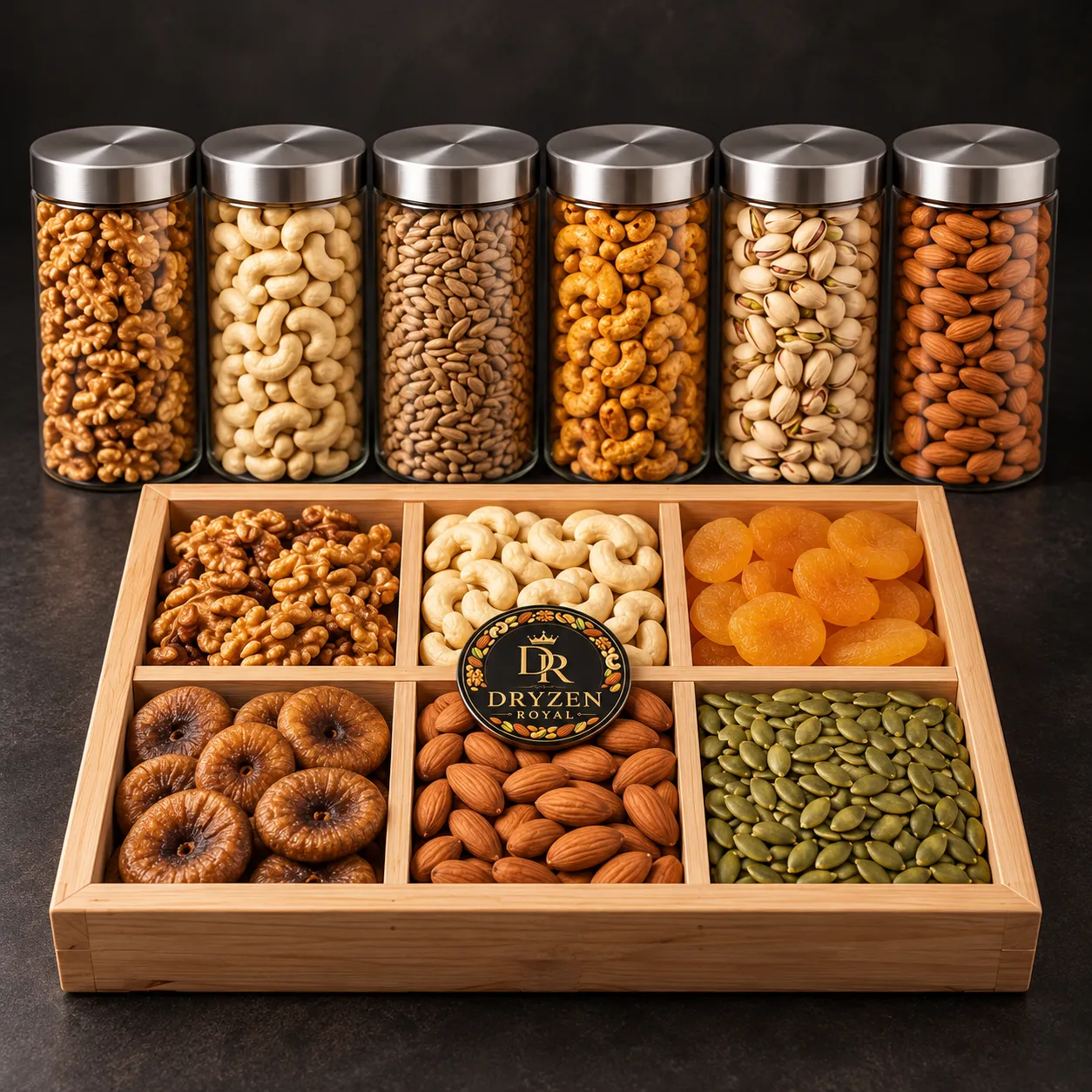
Start with the person receiving it, then compare the confirmed contents and practical details. A compact gift with the right ingredients can be a better fit than a larger arrangement chosen only for its photograph.
| Question | Compartmented gift box | Multi-part hamper |
|---|---|---|
| How is it arranged? | Several sections within one main box | A combination of containers or gift components |
| What should I check? | Section fillings, closure and net food weight | Contents of every component and combined net food weight |
| How might it be used? | Opened as a single selection for sharing | Individual components may be opened separately |
| What affects transport? | Dimensions, closure and protective packing | Number of components, stability and protective packing |
These are format comparisons, not promises that every box or hamper has the same packaging. Confirm the actual product specification before choosing.
For a short host visit, one compact box can be easy to hand over and place on a table. For a household that prefers opening one item at a time, a hamper with separate containers may be more convenient. Ask whether the containers are actually sealed individually; visual separation does not prove separate sealing.
Also consider storage space. A decorative arrangement may look impressive in a photograph but be awkward on a small desk or kitchen shelf. Product dimensions matter when you need the gift to fit a bag, cupboard or presentation area.
List the ingredients and edible quantities side by side. Wooden boxes, jars, handles and decorative wrapping contribute to presentation and cost, but they are not part of the food quantity. A quoted shipping weight may include all of them.
If one seller gives a total net food weight and another gives only an outer-box size, you do not yet have a useful weight comparison. Ask for the missing information rather than estimating from the photo. Our price-per-100g guide helps with the food calculation; presentation can then be considered separately.
Write a short list of preferred ingredients and ingredients to avoid. Ask whether the photographed assortment is the current one and whether a substitution requires confirmation. Roasted, salted, flavoured and plain versions of the same nut can create different gifts.
If the recipient has an ingredient restriction, obtain the actual ingredient and handling information. Separate jars or compartments should not be treated as proof that products are suitable for someone with an allergy. Choose based on confirmed information rather than the appearance of the arrangement.
Family visits: prioritise familiar ingredients and an arrangement that is easy to share. Birthdays: consider the recipient's favourites and whether a message card is available. Wedding gifts: check presentation dimensions and the exact handover plan rather than assuming a larger gift is always more appropriate.
Corporate gifts: use a written specification so multiple recipients receive the agreed format and contents. Confirm any branding, message cards and dispatch requirements before placing the order. For a larger project, the corporate gifting checklist covers order planning.
The catalogue includes a nine-compartment wooden box, which presents an assortment within one main box. It also includes the dry-fruit jars and wooden-box hamper, whose description shows six jars paired with a six-section wooden box. Confirm current fillings and weights for either product.
If you prefer a basket-style presentation, compare the wrapped dry-fruit basket as a separate option. The words basket, box and hamper describe presentation; they should not be used to infer a standard quantity or a fixed ingredient list.
Provide the correct address, recipient contact and required date, then obtain the seller's current delivery guidance. If someone else will receive the gift, explain how it should be stored until the occasion. Do not leave a food gift in a hot vehicle while completing other errands.
Ask about the transport packaging, particularly when a hamper has several components. A decorative cover is not the same as protective transit packing. Confirm any personalisation and its effect on preparation time before finalising the order.
Record the occasion, recipient preferences, confirmed filling list, net edible weight and delivery requirements. Compare both formats against that same brief. Add the price only after the contents are clear so you know what the comparison includes.
For more help choosing the internal layout, read the gift-box buying guide. The right dry fruit gift box vs hamper decision is the one that delivers the agreed food in a presentation the recipient can comfortably use.
No. Compare the confirmed net edible weight and contents. Packaging size and the word hamper do not establish the amount of food.
That depends on the product. Ask for the actual packaging details rather than assuming separate containers mean separate seals.
Choose the format that fits the agreed contents, presentation, budget and delivery plan. A clear written specification matters more than the format name.
Questions about this article?
Email us and we will get back to you.
Explore more
