- 100% Natural
- Premium Quality
- No Preservatives
- Fresh & Healthy
A loose savoury rice porridge with softened makhana, ginger and small vegetables, finished to taste.
Makhana rice congee is a loose savoury rice porridge with ginger, small vegetables and fox nuts that soften during the final simmer. It is inspired by congee-style rice bowls, with makhana added as a home variation. The texture is deliberately soft and spoonable, without claiming that the dish treats illness or suits every dietary need.
The rice cooks in plenty of liquid until the grains begin breaking down. Makhana goes in later so you can control how much it softens. Makhana rice congee is useful as a simple warm meal when you want mild flavour, with stronger seasonings offered separately at the table.
The quantities serve three to four as light bowls. Allow 10 minutes for preparation and about 50–70 minutes for simmering, depending on rice type and preferred texture. Use a heavy saucepan with room above the liquid, a wooden spoon and a separate small pan for refreshing the fox nuts.
Use a rice you know, and note that long-grain rice may remain more distinct than a starchier short-grain variety. Both can make a soft bowl, but they will not look identical. Check stock and sauces for allergens and seasoning. The measured base does not need a strong salty sauce to cook properly.
Rinse the rice according to its packaging or your normal preparation method. Put it into the saucepan with 1.2 litres water or stock, ginger and the tiny carrot cubes. Bring to a boil, then reduce to a low simmer. Stir and partly cover.
Leave enough of a gap for steam to escape and watch for foaming at the beginning. A fully closed small pan can boil over. Stir regularly along the base so rice does not settle and catch. As the grains soften, they become more likely to stick.
The congee thickens as rice starch moves into the liquid and water evaporates. Add hot water in 50–100 ml steps if it becomes too thick before the rice is soft. The starting ratio is a guide, not a fixed final volume for every rice and saucepan.
Do not raise the heat sharply to speed the process. A strong boil can dry the edges and scorch the base while the grains still need time. This soft rice bowl is a slow simmering recipe, so plan it for a period when the pan can be checked regularly.
While the rice cooks, put makhana into a dry frying pan over medium-low heat for 4–5 minutes, stirring until dry and lightly crisp. Inspect for hard or abnormal pieces. Break the largest fox nuts in half so they soften at a similar rate to the smaller ones.
This step does not mean they will stay crunchy in the bowl. Once added to liquid, they absorb it and soften. If you want a contrasting garnish, reserve a small separate spoonful and add it only to individual servings. Do not expect the entire simmered batch to retain snack texture.
When the rice is very soft and the liquid looks lightly creamy, usually after 40–55 minutes, add the refreshed fox nuts and teaspoon of oil. Simmer for another 10–15 minutes, stirring gently. Test a piece to decide whether its centre is soft enough for the texture you want.
The finished consistency should flow slowly from a ladle. If it stands in a thick mound, add hot water. If too thin, simmer uncovered briefly while stirring. Makhana rice congee continues to thicken as it sits, so stop a little looser than the final serving texture.
Add salt only after tasting a cooled spoonful, especially if stock was used. Fold in some sliced spring onion and keep the rest for serving. The optional sesame oil adds aroma in a small quantity; too much can dominate the mild rice and fox nuts.
Offer soy sauce or chilli oil separately, checking their ingredients. Do not automatically pour several sauces into the whole pan. A mild base gives each person control, and it keeps the rice flavour clear. This is a serving choice, not a claim that a particular seasoning is medically necessary.
Makhana rice congee can be served with cooked greens, a small portion of beans or another safely prepared side. Keep wet toppings modest so the bowl does not become diluted. A few herbs or spring onions provide freshness without requiring a complicated garnish.
Use a deep bowl and a spoon. The rice is meant to be soft, so a fork is less practical. If serving children or anyone sensitive to hot food, let an individual portion cool to a comfortable eating temperature while keeping the main batch appropriately handled. Do not serve directly from a vigorously bubbling pan.
Cooked rice needs prompt cooling and refrigeration when not eaten immediately. Do not leave a large pot on the counter for hours. Divide leftovers into shallow portions so they cool more quickly, and refrigerate promptly using safe household practice.
For this rice-based dish, a conservative plan is to use refrigerated leftovers within 24 hours and reheat only once. Heat until steaming hot throughout, with 74°C as a useful thermometer target. Add water during reheating because the stored mixture will be much thicker.
Put only what you intend to eat into a saucepan. Add a little water and stir over gentle heat until evenly hot. A microwave can also work with a suitable covered, vented container, stirring to remove cold spots. Check the centre rather than judging only the hot edges.
Do not mix a cold stored portion into a warm serving bowl and assume it has reheated. Keep the heating stage separate and complete. Makhana rice congee is easier to manage when containers are labelled with the cooking date and divided by meal.
A gritty rice centre needs more cooking and liquid. A burnt smell from the base means the pan caught; transfer only the unburnt upper part if appropriate and do not scrape the scorched layer into it. A watery bowl with firm makhana may need a little more gentle simmering rather than more rice.
If the whole mixture becomes gluey, it may have reduced too far or been stirred very aggressively after the grains broke down. Add hot water and fold gently. Record the rice type and final liquid adjustment for the next batch.
Makhana rice congee is most dependable when the rice is given enough time, the fox nuts are added deliberately and leftovers are handled promptly. Keep the flavour simple, the consistency loose and the serving temperature comfortable, and the bowl becomes a practical addition to a home menu.
For a blended vegetable bowl rather than rice porridge, explore smooth makhana tomato soup. The textures in dry makhana snack ideas are different because the fox nuts remain dry.
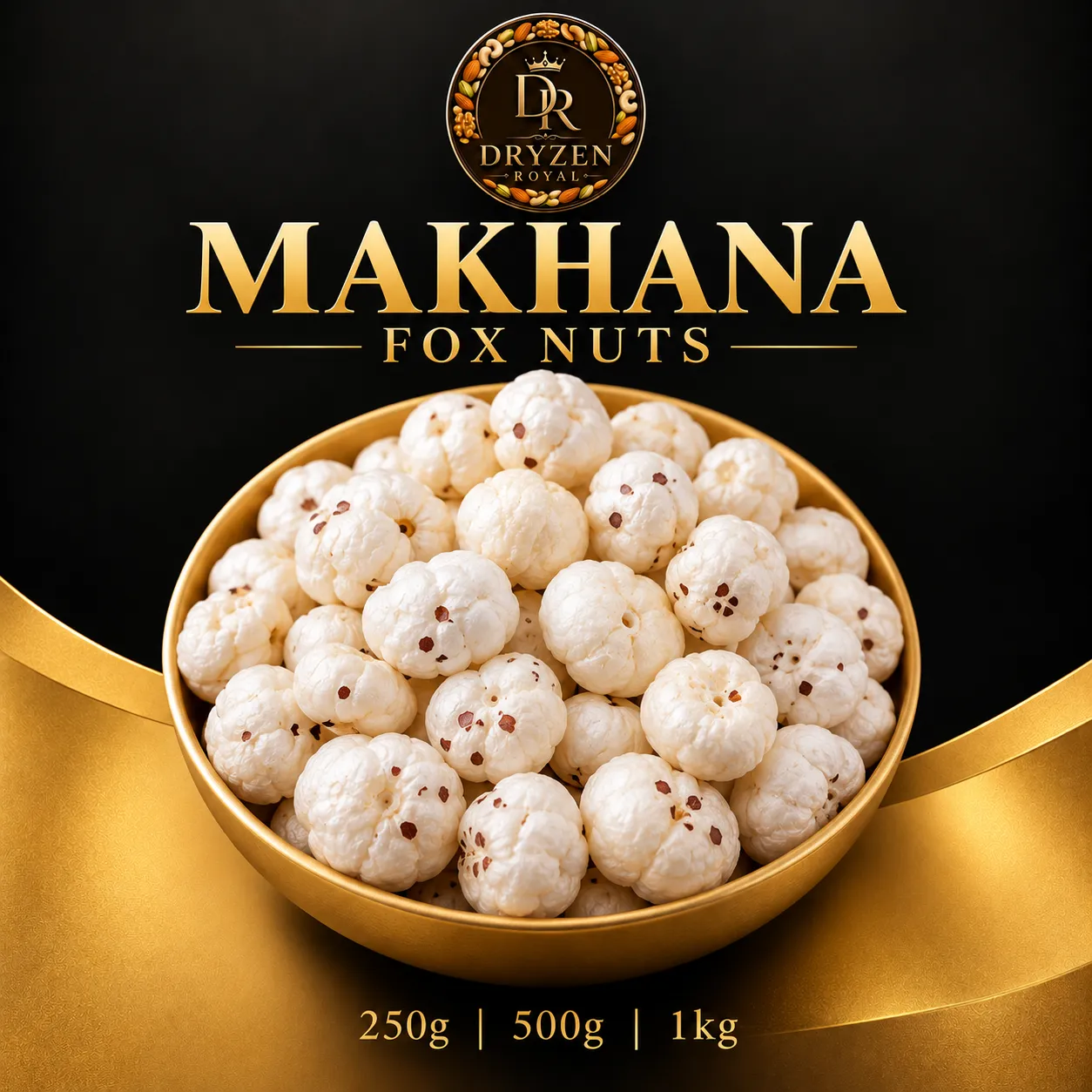
Explore Makhana at Dryzen Royal and choose plain fox nuts for a gentle savoury cooking project.
No. It absorbs liquid and softens. Reserve a little dry topping separately if you want contrast.
Not reliably. Grain type affects breakdown and liquid needs; cook until the rice is properly soft.
The rice starch and absorbed liquid set more firmly. Add water while reheating and stir until evenly hot.
Cool promptly in shallow portions, refrigerate and use within 24 hours as a conservative plan, reheating only once.
Questions about this article?
Email us and we will get back to you.
Explore more
