- 100% Natural
- Premium Quality
- No Preservatives
- Fresh & Healthy
A home variation inspired by upma, using coarsely broken makhana rather than a semolina base.
Makhana upma is a home breakfast variation that uses coarsely broken fox nuts with vegetables and a simple tempering. It is inspired by the soft, savoury style of upma, but the base is not semolina. The texture is lighter and less uniform, with small pieces that absorb moisture quickly.
The key is adding water gradually after the vegetables are nearly cooked. Fine makhana powder can become a paste, while very large pieces stay uneven. Makhana upma is easiest to manage when the fox nuts are dry-toasted, cooled and broken into a coarse crumb before entering the pan.
Allow twenty-five to thirty minutes from preparation to serving. You need a wide pan with a lid, a dry pan or the same pan for toasting, and a processor or a bag and rolling pin for breaking the fox nuts. A broad spoon helps fold without crushing the final mixture.
Choose plain fox nuts rather than a flavoured snack pack. A seasoning coating can burn during tempering or make the dish unexpectedly salty. Check other ingredient labels for allergens. The measured base does not require nuts or dairy, but additions should be described accurately if you choose them.
Put makhana into a dry pan over medium-low heat and stir for five to seven minutes, until crisp and dry through the centre. Remove unusually hard or abnormal pieces. Break one carefully once cool enough to assess whether it has become crisp.
Transfer to a plate and cool before processing. Warm fox nuts can create steam in a closed grinder. The dry preparation helps you control the final crumb rather than trying to crush soft pieces after water has already been added.
Pulse briefly in a processor or crush gently in a suitable food-safe bag with a rolling pin. Aim for a mixture of small crumbs and pieces roughly the size of coarse breadcrumbs. Do not run the machine until everything becomes fine powder.
A little natural variation is fine. Very large pieces can be broken separately and returned. Keep the prepared crumb dry while the vegetables cook. Makhana upma depends on this coarse texture to remain spoonable rather than turning into a smooth porridge.
Heat oil in the wide pan over medium heat. Add mustard seeds and allow them to begin popping, using a suitable lid or splatter protection if needed. Add cumin and optional curry leaves, then lower the heat before they darken.
Add onion and ginger and cook for five to seven minutes until softened. Do not let the small seeds become black while waiting for a large onion piece to cook. If the pan seems too hot, remove briefly from the heat and stir.
Add tiny carrot cubes and peas with about 50 ml of the measured hot water. Cover and cook until nearly tender, usually five to eight minutes depending on size and product. Follow frozen-pea packaging guidance where it is more specific.
Check carrot with a knife. The makhana stage is short and should not be used to finish large raw vegetable chunks. If more time is needed, cook the vegetables now rather than adding fox nuts and hoping the whole pan catches up together.
Add prepared makhana and stir gently through the vegetables. Add about another 75 ml hot water, then fold and cover for two minutes. The pieces should absorb moisture and soften without sitting in a puddle.
Lift the lid and assess. Add the remaining water a tablespoon or two at a time only if needed. Different fox nuts and crumb sizes absorb differently. Makhana upma should be soft and loose enough to spoon, not dry crumbs or a wet paste.
Turn off the heat once the pieces are tender and the pan is evenly moist. Leave covered for two minutes, then fluff gently. Add lemon juice and coriander. Taste a cooled spoonful before adding final salt and pepper.
Do not keep stirring hard to make the mixture look uniform. That can break softened pieces and create a denser texture. A slightly irregular crumb is expected in this variation and distinguishes it from a fine semolina version.
Makhana upma can be served with plain yogurt if suitable, a small tomato relish or lemon wedges. Put wet accompaniments beside it rather than mixing everything into the whole pan. The contrast is clearer when each diner adds a little at the table.
Serve in warm shallow bowls. The mixture thickens as it stands, so a long uncovered wait can make it dry at the surface. A small splash of hot water and a gentle fold can restore a waiting portion, but repeated reheating is not a substitute for serving promptly.
A little chilli can be added during the onion stage if your table prefers heat. Start with a measured amount and offer more separately. Too many strong spice powders can hide the mild fox nut flavour.
If adding cashews, peanuts or another garnish, toast separately and account for the extra allergen and quantity. Do not present such additions as part of the plain base. Makhana upma is useful precisely because the core method is simple enough to understand before variations.
Toast and break makhana ahead, then cool and keep dry in a sealed container for a short plan. Chop vegetables and refrigerate appropriately. Combine and cook near breakfast rather than leaving a completed pan lukewarm for a long period.
For a larger family, use a wide pan so the moisture distributes evenly. Doubling in a narrow saucepan creates a deeper mass that is harder to fold without crushing. Keep the first batch small enough to observe how your fox nuts absorb water.
Dry pieces need a small amount of hot water and a short covered rest. A gummy paste may come from grinding too finely or adding too much water. Those are opposite problems, so more liquid is not always the answer.
If vegetables remain firm, they needed more cooking before the crumb was added. If the flavour is bitter, check burnt tempering seeds. More lemon can brighten a mild dish but cannot remove a scorched taste.
Refrigerate leftovers promptly in shallow covered portions and use within two days as a conservative household plan. Reheat with a little water until thoroughly hot, using 74°C as a useful thermometer target. The texture will soften further.
This breakfast variation becomes dependable when the dry crumb is coarse, the vegetables are nearly tender and water is added in small stages. Record the final water amount for your product rather than treating one number as universal for every fox nut pack.
For a dry snack texture instead, explore crisp makhana snack methods. For another breakfast format with a separate dough wrapper, see makhana stuffed paratha.
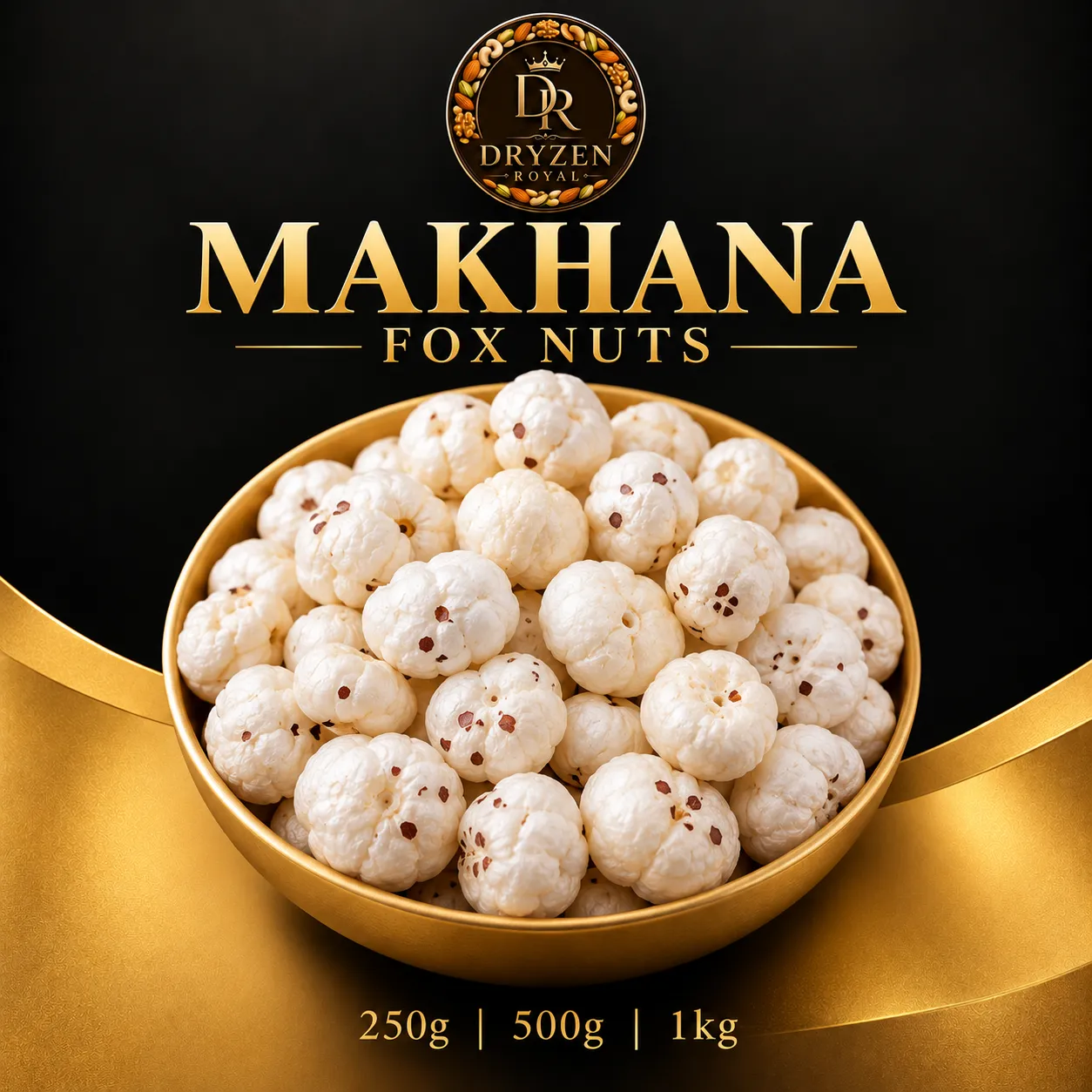
Explore Makhana at Dryzen Royal and choose plain fox nuts for a measured savoury breakfast.
No. It is a home variation using coarsely broken makhana as the base.
Fine powder can become pasty when hydrated. A coarse crumb keeps more texture.
Cook it nearly tender first; the final fox-nut stage is short.
Add a little hot water, cover briefly and fold gently rather than pouring in a large amount at once.
Questions about this article?
Email us and we will get back to you.
Explore more
