- 100% Natural
- Premium Quality
- No Preservatives
- Fresh & Healthy
Six small muffin-shaped pastry coils with chopped pistachios, made from one measured sheet of puff pastry.
Pistachio cruffins are muffin-shaped pastry coils with a thin pista filling and visible laminated layers. This home shortcut uses ready-made puff pastry rather than a fully homemade croissant dough. The result is a crisp-edged small bake, best enjoyed while the layers still have contrast.
The shaping works by rolling wide strips, cutting the rolls open lengthways and coiling the exposed layers into a tin. Keep the filling light so the pastry can expand. Pistachio cruffins are more manageable when the dough stays cool and the muffin cavities are not packed tightly.
Allow twenty-five minutes for preparation, twenty minutes for chilling and about twenty-five to thirty-five minutes for baking. Use a six-cavity metal muffin tin or six spaces in a larger tin. You need a ruler, sharp knife, rolling pin and pastry brush.
Choose puff pastry intended for baking and thaw according to its packet. A sheet that is warm and greasy is difficult to cut cleanly. A sheet still frozen at the centre can crack when rolled. Work in short stages and return it to the refrigerator when needed.
Check pastry ingredients for wheat, dairy or other allergens. Pistachios remain an allergen whether chopped or ground. A sweetened pista spread is not an equal replacement for the dry filling because it adds moisture, sugar and fat in different proportions.
Inspect kernels for shell fragments and chop into small pieces, roughly the texture of coarse sand. A few tiny pieces are fine, but large halves can interrupt rolling and tear a thin pastry layer. Do not process continuously until the nuts become oily paste.
Mix pistachios with caster sugar and optional zest. Keep the softened butter separate for a thin spread. The filling should be ready before the pastry is rolled, so the sheet does not warm on the counter while you prepare nuts.
Lightly flour the work surface and roll pastry to about 24 by 36 cm, keeping an even thickness around 3 mm. Lift occasionally to prevent sticking. Brush away excess flour before adding butter.
Spread the 15 g softened butter very thinly over the rectangle, then scatter the dry filling evenly. Press lightly with your palm, not a heavy rolling-pin pass that crushes the layers. Leave a narrow clear border at the edges to make handling cleaner.
Cut the rectangle lengthways into three strips, each about 8 by 36 cm. For each strip, start at one 8 cm end and roll along the 36 cm length to form a short log about 8 cm long. Keep it snug without squeezing out filling.
Chill the three logs for ten minutes if they feel soft. A clean cut depends on firm pastry. Use a straight downward knife motion rather than repeated sawing that pulls the coils out of shape.
Cut each log lengthways through its centre to make two pieces with exposed layered faces. You now have six short pieces. With the cut layers facing outward and upward, bend each piece into a small coil and tuck the loose end underneath.
The shape can be rustic. The important point is keeping some exposed layers rather than compressing the piece into a smooth ball. Put each coil into a lightly greased muffin cavity. Pistachio cruffins need room around the sides for expansion.
Refrigerate the shaped coils for about twenty minutes. Heat the oven to 200°C conventional or about 180°C fan, unless the pastry packet recommends a different temperature. Have the oven fully ready before the cold tin enters.
Do not fill empty cavities with extra pastry scraps just to use every space. A second improvised thick shape may need different timing. Bake scraps separately as small pieces if suitable, and watch them independently.
Bake for twenty-five to thirty-five minutes, checking from about twenty-five. The upper layers should be golden and crisp. Lift one carefully once set enough to assess the lower pastry; a damp translucent centre needs more time.
If tops colour early, cover loosely with foil and continue at a slightly lower heat if needed. A very deep cavity can shield the base. Record the tin and pastry brand that worked rather than treating every muffin pan as identical.
Leave in the tin for five minutes, then loosen with a flexible tool and transfer to a rack. Hot sugar and butter can burn, so do not grab an exposed filling edge with bare fingers. A small spatula supports the coil better.
Pistachio cruffins become less fragile as the layers settle. Do not leave them in the tin until completely cold if melted sugar has collected around the base, because it may glue them in place. Prepare the tin well and check release gently.
Serve pistachio cruffins warm or at room temperature with plain tea or coffee. A light dusting of icing sugar is optional. A thick glaze or wet topping quickly softens the exposed pastry and hides the shaping.
For a mixed tea plate, one small coil can be divided if needed. Keep cream or fruit accompaniments separate. The bake is already rich in pastry, so a modest serving lets the pista flavour remain clear without an elaborate finish.
A flattened coil can mean the pastry was too warm or the shape too loose. A heavy wet centre can reflect too much filling, a tightly packed cavity or insufficient baking. More sugar on top does not correct those issues.
If filling falls out during shaping, remove loose bits from the tray or tin area before baking so they do not scorch. Next time, chop more finely and use the measured amount. Pistachio cruffins are easier to repeat with a thin even filling than a generous mound.
Prepare the dry filling ahead and keep sealed. Shape the pastry for a short refrigerated same-day plan, following the packet's handling guidance. If freezing unbaked coils, use the pastry manufacturer's recommendations and test a small batch before relying on it for an event.
Cool leftovers completely before sealing. For a short quality plan, enjoy within a day or two, using appropriate cool storage for your conditions. This is not a tested commercial shelf life. A brief oven warming can improve the surface, while repeated reheating dries the layers.
These pastry coils reward cool dough, a restrained filling and patient checking of the inner pastry. Keep a note of strip size, cavity depth and bake time so the next batch is shaped for your actual equipment rather than an imagined standard tin.
Compare pista paste and sweet cream before changing the filling. Use pan capacity and pastry depth when deciding whether your muffin cavities suit the shaped coils.
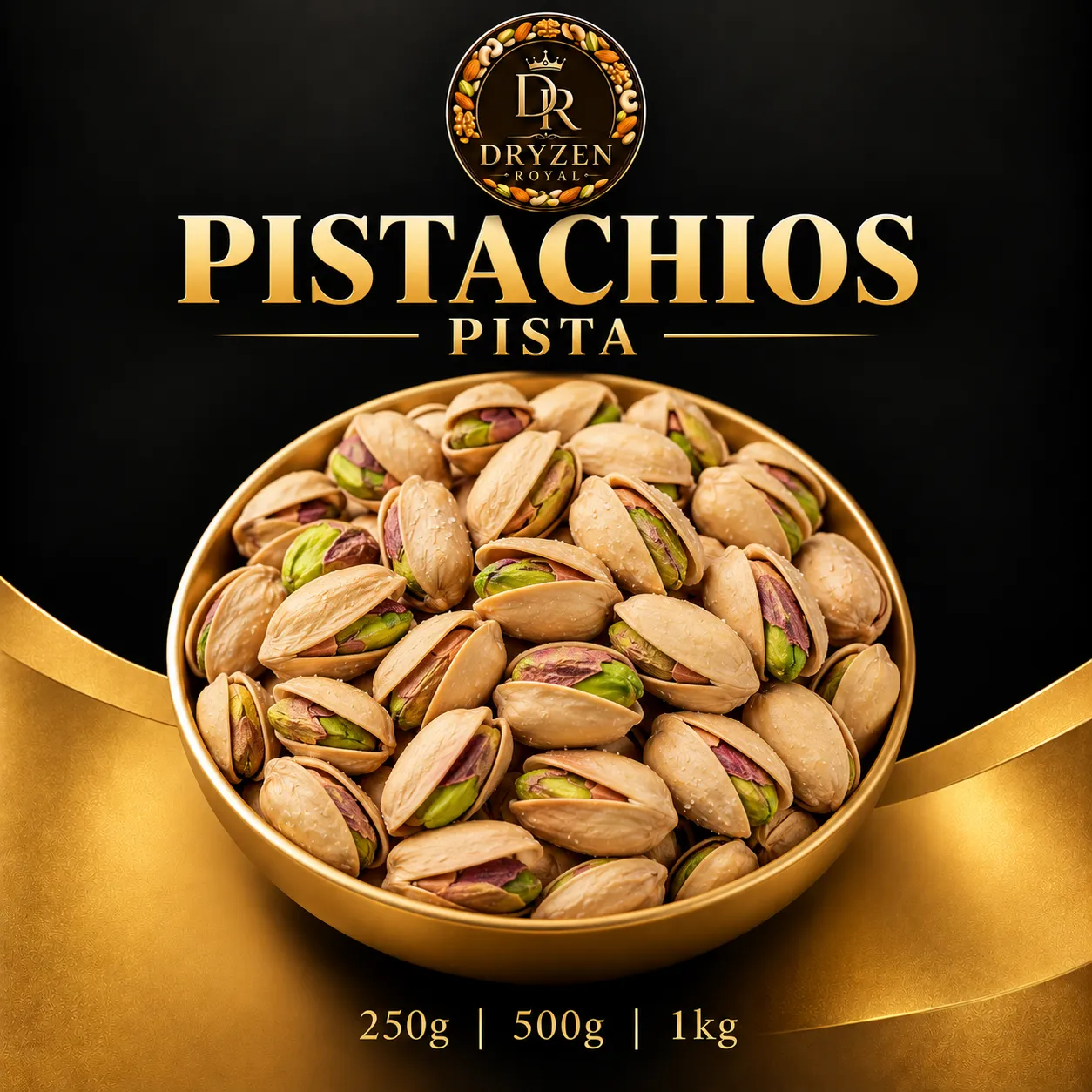
Explore Pistachios at Dryzen Royal and choose plain kernels for a small pastry project with a measured filling.
No. This version uses ready-made puff pastry as a practical home shortcut.
It exposes layers that can face outward when the pieces are coiled into the muffin tin.
Not reliably. It changes moisture, sugar and fat, which can affect expansion and the centre bake.
No. Check lower and inner layers for damp translucent dough before finishing.
Questions about this article?
Email us and we will get back to you.
Explore more
