- 100% Natural
- Premium Quality
- No Preservatives
- Fresh & Healthy
Understand the difference between pure nut paste, sweetened pistachio spreads and pastry cream so you can buy the ingredient your dessert needs.
For pistachio paste vs pistachio cream, the ingredient list matters more than the colour of the jar. A pure pistachio paste can be a concentrated nut ingredient. A sweetened cream may be a finished spread containing sugar, oils or milk ingredients. Products with similar names can behave very differently in a filling, frosting or dessert.
| Product | What to check | Typical role |
|---|---|---|
| Pure pistachio paste or butter | Whether the ingredients are only pistachios | A nut base to season or sweeten within a recipe |
| Sweetened pistachio paste | Nut content and added sweetener | A pastry ingredient with sweetness already included |
| Pistachio cream or spread | Sugar, fats, milk ingredients and nut percentage | A ready-to-spread sweet product |
| Pistachio pastry cream | The complete custard recipe and storage requirements | A prepared dessert filling |
The names are not a reliable universal formula. American Pistachio Growers explains that pistachio pastes can be sweetened or unsweetened, while nut butter is produced by grinding shelled nuts until their oil helps form a smooth paste.
First, the pistachio percentage. If declared, it helps explain how much of the product is nuts. Second, the sweetener. A sweet spread will contribute sugar to the recipe as well as pistachio flavour. Third, the added fats. These affect how a spread behaves and how it fits into a recipe already containing butter or chocolate.
Fourth, milk and other ingredients. A product called cream may contain milk powder, but the name alone does not establish its composition. Fifth, storage instructions. A shelf-stable unopened jar, an opened spread and a homemade custard need not have the same storage requirements.
As an example of a manufacturer's formulation, Bon Cream's pistachio spread lists pistachios alongside sugar, fats and milk ingredients. That illustrates why a cream cannot automatically be treated as pure nuts; other brands and recipes may differ.
If a recipe asks for a pure nut paste, it may be balancing sweetness and fat elsewhere. Replacing that ingredient with a sweetened spread can alter both balances. If the recipe asks for a ready-made pistachio cream, plain ground pistachios may produce a less sweet and less spreadable result.
Read the recipe's notes or its recommended product type before buying. “Pistachio filling” is too broad on its own: it could mean a nut butter, a chocolate-based mixture, a custard or a commercial spread. Knowing the intended consistency will prevent a costly guess.
Consider two hypothetical jars: one labelled 100% pistachio and another labelled 30% pistachio. A 100g portion would contain 100g and 30g of pistachios respectively. This is ingredient arithmetic, not a comparison of two Dryzen Royal products or a formula for correcting a recipe.
Adding more of the second jar to increase nut flavour also adds more of its other ingredients. Simply reducing the recipe's sugar may still leave the fat and texture different. For an important celebration bake, use the specified ingredient or make a small trial rather than improvising in the full batch.
Read the ingredient list for colouring and flavouring, and inspect the manufacturer's description of roasting and skin removal. A bright jar is not proof of a high nut percentage. Equally, a darker paste is not automatically unsuitable for baking.
Choose according to the flavour and appearance your recipe requires. If a photograph of the finished dessert is very green, check whether the recipe includes colouring before expecting plain nuts to give exactly the same result.
Whole nuts can be the starting ingredient for a homemade nut butter, but remove the shells and check the preparation. Plain, unsalted kernels give you more control over a sweet recipe than a seasoned snack product. A domestic processor may also produce a more textured result than a commercial paste.
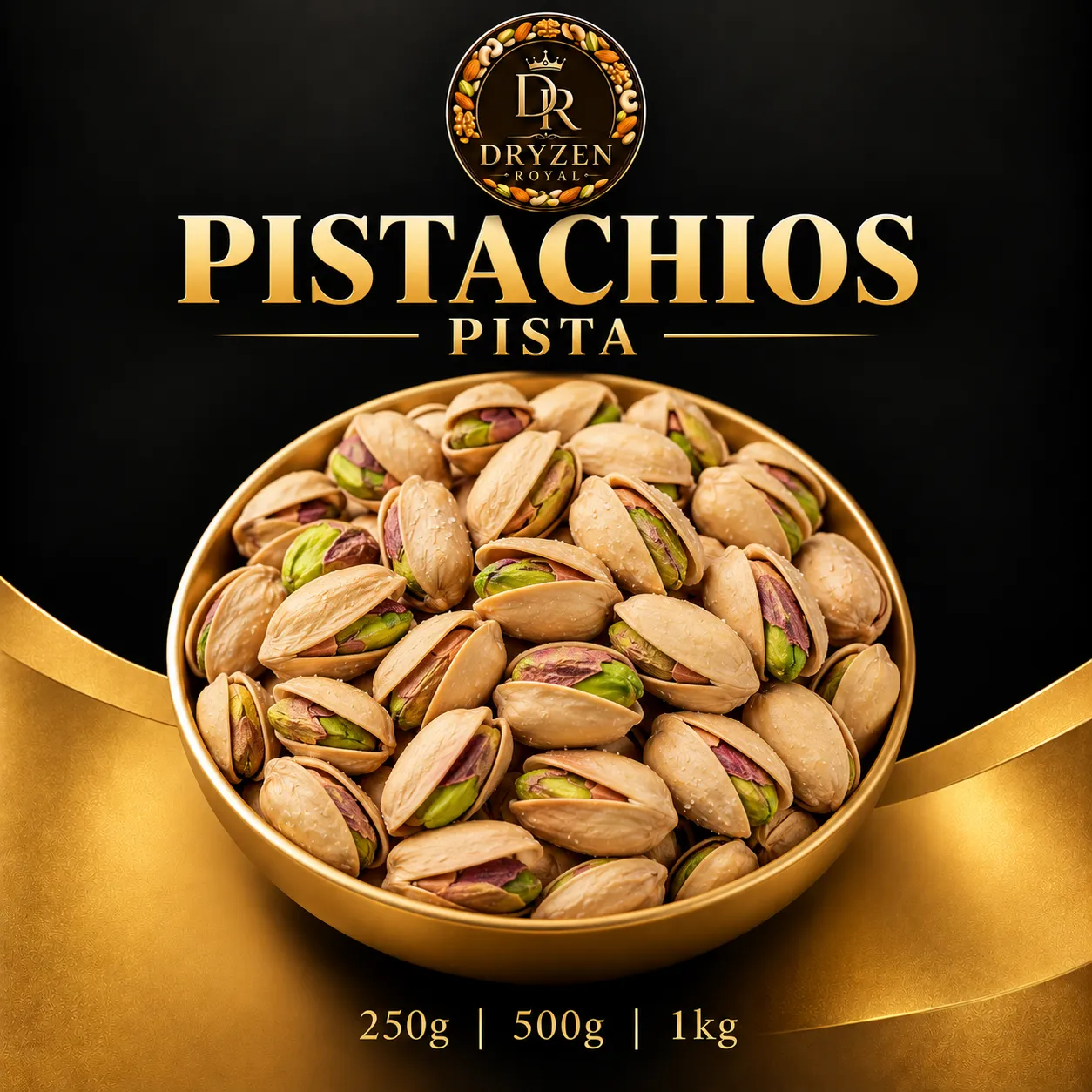
The current Dryzen Royal pistachio listing describes roasted, lightly salted pistachios. Check those details against your recipe rather than assuming the product is an unsalted pastry ingredient. This guide does not mean that ready-made pistachio paste or cream is stocked.
For buying by edible weight, read shelled versus in-shell pistachios. For a dessert pairing that uses nuts in their existing form, explore chocolate and dry-fruit pairings.
Before choosing between pistachio paste vs pistachio cream, write down the exact recipe, ingredient weight, required sweetness and texture. Compare those requirements with the label, then check price per usable weight. Follow the product's storage directions after opening and avoid applying a custard's instructions to a nut spread or vice versa.
No. Some pastes contain sweetener. Read the full ingredient list; use a product explicitly described as pure pistachio when the recipe requires it.
Not automatically. A cream may add sugar, fats and milk ingredients, so it can change the recipe's flavour and texture.
No. Colour alone does not establish nut content or quality. Check the declared ingredients and pistachio percentage where supplied.
Questions about this article?
Email us and we will get back to you.
Explore more
