- 100% Natural
- Premium Quality
- No Preservatives
- Fresh & Healthy
A small churned frozen dessert with a cooked yolk custard and plain ground pistachios.
Pistachio gelato is a churned frozen dessert with a milk-forward custard and finely ground pista. This home version uses egg yolks and an ice-cream machine, so its method is different from a moulded kulfi. The result depends on both the cooked base and the machine's freezing performance.
Plain unsalted kernels give you control over sweetness and seasoning. Sweetened pista spreads contain additional ingredients and are not an equal replacement in this formula. Pistachio gelato made from natural nuts may look muted rather than bright green, especially when the kernels retain some brown skin.
This makes around 650–750 ml before normal variation in churning volume. Check that your machine can handle the quantity, and freeze its bowl for the time stated by the manufacturer if required. Allow 30 minutes for cooking and cooling preparation, several hours for refrigeration and the machine's own churning time.
You need scales, a saucepan, whisk, heatproof bowl, thermometer and a shallow freezer container. The thermometer is particularly useful because a custard can move from smooth to scrambled if heat is not controlled. Prepare a cold-water or ice bath for the bowl before beginning.
This is a starting home formula, not a commercial stabilised gelato recipe. Milk fat, cream composition and the machine affect texture. Do not reduce sugar substantially on the first attempt: sugar contributes to freezing behaviour as well as taste. The recipe contains nuts, milk and eggs.
Check the kernels for shell fragments and remove any hard pieces. Grind with about 20 g of the measured sugar in short pulses until very fine. Stop if the machine becomes hot or the mixture turns into an uneven oily mass. A small processor may work better than a large empty bowl.
You can use a plain smooth pistachio paste if its only ingredient is suitable nuts, but match the nut weight and recognise that texture may differ. Do not substitute a white-chocolate pista spread or a sweet cream without recalculating the recipe. Keep the first batch as written for a meaningful baseline.
Put milk, cream and ground pistachios into the saucepan. Heat gently until steaming, stirring along the base. Remove from the heat, cover and leave for ten minutes. This gives the nut flavour time to mingle without boiling away a large amount of liquid.
If the ground nuts remain slightly textured, that is expected in a home mixture. A very fine blender can improve smoothness, but follow its hot-liquid instructions. Never seal a boiling dairy mixture inside a personal blender cup. A hand blender must be used carefully to avoid splashing.
Whisk yolks with the remaining sugar and salt until combined. Gradually whisk in a ladle of warm dairy, then another. Pour the tempered mixture back into the saucepan. Cook over low heat, stirring continuously with a spatula that reaches the corners.
Aim for a lightly thickened custard that coats the spatula. The mixture should pass 71°C for egg cooking and is commonly taken to around 80–82°C for this custard texture, without boiling. Use the thermometer and stop before the yolks become grainy. Do not rely only on a cloud of steam.
Pour into the heatproof bowl over the prepared cold-water or ice bath. Stir carefully as it cools, keeping bath water out of the food. Add optional vanilla. Once sufficiently cooled for refrigeration, cover and chill promptly until thoroughly cold, usually at least four hours or overnight.
Do not put a deep hot saucepan into a crowded refrigerator and assume the centre cools quickly. A shallow bowl and an active cooling stage are more practical. Keep the custard away from raw-food containers and use clean utensils after cooking.
Stir the cold base before pouring into the running machine if its instructions require that sequence. Churn until the consistency resembles soft ice cream and the machine's guidance indicates it is ready. Timings vary, so a fixed number of minutes cannot replace the appliance instructions.
Transfer to a shallow freezer container and smooth the surface. Cover and freeze for a few hours to firm. Pistachio gelato from a home machine usually becomes harder in a domestic freezer than a shop display product. That is not automatically a failure of the custard.
Take out only the amount you plan to serve and allow it a brief softening period until a scoop moves through it comfortably. Do not leave the whole tub warming through a long meal. Use a clean scoop and return the reserve to the freezer promptly.
Serve small scoops in chilled bowls. A pinch of finely chopped pista is optional, but a large pile of nuts can interrupt the smooth texture. The gelato does not need a sweet sauce to taste complete. A plain wafer can be offered separately if its ingredients suit the diners.
Large ice crystals can follow a base that was not fully chilled, a machine bowl insufficiently frozen or repeated thawing and refreezing. A grainy custard texture can instead come from overcooked yolks or coarse nut grinding. Those causes need different corrections.
If the base scrambles strongly, do not expect the freezer to make it smooth. A lightly uneven mixture may be strained or blended carefully, but a clearly curdled batch is not the intended result. For the next attempt, lower the heat and stir continuously.
Pistachio gelato can vary in colour because kernels differ. A brighter green is not proof of a better product. Avoid adding nutritional or medical claims to a homemade frozen dessert. The useful information is its ingredients, flavour and method.
If using a commercial nut paste, read the full label and explain additional ingredients to guests. A dessert made with pista cream may contain other nuts, milk or chocolate components beyond this recipe. Precision in description matters more than calling every version pure pista.
Keep the container covered in the freezer and label the preparation date. For a quality-focused home plan, make an amount you expect to enjoy within a couple of weeks rather than promising a long tested shelf life. Follow any stricter ingredient or appliance guidance.
Pistachio gelato is most dependable when the base is cooked carefully, chilled fully and churned in a properly prepared machine. Record the machine model, batch quantity and hardening time. Those observations help you adjust the next batch without changing sugar, fat and freezing method all at once.
Compare pistachio paste and sweet cream before choosing a nut product. For an unchurned traditional-style frozen dessert with a different method, explore pistachio kulfi.
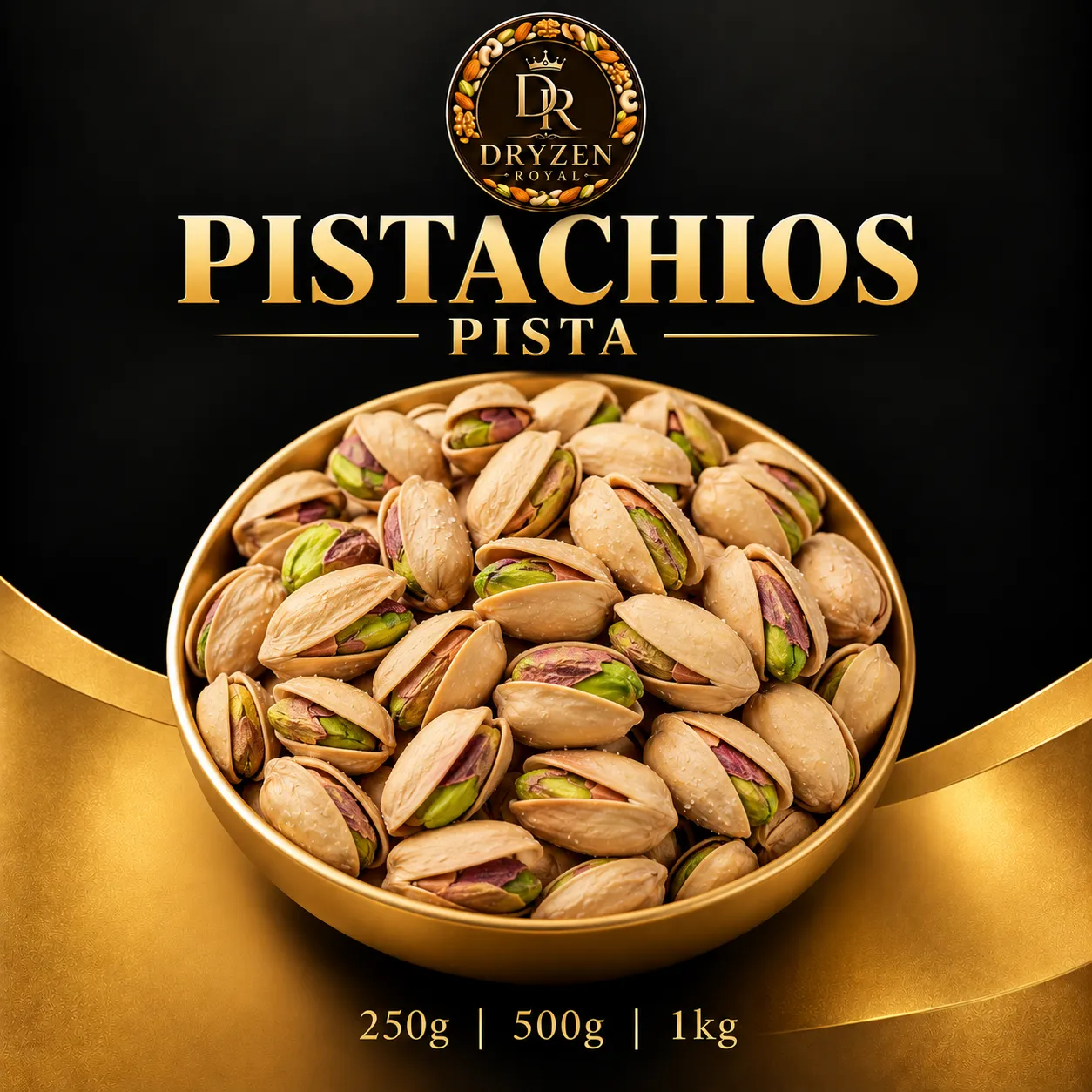
Explore Pistachios at Dryzen Royal and check the seasoning before selecting kernels for a frozen dessert.
A shallow tub lets you take a serving without warming a deep block for a long time. Press a suitable food-safe cover close to the surface if your container system allows it, then fit the lid. For pistachio gelato with fewer handling changes, divide the finished batch into two small tubs and open only one at a time.
Yes. It is written for churning; a no-churn version needs a different formulation and texture expectations.
No. Its sugar, fat and other ingredients change the custard and freezing balance.
A domestic freezer is colder than a serving display, and this formula has no commercial stabiliser system. Soften only the serving portion briefly.
No. Crystals relate to freezing and handling, while grainy yolks usually point to excessive cooking heat.
Questions about this article?
Email us and we will get back to you.
Explore more
