- 100% Natural
- Premium Quality
- No Preservatives
- Fresh & Healthy
A soft red-lentil dal finished with ground pumpkin kernels and a little toasted crunch.
Pumpkin seed dal adds a small kaddu beej paste to soft red lentils, then finishes the bowl with a few toasted kernels. The paste gives body and a mild nutty note, while the reserved seeds provide contrast. This is a home variation rather than a claim that every traditional dal contains seeds.
The lentils cook first, and the ground kernels join near the end. That separation makes texture easier to control. Pumpkin seed dal should remain spoonable and easy to serve with rice or bread, not become a thick seed butter with a few lentils in it.
Allow fifteen minutes for preparation and twenty-five to thirty-five minutes for cooking. Use a saucepan, small frying pan and blender or grinder suitable for a small quantity. Keep hot water available for final adjustment because lentil thickness changes as the pot stands.
Use edible kernels rather than hard white-shelled seeds. Read lentil and spice packaging where relevant. If adding yogurt, butter or another garnish later, identify those ingredients separately rather than assuming the base recipe's description still covers the finished plate.
Check lentils for debris and rinse according to their packet. Put in the saucepan with 750 ml water and turmeric. Bring to a boil, skim heavy foam if needed, then reduce to a gentle simmer.
Cook until the lentils are fully tender and breaking down, commonly fifteen to twenty-five minutes depending on the product. Stir regularly as they soften because the base becomes more likely to catch. Add hot water in small amounts if the pan becomes dry before tenderness.
Toast 50 g kernels in a dry pan over medium-low heat for three to five minutes, stirring until fragrant and lightly puffed. Transfer to a plate and cool. They may pop, so keep your face away from the pan.
Reserve half for topping. Grind or blend the other half with about 60 ml clean water to make a fine paste. Do not add an unmeasured large amount of water just to move the blades. A small jar is usually more practical than a large processor bowl.
Heat oil in the frying pan and add cumin seeds. Let them become fragrant without blackening, then add onion. Cook over medium-low heat for seven to nine minutes until softened.
Add ginger and garlic briefly, then tomato and optional chilli. Cook until tomato breaks down and the mixture is thick rather than watery. A little water can prevent spices catching, but avoid turning the pan into a deep raw tomato soup.
Fold the onion-tomato mixture into the tender lentils. Add the small pumpkin seed paste and stir thoroughly. Simmer gently for three to five minutes, scraping the base so seed solids do not catch.
The colour may become muted rather than bright green. That is normal when kernels mix with lentils and tomato. Pumpkin seed dal should be judged by flavour and consistency, not by an expectation of a vivid coloured sauce.
Add hot water a few tablespoons at a time until the dal flows from a ladle and settles in a bowl. It will thicken further as it rests. A pot that looks perfect while boiling can become too stiff by serving time.
Taste a cooled spoonful and add salt, pepper and some lemon juice. Add acidity in small steps because tomato varies. Do not use a large amount of salt to compensate for a flat flavour before testing a little lemon.
Scatter reserved toasted kernels over individual portions just before eating. If stirred into the whole pot far ahead, they soften and lose the contrast. A small amount of chopped coriander can be added if wanted.
Pumpkin seed dal does not need a heavy layer of oil or cream to look complete. The mild seed paste already changes the body. Keep the first batch restrained so you know what that measured addition contributes.
Offer pumpkin seed dal with plain rice, roti or a vegetable side. A cucumber salad can add freshness. Choose the amount according to the rest of the meal rather than presenting one bowl as a fixed nutritional prescription.
If serving several people, keep reserve dal appropriately hot or refrigerate promptly after the meal. Do not leave a large pot lukewarm through a long gathering. A thick lentil mixture can cool unevenly, so portioning helps with later storage.
A little spinach can be added in a later batch if washed and cooked appropriately, but it adds moisture and another flavour. A different lentil type needs its own timing and water adjustment. Whole chickpeas are not a direct replacement for split red lentils in this short simmer.
Seed butter also changes the formula because it may contain oil, salt or other ingredients. Use plain kernels for the first version and check any commercial product carefully before substituting.
Toast kernels and keep them dry once cool. Cook lentils and the onion base ahead if needed, cooling and refrigerating promptly in separate covered containers. Combine and heat thoroughly near the meal, adding fresh water as needed.
The wet seed paste should be refrigerated if not used promptly. Do not treat it as a shelf-stable pantry spread. Use clean utensils and keep the dry topping away from a spoon that has entered the wet pot.
Refrigerate leftovers promptly in shallow containers and use within two days as a conservative household plan. Reheat with a little water until piping hot throughout, using 74°C as a useful thermometer target.
Stir from the edges toward the centre so thick areas heat evenly. Do not repeatedly warm the entire batch for separate servings. The reserved topping can be added after reheating if it has been stored cleanly and appropriately.
A gritty seed texture means the paste needed finer grinding. Firm lentils need more water and cooking, not extra oil. A burnt note may come from cumin or a caught pan base and cannot be removed by adding lemon.
If the dal becomes too thick, loosen gradually rather than pouring in a large jug. If too thin, simmer gently before adding more seed paste. More kernels change flavour and richness as well as thickness, so they are not a neutral repair.
Pumpkin seed dal becomes dependable when lentils are tender before the seed paste joins and the final water is added thoughtfully. This lentil pot rewards those measured stages more than an elaborate garnish or a claim that every lentil pack cooks in the same time.
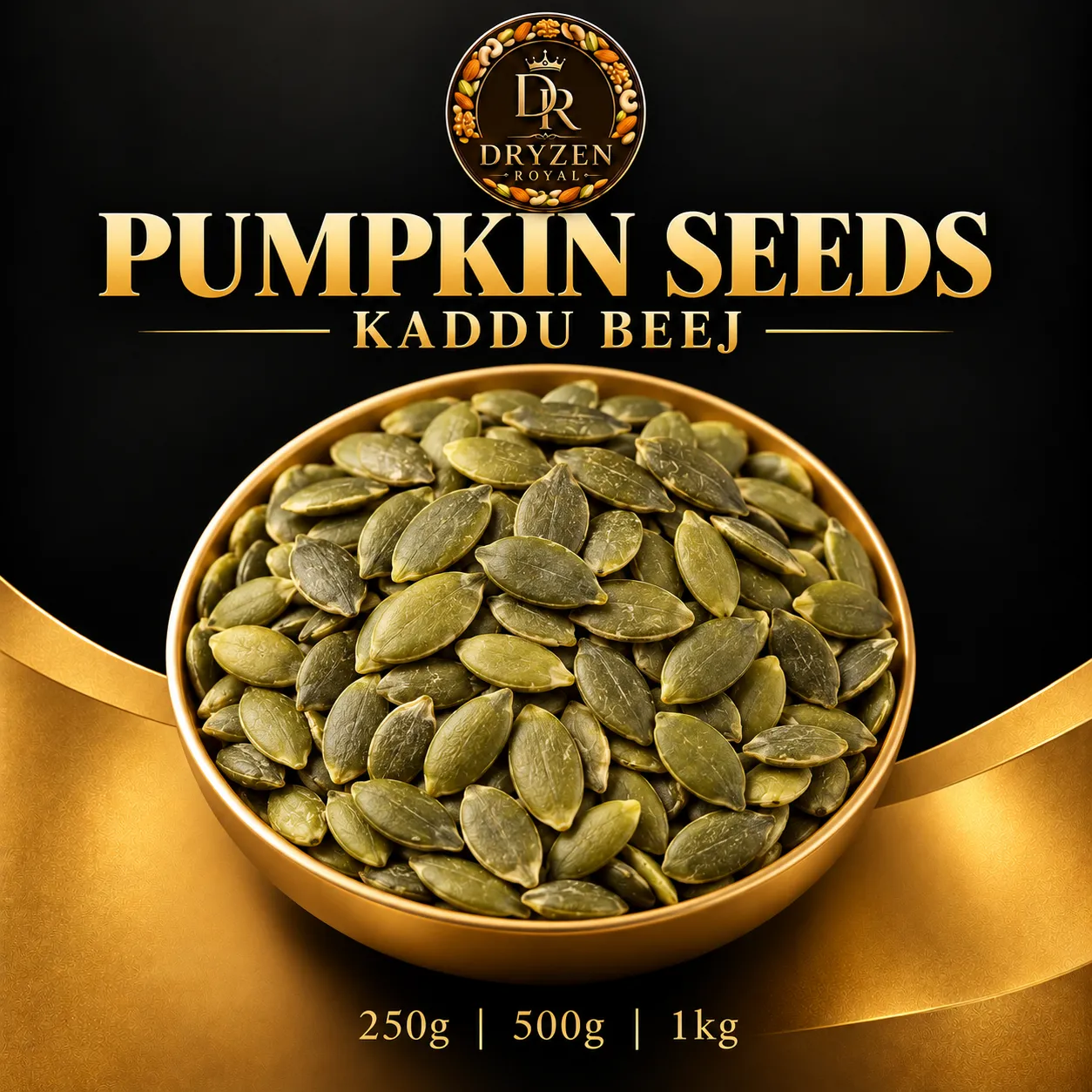
Choose the edible format with pumpkin kernels and whole seeds. The dry topping method in toasted seed finishing ideas can also finish this lentil pot.
Explore Pumpkin seeds at Dryzen Royal and choose plain kernels for a measured savoury lentil dish.
This method cooks lentils first, then adds a small prepared seed paste near the end for better control.
Use edible hulled kernels for the intended smooth texture.
They stay dry and add contrast when scattered over individual bowls at serving.
No. They need sufficient water and cooking time; oil does not replace hydration.
Questions about this article?
Email us and we will get back to you.
Explore more
