- 100% Natural
- Premium Quality
- No Preservatives
- Fresh & Healthy
Understand green kernels, pale outer hulls and the term pepitas, then choose a seed preparation that suits your recipe and shopping budget.
Pumpkin seed kernels and pale, whole pumpkin seeds can look like different ingredients on a shop shelf. The distinction matters when you are planning a salad topping, a baking mixture or a snack. Look for clear information about the outer hull, roasting and seasoning rather than assuming that every packet labelled kaddu beej is ready for the same use.
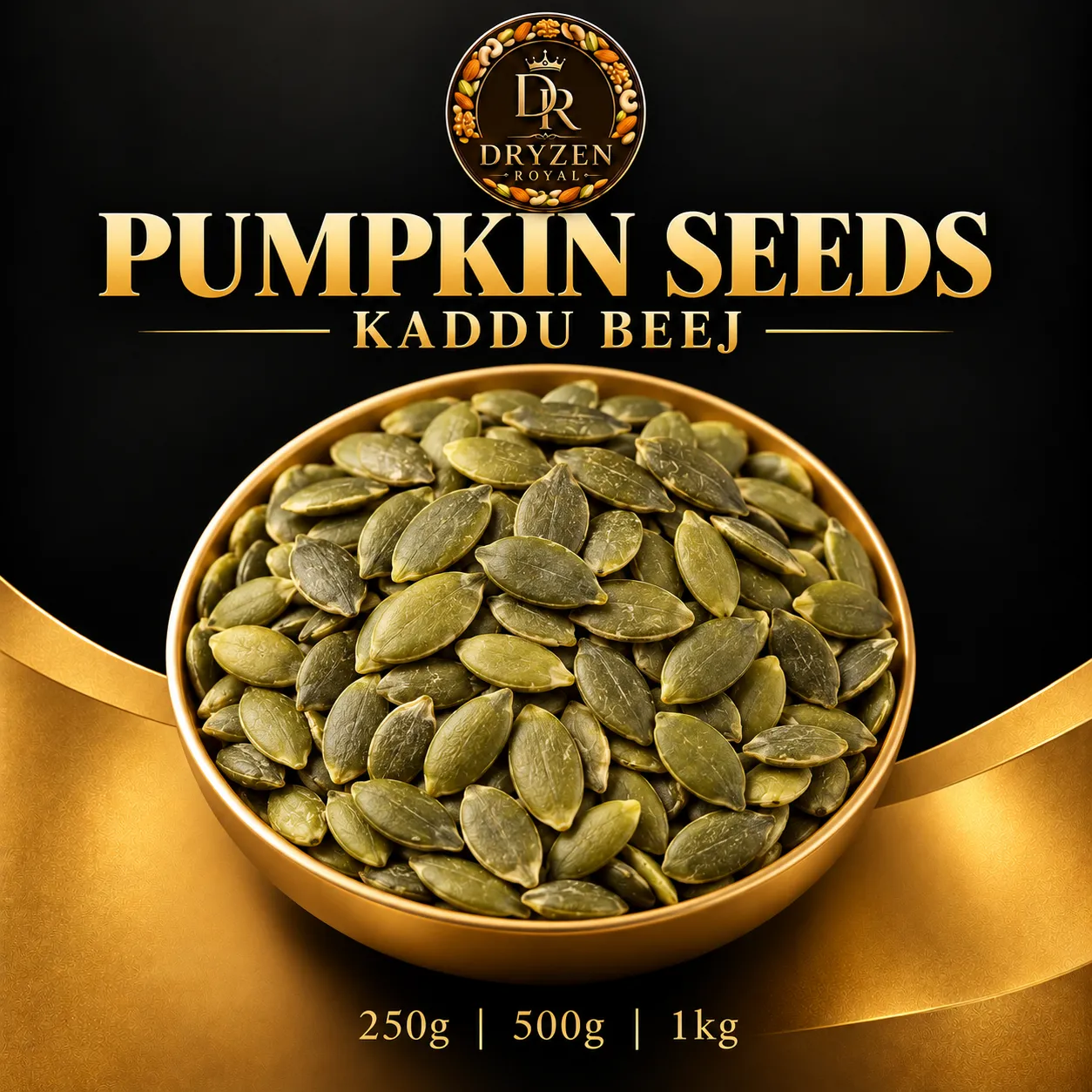
The kernel is the inner seed portion, while a traditional whole pumpkin seed has a pale protective outer hull. Some pumpkin varieties produce seeds without the familiar hard hull. The University of Alaska Fairbanks guide to pumpkin seeds discusses hulled and unhulled preparations, and notes that outer hulls can be tough to chew.
The word pepitas commonly appears on green seed products. Illinois Extension's explanation of pepitas describes varieties that grow without the usual tough outer hull. Because retail wording can vary, ask what the product actually contains rather than assuming every green seed was manually peeled from an ordinary pumpkin.
First decide whether you need a ready kernel or an in-shell snack. Then decide whether it should be plain, roasted, salted or flavoured. A bag of seasoned whole seeds may be enjoyable on its own but inconvenient for a recipe that expects a spoonful of plain green kernels.
Write a short shopping description: “plain pumpkin seed kernels for baking” is more precise than “pumpkin seeds.” If you are buying for several dishes, list the most demanding recipe first. A finely blended dressing and a visible topping may need different preparation even when they start from the same pack.
Do not judge readiness solely from a product photograph. Serving bowls, enlarged images and styling can make size difficult to assess. A written specification or an answer from the seller is more useful when you need to know whether any hull removal remains to be done.
For a rice or vegetable dish, keep a small quantity aside as a final garnish rather than mixing everything into a moist pan early. That lets you control how noticeable the topping is. The amount is a flavour and presentation choice, not a fixed daily intake recommendation.
When combining kernels with nuts, dried fruit or spices, begin with a small test bowl. Taste the mixture as a whole. A strongly salted seed can change the seasoning of the entire mixture, even if every other component was plain.
Whole roasted pumpkin seeds offer a different eating experience from ready kernels. Whether a particular hull is pleasant to eat depends on the seed and preparation; do not assume every thick shell will be enjoyable. Follow the product's intended-use guidance and discard hard fragments rather than adding them to a recipe expecting kernels.
If you want a ready-to-sprinkle ingredient for a quick meal, choose the form that avoids additional shell handling. If you enjoy preparing seeds from a pumpkin, use a reliable food-preparation method and treat that as a separate task from opening a commercially prepared bag.
Only buy seeds intended for food. A packet sold for planting is a different product and should not be used in cooking. Labels about a seed's gardening variety do not establish that it has been handled or treated for eating.
For a recipe that needs 40 g of pumpkin seed kernels, weigh the ready kernels. Do not count a discarded outer hull as part of that recipe weight. There is no need to assume one fixed conversion between whole seeds and kernels across every product.
If you already have a suitable in-shell pack, you can measure a small sample before and after removing the parts you do not intend to use. Keep that result as a guide to that particular pack. It is a kitchen observation, not a guarantee about another variety or supplier.
For price comparisons, our price-per-100g guide explains the basic arithmetic. Compare like with like where possible, and include preparation time when deciding which pack offers practical value for a busy kitchen.
Check whether the product is already roasted before heating it again. If following a recipe that toasts plain kernels, watch the pan closely and use the recipe's colour and aroma cues. A small quantity can change quickly, so finish preparing the rest of your ingredients before starting.
Cool a freshly toasted batch before mixing it into dry ingredients intended for storage. Keep the amount for the current meal separate from the main supply. If you add oil or other seasonings, label the preparation clearly so it is not later mistaken for plain seeds.
Do not use a quick toast to disguise a musty or rancid smell. Start with ingredients in suitable condition and follow the supplier's instructions. Our pumpkin seed preparation guide covers the wider topic of roasting and storage.
Before ordering, confirm net weight, form, ingredients and storage directions. If you transfer pumpkin seed kernels to a jar, keep the original label or record the opening date and relevant product details. Close the container after use and keep a clean, dry spoon for portioning.
Explore Dryzen Royal pumpkin seeds for the current selection. Ask the store when shell or seasoning information is unclear. The best choice is the preparation that matches your intended dish, with no uncertainty about what needs to happen before it reaches the plate.
No. Whole seeds and ready kernels are different retail forms. Check the product description rather than relying only on the name kaddu beej.
It commonly refers to green pumpkin seed products, including seeds from varieties without the familiar tough hull. Confirm the exact preparation with the seller.
If a recipe specifies kernels, measure the ready kernels after removing any outer parts you will discard.
Questions about this article?
Email us and we will get back to you.
Explore more
