- 100% Natural
- Premium Quality
- No Preservatives
- Fresh & Healthy
Make sense of dried-grape names and choose kishmish for your recipe by size, texture and ingredients rather than colour alone.
The raisins vs sultanas question often appears when a recipe uses a name different from the one on your packet of kishmish. Add dried currants to the list and the shopping decision can become confusing. These terms commonly describe dried grape products, but they do not guarantee identical size, flavour or processing. Start with the ingredient identity, then consider what the recipe needs.
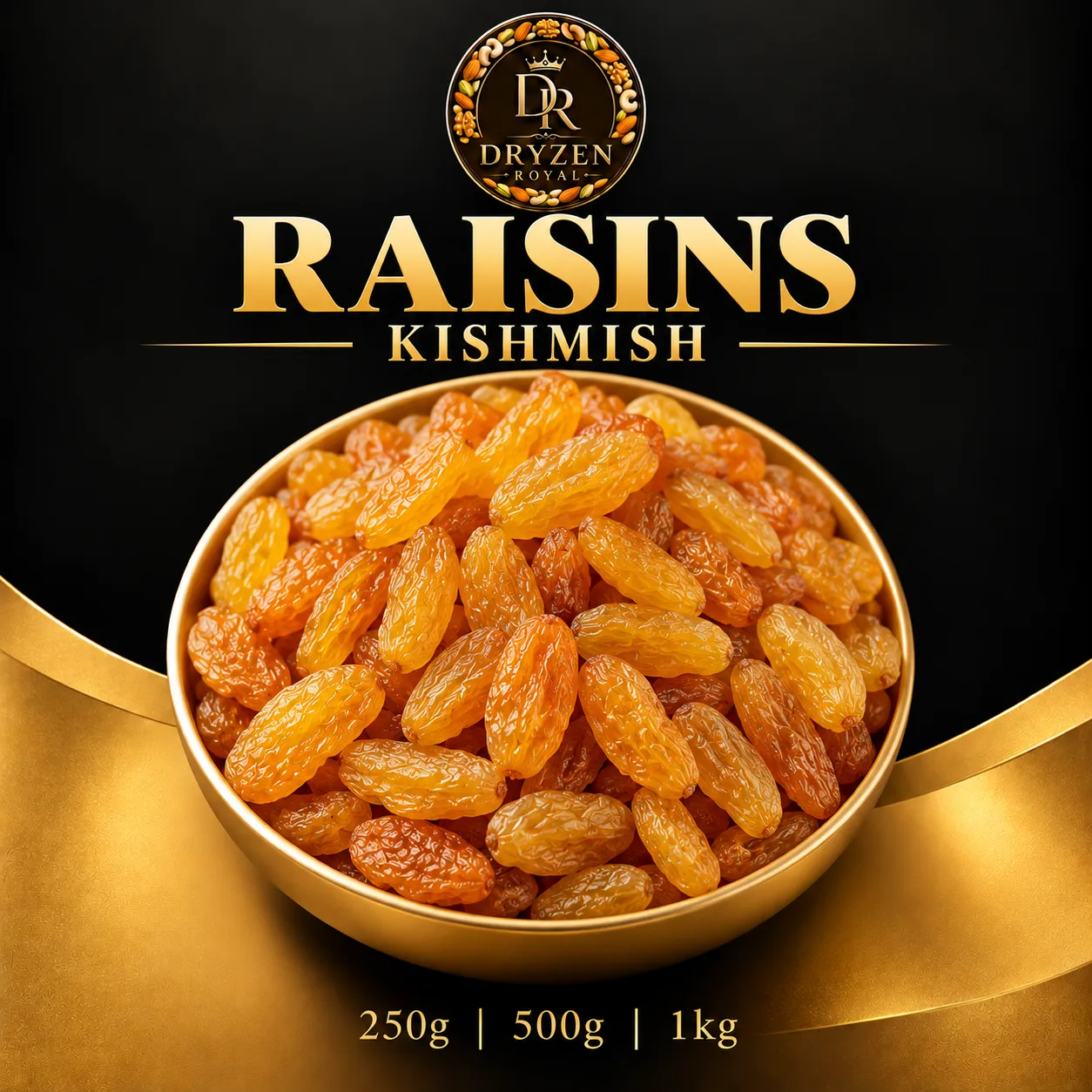
Raisin is a broad name for a dried grape. Sultanas are also dried grapes, and the terminology used on a packet can depend on the market and producer. Dried Fruits Australia's variety guide describes several sultana varieties, including Thompson Seedless. That is one reason a name alone does not identify every characteristic of a finished product.
In practical shopping, ask what the packet contains rather than relying on a rigid colour rule. A seller may use kishmish as the familiar local description while an imported recipe calls the ingredient a sultana or raisin. Check whether the fruit is seedless, its approximate size and any ingredients added during preparation.
Zante currants sold for baking are small dried grapes. Sun-Maid's ingredient guide identifies its Zante currants as dried Black Corinth grapes and describes them as smaller than its typical seedless raisins. That small size can be useful when a recipe calls for little pieces of fruit distributed through dough.
Do not confuse those dried-grape currants with fresh blackcurrants or redcurrants. Colorado State University Extension explicitly distinguishes Zante currants from the currants grown on berry shrubs. If a recipe calls for a fresh berry sauce, dried baking currants are not an equivalent swap.
Read the ingredient list on a product labelled dried currants rather than assuming the name is unambiguous. This is particularly helpful when ordering online, where a small photograph may not show the fruit clearly.
Colour can help with presentation, but it does not replace ingredient information. For example, the Sun-Maid guide describes a sulphur-dioxide treatment for its golden raisins. That is information about that product, not proof that every pale dried grape is processed in the same way.
For the separate colour comparison, see our golden versus black raisins guide. The raisins vs sultanas decision is more useful when you connect those product details to a specific recipe rather than trying to name a universal winner.
For an informal home recipe, a different dried grape may be a workable substitution, but begin with an equal weight rather than an equal number of pieces. One hundred grams of tiny fruit contains many more individual pieces than the same weight of large raisins. The distribution through the finished bake will therefore change.
If replacing small currants with very large raisins, chopping the larger fruit may make the texture more even. If a recipe depends on intact fruit for appearance, keep the pieces whole and accept that the result will look different. Avoid changing the flour, liquid and fruit preparation at the same time during your first trial.
Follow any soaking or draining instruction in the recipe. Adding wet fruit to a mixture designed for dry fruit can introduce extra liquid. Conversely, skipping a specified softening step may change the texture. A substitution works best when both the ingredient and its preparation are considered.
Make a small batch before a celebration or gift order. Record which packet you used and whether you soaked, drained or chopped the fruit. That simple note is more useful for repeating your result than relying on the general word kishmish.
For rice, vegetables or a filling, choose the size and chew you want in each bite. A few larger raisins create distinct sweet contrasts; smaller fruit can distribute more evenly. Start with a modest amount if the dish already includes sweet onions or other dried fruit.
Add the fruit at the stage your recipe directs. Dropping it into very hot fat and leaving it unattended can darken it quickly. Keep your attention on the pan and do not assume that all packet types will soften or colour at the same speed.
Our raisins in savoury cooking guide offers ideas beyond desserts. Use those as flavour directions and adjust the amount to the dish, rather than treating a particular dried-grape name as a requirement for every meal.
Instead of asking only for the best kishmish, describe the job: “I need seedless dried grapes for a cake, with small pieces and no strong coating.” Then ask for the current ingredient list and pack weight. For a visible garnish, ask about appearance and size as well.
Compare prices for equivalent products and net weights. A larger packet is not automatically better value if most of it will sit unused. Keep the original label or a photograph of it when transferring fruit to a kitchen container, so preparation and storage details remain available.
Keep a small written note of the size and preparation that worked, especially when the next purchase may be from a different supplier.
Explore Dryzen Royal raisins for current options. Do not assume a product is a particular imported variety unless the listing or seller confirms it. Keep the pack closed after use and follow the supplied storage directions.
For raisins vs sultanas, the practical answer is to match the dried fruit to your recipe: identity first, then size, texture and ingredients. For dried currants, clarify whether the product means small dried grapes or another fruit before making a substitution.
Yes. Sultanas are dried grapes, with product terminology and varieties differing between markets and producers. Check the packet for the specific product details.
No. Zante currants are small dried grapes. Blackcurrants and redcurrants are different fruits, so do not treat them as interchangeable in a recipe.
Often a small trial is practical. Start with equal weight, consider differences in size and moisture, and follow the recipe's soaking and draining instructions.
Questions about this article?
Email us and we will get back to you.
Explore more
