- 100% Natural
- Premium Quality
- No Preservatives
- Fresh & Healthy
A thin savoury chickpea-flour bake with sunflower kernels, cooked in a hot oven and served in wedges.
Sunflower seed farinata is a thin chickpea-flour bake with a soft centre, lightly browned edges and kernels added for texture. It is inspired by farinata-style batter baking, with a seed topping as a home variation. The mixture contains no yeast and does not need a bread-like kneading stage.
The batter rests so the flour hydrates, then cooks in a hot oven in a suitable shallow pan. Depth matters: a thick casserole-sized layer gives a different result. Sunflower seed farinata is most enjoyable warm in wedges, with simple vegetables or salad beside it.
Use a 24 cm ovenproof metal pan or skillet rated for the intended heat. Check handles and coatings rather than assuming every frying pan can go in the oven. A pan with a plastic handle is not appropriate unless its manufacturer explicitly permits that temperature.
Allow ten minutes for mixing, thirty to sixty minutes for resting and twenty-five to thirty-five minutes for baking. You need a whisk, bowl, scales and a spatula. Prepare the serving plate before the bake finishes because the thin edge texture is best soon after cooking.
Chickpea flours vary in grind and composition, so read the label. A coarse mixed pulse flour is not automatically equivalent to fine besan. Check kernels and flour for relevant allergen and manufacturing information rather than making a broad allergen-free claim.
Put flour and salt in the bowl and add water gradually, whisking smooth after each addition. Stir in one tablespoon oil and optional herb or spice. The mixture should be thin and pourable. Let it rest covered for thirty to sixty minutes.
In a very warm kitchen, refrigerate during the rest and allow for a cooler starting batter. Do not leave a wet flour mixture on the counter for an extended period. The rest is for hydration, not an instruction to ferment the batter overnight.
After resting, stir gently from the bottom because flour can settle. Skim a heavy foam layer if present. If there are dry lumps, whisk or sieve appropriately before baking rather than expecting them to disappear in the oven.
Do not taste the raw flour batter to judge seasoning. Cook a small test spoonful separately if you need a seasoning check. Raw flour is not a ready-to-eat ingredient simply because it comes from chickpeas.
Warm sunflower kernels in a dry pan over medium-low heat for two to three minutes, just until fragrant. They will receive more heat in the oven, so avoid a dark roast. Cool and keep separate.
Use hulled edible kernels rather than in-shell seeds. A salted snack product changes the seasoning and may carry flavour coatings that burn. For the first batch, plain kernels make the result easier to understand.
Heat the oven to 230°C conventional or about 210°C fan, staying within the pan's rated limit. Warm the empty suitable pan briefly, then remove with oven gloves and add the remaining tablespoon oil, spreading carefully.
Do not heat oil until it smokes or handle the pan as if its usual stovetop handle were cool. Every part can be hot after oven use. Set it on a stable heat-resistant surface while pouring the batter.
Stir batter again and pour into the prepared pan. The layer should be around 1 cm to 1.5 cm deep, depending on actual internal area. If using a smaller pan, reserve some batter for a second bake rather than making a much deeper round.
Sunflower seed farinata relies on a broad exposed surface to cook and brown. A tall narrow dish cannot be treated as the same recipe with a few extra minutes. Pan area is part of the method, not merely a serving preference.
Bake for about fifteen minutes, then scatter the lightly toasted kernels over the partly set surface. Return to the oven for another ten to twenty minutes until the centre is set and edges are golden.
If your oven browns strongly from above, check kernels before they darken. A loose foil cover can protect the surface late in cooking, but the centre still needs to be cooked. Do not stop at attractive colour if liquid batter remains underneath.
The finished centre should be set and moist, not a puddle of raw batter. A thin knife should come out without a coating of uncooked flour mixture. The edges may pull slightly from the pan.
Let stand for five to ten minutes before cutting. Sunflower seed farinata is soft in the middle, so a brief rest helps wedges hold together. Use a broad spatula and support the base rather than lifting by the upper crust.
Offer sunflower seed farinata with tomatoes, cucumber, cooked greens or a small yogurt accompaniment if suitable. A lemon wedge can be served separately. The chickpea flavour is mild enough that a strongly sweet sauce may be less useful.
Cut into six or eight wedges according to the meal. This is a savoury batter bake, not a fluffy bread loaf, so describe the texture honestly. A soft centre is intended, while a raw sticky band is not.
A little finely sliced onion can be used in some versions, but it adds moisture and changes surface browning. Try the plain seed version first. Cheese also changes flavour and allergens, so it is not an invisible addition.
If you want a thicker chickpea cake, use a recipe designed for that depth. This savoury round becomes easier to learn when the first pan remains thin and the flour-water ratio is not repeatedly adjusted during baking.
Measure dry ingredients and toast kernels earlier if needed, keeping them dry and sealed once cool. Mix batter within a planned resting window and refrigerate if the room is hot. The pan and oven should be ready before the batter is poured.
For a gathering, two thin rounds may serve better than one thick deep bake. Keep the second batter portion covered and chilled as appropriate while the first cooks. Record the actual pan diameter and time for repeatability.
Refrigerate cooked leftovers promptly in shallow covered portions and use within two days as a conservative household schedule. Reheat in a pan or oven until thoroughly hot, using 74°C as a useful target. The seeds will be softer than at the first serving.
Sunflower seed farinata becomes dependable when the flour is hydrated, the pan is suitable and the layer stays thin. This thin chickpea bake rewards those practical checks more than an attempt to make it rise like a yeast bread.
For a stovetop vegetable pancake instead, explore sunflower seed cabbage pancakes. Use pan area and batter depth before changing the farinata pan.
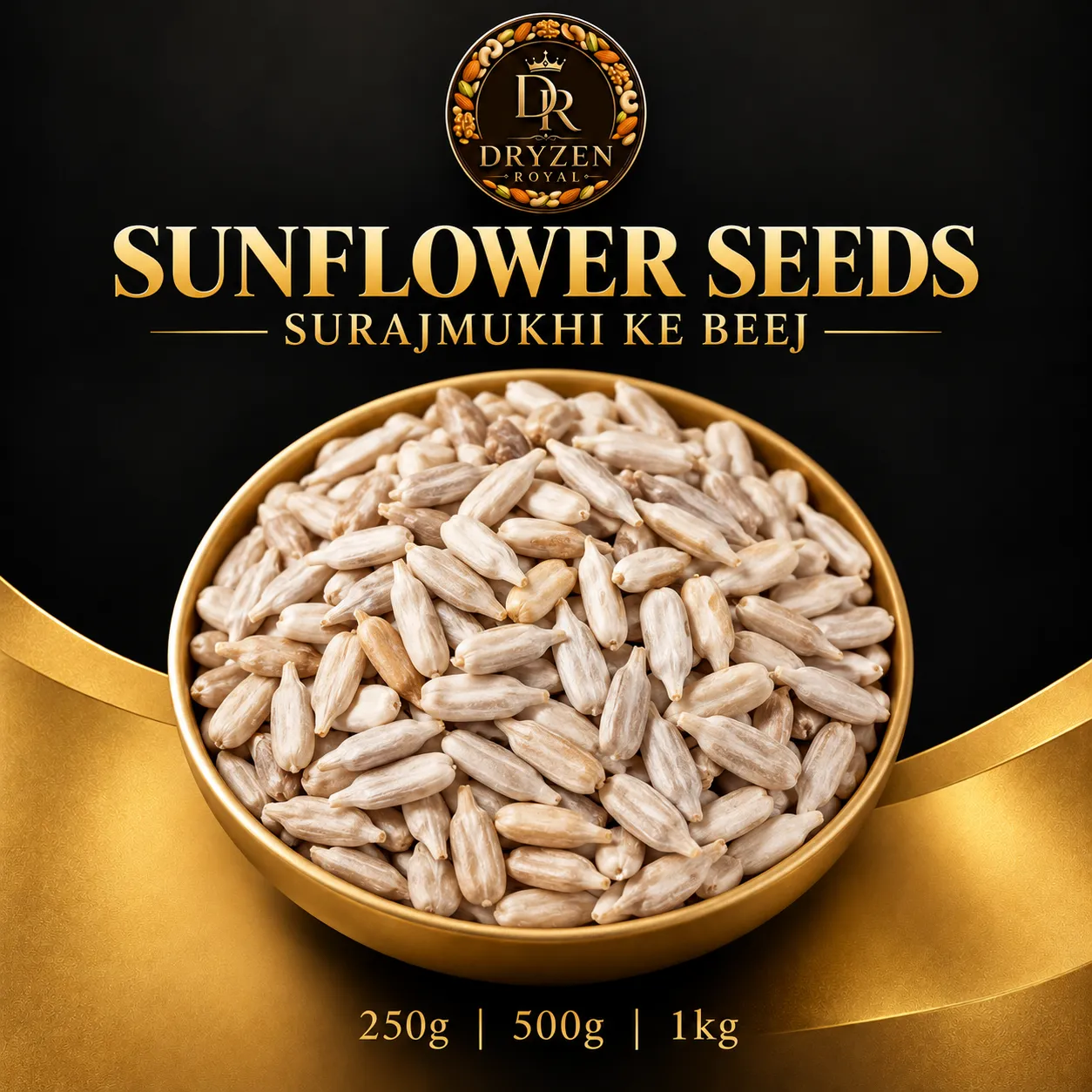
Explore Sunflower seeds at Dryzen Royal and choose plain edible kernels for a small savoury oven bake.
No. It uses a rested thin chickpea-flour batter and a hot shallow pan.
No. A deeper layer changes cooking and texture; use a similar area or bake in batches.
They are less exposed to the full hot-oven period and are less likely to burn.
No. The centre should be set and moist, without a liquid or uncooked flour band.
Questions about this article?
Email us and we will get back to you.
Explore more
