- 100% Natural
- Premium Quality
- No Preservatives
- Fresh & Healthy
Make walnut baklava with measured filo, akhrot and syrup. Follow thin layering, pre-bake cutting and cooling steps for crisp pastry with a balanced nut filling.
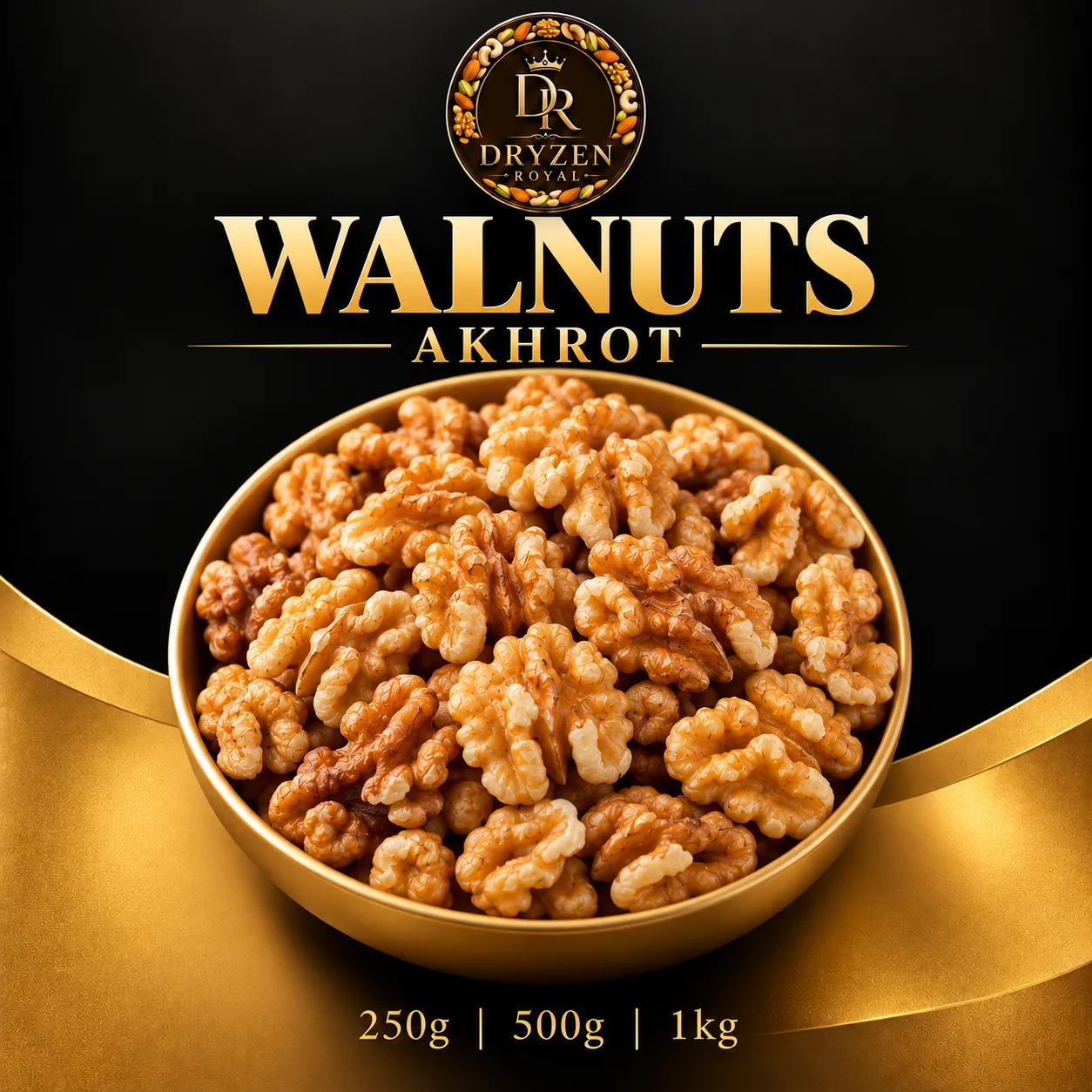
Walnut baklava layers thin filo pastry with chopped akhrot and finishes with a measured syrup. A small tray lets you learn the handling without committing to a large celebration batch. The goal is a crisp upper surface and moist filling, rather than pastry floating in liquid.
Use filo according to its thawing instructions. Puff pastry has a different structure and is not an identical swap. Prepare the filling, butter and tray before opening the delicate sheets.
Choose a tin around 20cm square. Allow thirty minutes to assemble, thirty-five to forty-five minutes to bake and additional time for syrup absorption.
Keep a pastry brush, sharp knife and suitable cover ready. A few torn sheets can work inside, while intact pieces are useful on the surface.
Check walnuts for shell fragments and chop evenly. Very large pieces form awkward lumps, while excessive powder can compact. Mix with filling sugar and optional cinnamon.
Our walnut halves and pieces guide explains why broken kernels are practical here. Weigh edible nuts after any shell removal.
Combine syrup sugar, water and lemon juice. Dissolve over gentle heat, then simmer for approximately eight minutes. Remove and leave to cool.
The syrup should stay light and pourable. Do not keep it reducing while you work on the tray. Over-concentration changes how it reaches the pastry layers.
Set the pan somewhere safe. Clear hot syrup can look deceptively harmless, so keep it away from a crowded preparation edge.
Heat the oven to 170°C conventional or around 150°C fan. Brush the tin lightly. Add roughly one-third of the filo sheets, brushing between layers without leaving pools.
Spread half the nut mixture evenly. Add another third of the pastry, the remaining filling and the final pastry group. Finish with a lightly buttered surface.
Sheet counts vary by brand, so divide the pastry into approximate groups rather than relying on one exact number. Keep unused sheets covered according to their instructions.
Trim or fold carefully so one corner does not become far thicker than the centre. Spread nuts toward the edges without building a high ridge.
Use an intact top sheet if possible, but do not discard every small tear. The inner layers can overlap modestly. Excessively thick folds need more attention during baking.
Mark squares or diamonds with a sharp knife and cut through the stack. Hold the upper sheets gently so they do not slide. Squares are easiest for a first attempt.
Pre-cut lines let syrup reach the filling and make serving easier. Cutting a fully baked brittle tray can shatter the top and pull the nuts out.
Bake for thirty-five to forty-five minutes until the top is golden and lower layers are cooked. Cover loosely if the surface colours before the base is ready.
Set the hot tin on a protected surface and pour cooled syrup gradually across the cut lines. Steam may rise, so keep hands and face back.
Allow absorption before adding the last spoonfuls. A deep pool is not the intended result. Do not shake the hot tray to force syrup into every corner.
Leave strong steam free to escape initially. Give the syrup time to settle before lifting pieces. Use a small spatula to support each portion.
Serve small pieces with plain tea or coffee. The filling and syrup already provide richness and sweetness, so a heavy extra topping is unnecessary.
Our chocolate and nut pairing guide offers a separate tasting idea. Keep new additions off the first tray while learning the basic balance.
If layers stay soft, review full baking and whether the tray was covered tightly while hot. More heat cannot reliably undo a tray that has already been flooded.
If the centre is dry, check filling distribution and syrup quantity. Bitter walnuts may be stale or scorched; syrup does not remove that flavour.
If the pastry breaks, allow more resting and support the base during lifting. Flaky edges are normal and do not require compressing the entire tray.
Pack fully cooled pieces in food-safe covered packaging away from heat and dampness. Identify walnuts, wheat and dairy for recipients. Make modest batches rather than assigning an unsupported long shelf life.
Begin with a clear working space. Measure the nuts after shell removal and organise the filo into three approximate groups. Set the measured ingredients beside the equipment before heating anything, and keep the original packs outside the wet preparation area. This makes it easier to distinguish a measured recipe portion from the unused reserve.
Prepare cooled syrup before opening the pastry, then keep the unused sheets protected while layering. Keep a short written order of tasks if several components are involved. A bowl that is ready early can be covered or chilled as appropriate while another stage finishes. Avoid leaving perishable ingredients on a warm counter simply because the next step is not ready.
Check the lower pastry as well as the top before adding syrup to the tray. Assess a small prepared sample before changing the whole batch. Record the original quantity and the adjustment so a successful result can be repeated. Changing several ingredients at once makes it harder to identify what improved the texture or flavour.
Use a supporting spatula for each rested piece and offer plain tea alongside. Bring out a manageable serving amount and keep the reserve protected. Use clean utensils for the finished food and retain the source ingredient information for anyone sharing it. Packaging and storage should match the prepared dish, rather than the dry ingredient from which it began.
Explore Premium Walnuts when planning walnut baklava. Check the current preparation and pack information, choose the quantity your recipe needs, and keep the remaining dry ingredients stored as directed.
Keep unused sheets covered as the pack directs so they remain flexible instead of drying out.
Use a coarse even chop. Paste does not distribute between filo layers in the same way.
Raw layers are easier to portion without shattering the crisp upper surface.
Do not assume commercial shelf stability. Plan handling appropriate to a homemade preparation.
Questions about this article?
Email us and we will get back to you.
Explore more
