- 100% Natural
- Premium Quality
- No Preservatives
- Fresh & Healthy
Crisp filo rolls with a dry spinach, cheese and akhrot filling, sized for a small oven tray.
Walnut borek wraps a savoury spinach, cheese and akhrot filling in thin filo pastry. The rolls become crisp on the outside while the chopped nuts give the middle a gentle bite. They work as a tea-table savoury, a light lunch with salad or a starter that can be assembled in stages. The important detail is a dry filling: excess spinach water quickly softens the pastry. Lift walnut borek with a broad spatula to support the flaky base.
This recipe uses a straightforward rolled shape rather than a large spiral. Individual rolls are easier to portion, lift and check underneath. Filo sheets vary considerably in size, so use the folding description as your guide and cut the sheets only after checking how wide your finished roll should be. The filling is fully prepared before the pastry packet is opened.
Allow around 35 minutes for preparing and cooling the filling, 20 minutes for assembly and 25–30 minutes for baking. You need a frying pan, sieve, clean cloth or potato ricer for pressing spinach, pastry brush and a shallow baking tray. Baking paper makes it easier to remove the rolls without damaging their bases.
Cheese saltiness differs, so avoid automatically adding a full teaspoon of salt. If using a very mild paneer instead, add a little salt after mixing and expect a less tangy filling. Check all packaging for allergens; this recipe contains nuts, wheat and dairy. A seed garnish does not replace that information when serving guests.
Cook the spinach briefly in a covered pan with the water clinging to its leaves, just until wilted. Frozen spinach should be thawed and heated according to its packaging. Drain well, cool enough to handle safely, then squeeze firmly in small handfuls. Chop the pressed spinach so long strands do not pull out of the roll when somebody takes a bite.
Warm the tablespoon of oil in a frying pan and soften the onion over medium-low heat for 8–10 minutes. Add the chopped spinach and stir for a few minutes until no visible liquid remains on the pan base. Spread the vegetables on a plate to cool. Never put a hot filling straight onto filo; steam starts softening the delicate sheets immediately.
Combine the cooled vegetables with cheese, pepper, optional nutmeg and chopped walnuts. Aim for walnut pieces around 3–5 mm rather than powder. Powder can disappear into the cheese while large halves make the roll difficult to close. Mix gently with a fork, breaking up any large cheese lumps so each roll gets a similar balance.
Scoop a spoonful onto a dry plate and leave it for a minute. If a puddle forms, return the vegetables to the pan before adding more cheese, or drain the mixture carefully. Do not try to solve a wet filling by packing in extra nuts. That makes the rolls heavy without reliably removing the moisture already present.
Heat the oven to 190°C conventional or about 170°C fan. Line the tray. Lay the filo packet beside a clean, lightly damp cloth, but do not put wet fabric directly onto the pastry. Cover unused sheets with their protective film and the cloth so the edges do not dry out while you form the first roll.
Place one sheet on a clean surface and brush lightly with the butter-oil mixture. Fold it in half to make a double layer. Put roughly one-eighth of the filling near a short edge, leaving clear margins on both sides. Fold the side margins inward, then roll away from you without squeezing the filling into a hard cylinder.
The aim is an enclosed parcel with a little space for steam. Place it seam-side down on the tray. Repeat with the remaining filling and sheets. If a sheet tears, place a spare strip over the tear before folding; the overlapping layers usually hold it. Reserve enough brushing mixture for the tops rather than saturating the first few sheets.
Brush the formed rolls lightly and leave a small gap between them. Bake for 25–30 minutes, checking from about 20 minutes onward. They should be golden, visibly crisp and hot through the middle. Lift one carefully to check the bottom: a soft, translucent base needs more time even if the top is attractive.
If the upper surface colours early, move the tray slightly lower and cover loosely with foil without pressing it onto the pastry. Allow the rolls to stand for five minutes before serving. The filling and trapped steam can be much hotter than the outside suggests. A short rest also makes the rolls less likely to split when lifted.
Walnut borek needs something fresh or tangy beside it rather than another rich pastry. Try cucumber, tomato and lemon, or a small serving of plain yogurt with chopped mint. Keep the yogurt in a separate bowl until eating so it does not soak the crisp base. Serve with a fork for lunch or cut each roll in half for a starter platter.
For a tea gathering, arrange a few warm rolls at a time and replenish the plate. A tall covered stack traps steam and softens the filo. Do not leave dairy-filled pastries sitting out for a long event. Keep waiting portions refrigerated before baking, and refrigerate cooked leftovers promptly once portioned for storage.
Prepare the dry vegetable filling a day ahead and keep it covered in the refrigerator. Mix with cheese and nuts when ready to assemble. Store unassembled filo according to its packet; repeated opening and refreezing can make fragile sheets difficult to handle. If freezing assembled rolls, follow the filo manufacturer's guidance and use a well-sealed container.
Refrigerate cooked leftovers in a shallow container. For a simple conservative household plan, use them within two days and reheat until steaming hot throughout. An oven or air fryer restores the surface better than a microwave, which tends to soften it. This is a short use plan, not a laboratory-tested shelf-life promise.
A long split may mean the parcel was rolled too tightly or the filling was still warm. A pale underside can come from a crowded tray or thick baking dish that heats slowly. Dry flakes falling everywhere before baking suggest uncovered filo. Identify the stage that caused the issue rather than adding more butter to every problem.
If you want a smaller batch, halve the filling and use four sheets, keeping the same parcel size. Walnut borek is most manageable when each roll remains modestly filled. Keep the spinach dry, the nuts evenly chopped and the unused pastry protected, and the individual rolls become a practical savoury addition to an ordinary home menu.
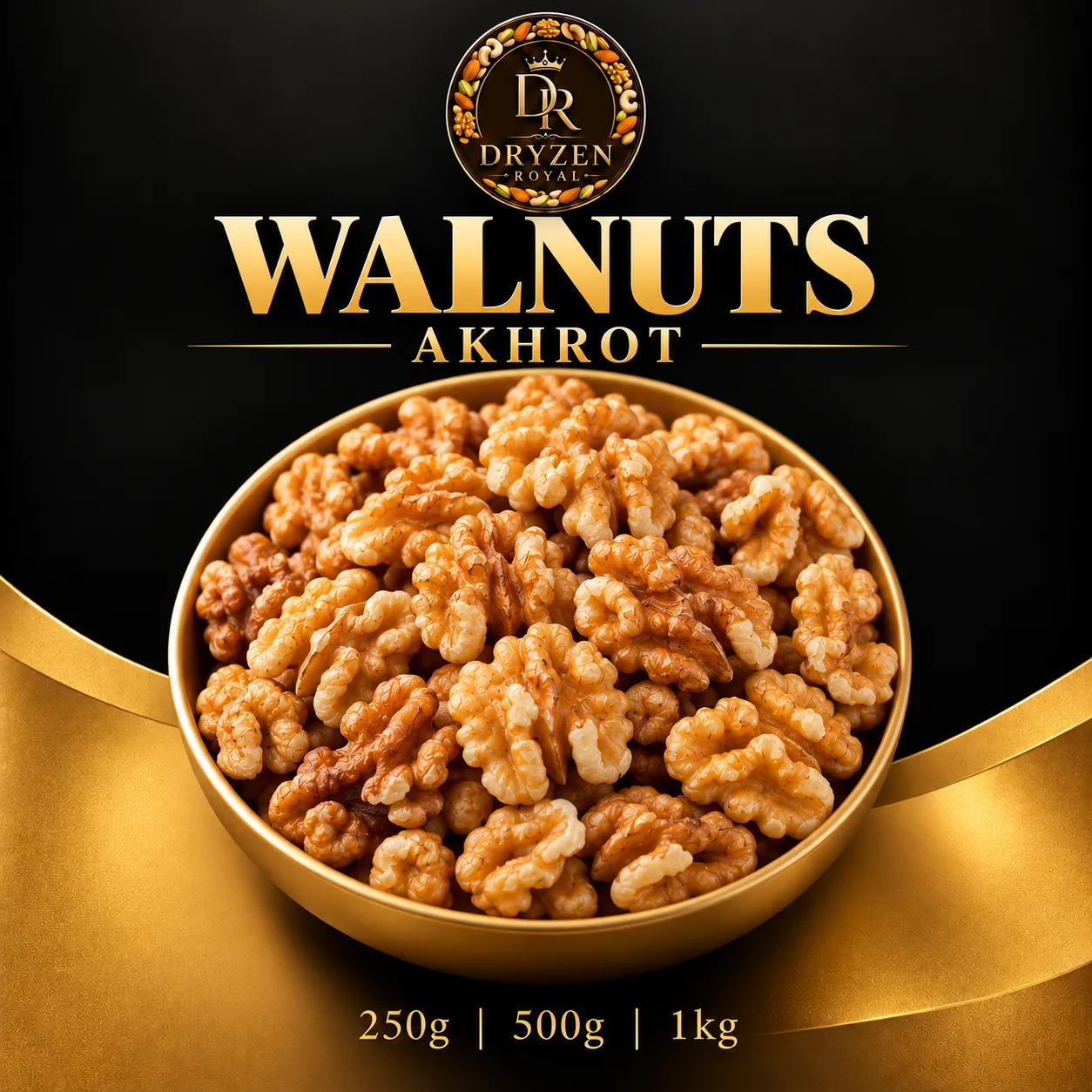
The guide to walnut halves and pieces helps with filling preparation. For a separate dessert project, explore sweet walnut filo baking.
Explore Walnuts at Dryzen Royal when planning your next savoury pastry batch, and choose a pack size you can store well.
For walnut borek with an even middle, divide the filling into eight portions before rolling. Serve walnut borek with salad beside the pastry rather than underneath.
Thaw and prepare it according to its pack, then squeeze out the liquid. Adding it frozen makes the filo wet.
Roughly 3–5 mm pieces give texture without making sharp lumps that tear the wrapper.
A cover traps steam. Serve a small uncovered batch and replenish rather than covering a hot stack.
Yes, but it gives a milder, less salty filling. Crumble it finely and adjust the seasoning before assembly.
Questions about this article?
Email us and we will get back to you.
Explore more
