- 100% Natural
- Premium Quality
- No Preservatives
- Fresh & Healthy
A twice-baked badam biscuit with a measured dough, careful slicing instructions and practical guidance for a crisp finish.
Almond biscotti bring a firm, toasted crunch to a cup of chai without needing a complicated dough. These Italian-style biscuits are baked as a log, sliced, and baked again. For a Pakistani tea table, their restrained sweetness and visible badam pieces make a welcome change from a soft cake or a heavily decorated cookie.
The important part is the sequence rather than speed. You need a dough that holds its shape, a first bake that sets the centre, and a second bake that dries the slices without burning the nuts. This small-batch method explains the cues to watch at each stage, so you can adjust for your own oven.
This batch makes approximately 18 to 22 biscuits, depending on the length of your log and the thickness of each slice. Allow about 25 minutes for preparation, 30 minutes for the first bake, a short resting period, and 20 to 25 minutes for the second bake.
You will also need a baking tray, baking paper, two mixing bowls, a serrated knife and a cooling rack. A kitchen scale helps keep the flour and eggs consistent. Cup measures can vary enough to change how dry this relatively firm dough feels.
Use plain edible kernels rather than strongly salted or seasoned nuts. Chop large almonds into two or three pieces so your knife can pass through the baked loaf more easily. Avoid reducing them to a powder, which changes the texture and hides the visible nut pieces.
If you are deciding between almond preparations, our blanched and unblanched almond comparison explains the difference. Keep the starting quantity the same if you choose a different preparation.
Heat the oven to 170°C conventional or about 150°C fan. Line the tray with baking paper and place a rack near the centre of the oven. If you know your oven browns one side quickly, plan to rotate the tray rather than changing the recipe immediately.
Whisk the flour, baking powder, salt and optional cardamom in one bowl. In another, whisk the eggs and sugar until evenly combined and slightly foamy. Stir in the cooled butter and vanilla. The butter should remain liquid but should not be hot enough to warm the eggs noticeably.
Add the dry ingredients to the wet mixture and stir with a spoon until no loose flour remains. Fold in the chopped almonds. The dough should feel somewhat sticky but hold together. Let it stand for five minutes before deciding whether it needs any adjustment.
If it is so soft that it spreads like batter, add flour one teaspoon at a time. If loose dry crumbs refuse to join the dough, add a teaspoon of beaten egg or water. Large additions can shift the balance quickly, so correct only what you can observe.
Lightly flour your hands and shape the dough into a log approximately 28cm long, 7cm wide and 2cm high. Transfer it to the tray, leaving space around the sides. Flatten the top gently so the middle is not dramatically taller than the edges.
There is no need to knead until smooth like bread. Repeated working can make the dough harder to handle and encourages you to add excess flour. A slightly rustic surface is fine; an even thickness matters more than a polished appearance.
Bake for approximately 25 to 30 minutes, checking near the earlier time. The surface should be lightly golden and feel set, with no visibly wet dough in the centre. A skewer should emerge without raw dough clinging to it. Extend the bake in small increments if necessary.
Move the tray to a heatproof surface and let the log rest for about 15 minutes. This pause allows it to become firmer while remaining warm enough to cut. Do not begin slicing while it is fragile and steaming, and do not leave it for hours before attempting the cuts.
Transfer the log carefully to a board. With a serrated knife, cut slices about 1cm thick using a gentle sawing motion. A slight diagonal produces longer biscuits, while straight cuts produce shorter ones. Keep the thickness consistent so the second bake works evenly.
If a large almond catches the knife, slow down rather than pushing straight through. Support the loaf with your other hand, keeping fingers clear of the blade. A few crumbly end pieces are normal and can be set aside rather than forced into matching slices.
Reduce the oven to 140°C conventional or around 120°C fan. Arrange the slices flat on the lined tray with a little space between them. Bake for 10 to 12 minutes, turn each slice, then bake for another 10 to 12 minutes.
The biscuits should look dry and lightly golden. They will become firmer as they cool, so do not chase a very dark colour in the oven. Transfer them to a rack and assess the texture only after they have cooled completely.
If your almond biscotti crumble during slicing, consider whether the first bake was too short or the resting time too brief. Also check whether the almond pieces were very large. A clean, sharp serrated knife usually gives better control than a blunt straight blade.
If the biscuits remain soft after cooling, return them to a low oven for a few minutes to dry further, watching closely. If they are much harder than you prefer, cut the next batch slightly thicker and reduce the second bake modestly. Record your oven adjustment rather than changing several ingredients at once.
Dark edges with a soft middle can indicate slices that are too thick or an oven that runs hot. Position the tray away from a strong top element and use an oven thermometer if available. Thick and thin slices on the same tray will rarely finish together.
Serve these biscuits alongside chai or coffee so guests can choose whether to dip them. For a mixed tea plate, offer a few smaller slices with fruit or another biscuit rather than making every item equally rich. Our dry fruits with chai guide offers complementary pairings.
Only pack almond biscotti once completely cooled. Trapped warmth can create moisture inside a closed container and soften the finish. Use a clean airtight box and separate fragile layers with food-safe paper. Keep the container away from humid kitchen steam and check the biscuits before serving.
These contain almonds, wheat, eggs and dairy. Keep an ingredient note with any homemade gift. The FDA’s flour-safety guidance also explains why raw dough should not be tasted; wait until the biscuits have been baked.
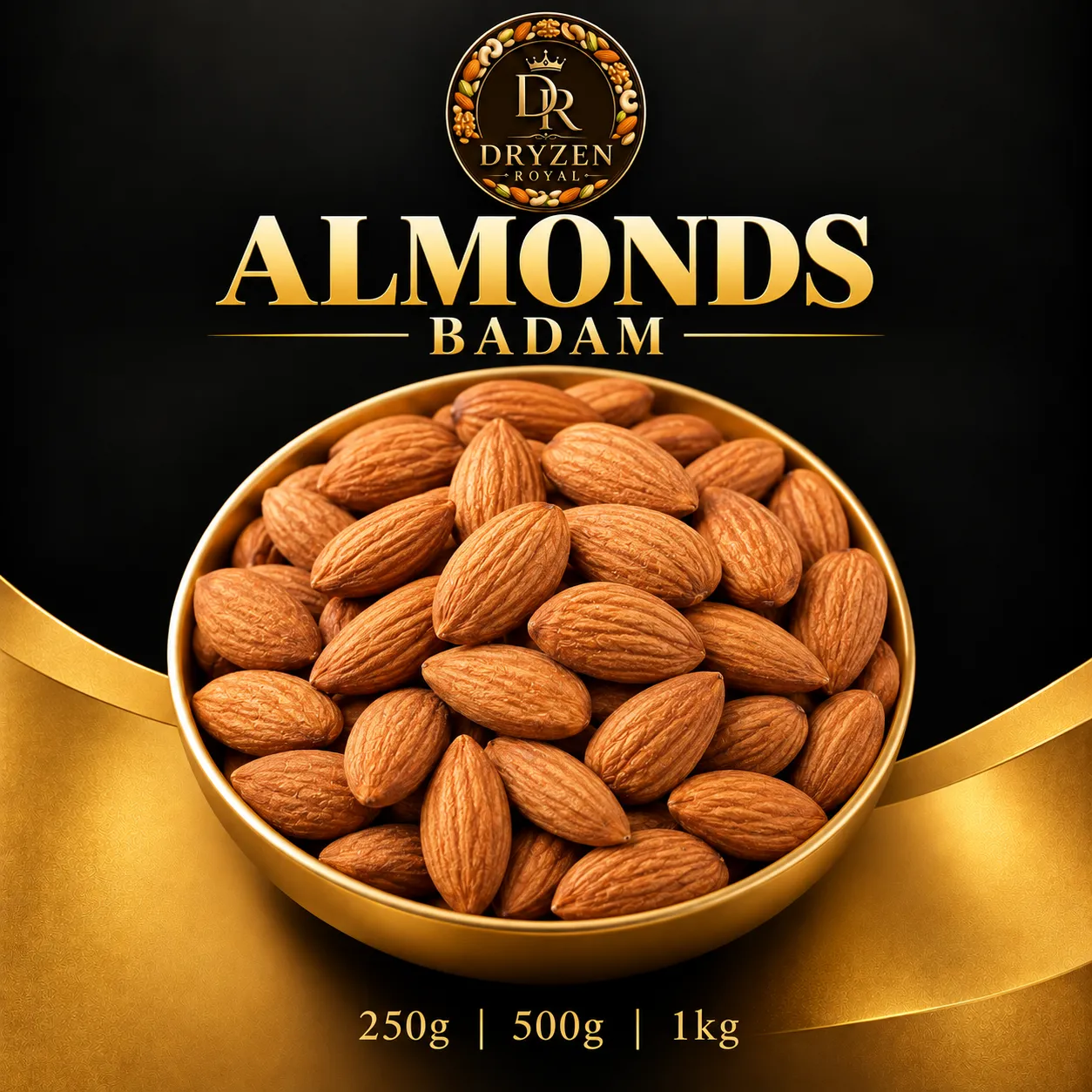
For your next batch of almond biscotti, explore Dryzen Royal Premium Almonds. Choose the quantity that fits your baking plans and keep the remaining kernels sealed according to the pack instructions.
The first bake sets the dough into a sliceable loaf. The second dries the cut surfaces to create the biscuit’s characteristic firm texture.
Give it about 15 minutes first. A very hot loaf can break, while one that has cooled completely can be harder to slice neatly.
No. Plain skin-on almonds work in this recipe. Blanched almonds give a different appearance but are not essential.
Yes. Shape two narrower logs, monitor the first bake carefully and cut similar-size slices so they dry evenly.
Questions about this article?
Email us and we will get back to you.
Explore more
