- 100% Natural
- Premium Quality
- No Preservatives
- Fresh & Healthy
Choose between skinless and skin-on badam by the finish you want in a dish, with practical examples for kheer, garnishes, baking and shopping.
Blanched almonds are almonds with their brown skins removed. Unblanched almonds keep that thin skin around the kernel. Both can be useful in the kitchen; the better choice depends on the appearance, texture and preparation your recipe needs. For Pakistani home cooking, it helps to separate three questions: whether the skin is present, how the nut is cut and whether it has been roasted.
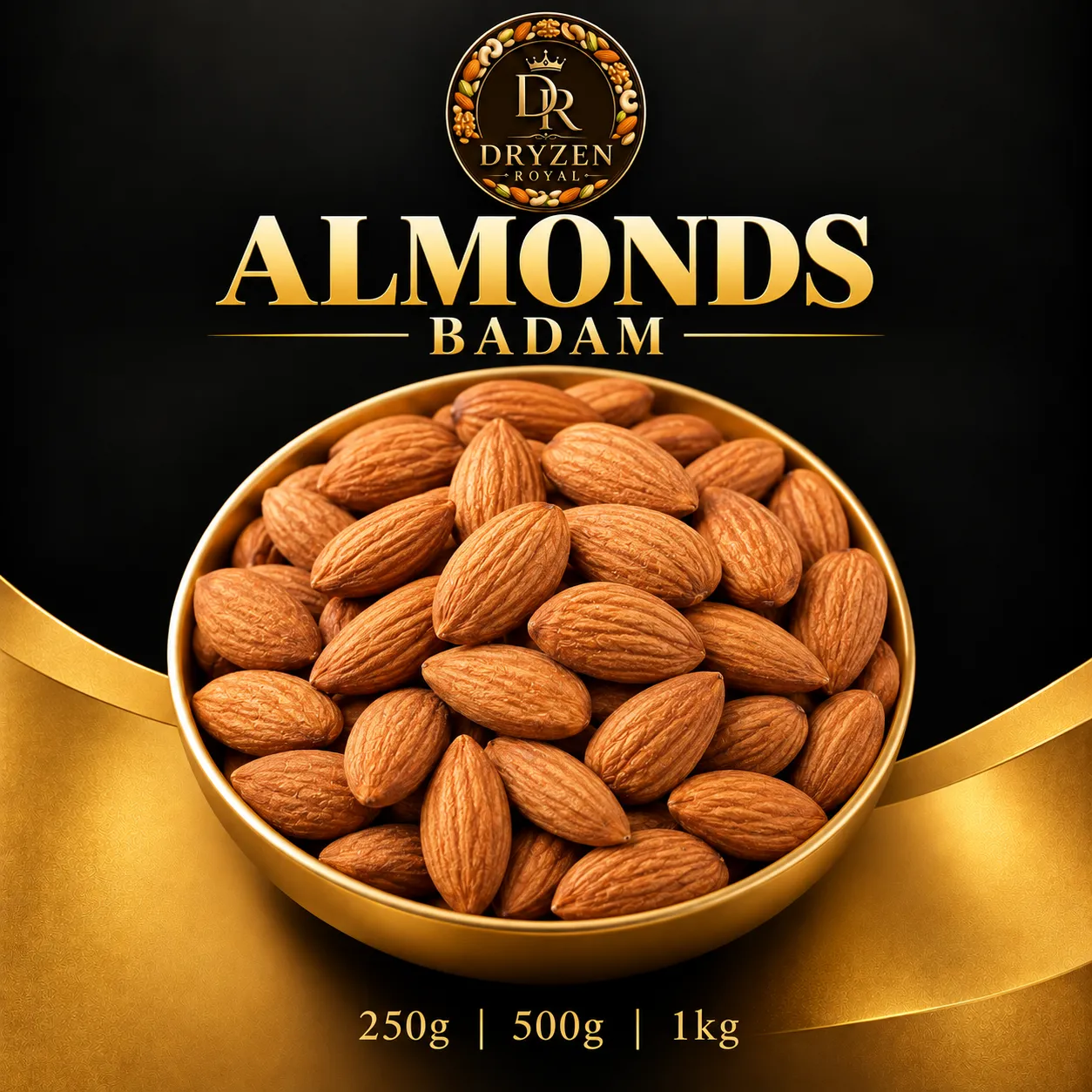
The Almond Board of California's guide to almond forms distinguishes skin-on natural almonds from blanched almonds, whose skins are removed during processing. The skin is the thin brown coating on the edible kernel, not the hard shell around an unshelled nut.
Blanching and roasting describe different steps. A skinless almond is not automatically toasted, salted or sliced. Likewise, a sliced almond may still have a brown edge. Read the complete product name and ingredient information rather than treating a single word on the front of a packet as a full specification.
For a pale kheer or a lightly coloured dessert topping, skinless slivers give a tidy visual finish. For a rustic biscuit or a breakfast bowl, brown-edged pieces may fit the presentation you prefer. These are cooking and appearance choices, not a ranking of one ingredient as universally better.
Think about how visible the almond will be. A few large pieces on top of mithai will be noticed more than finely chopped nuts mixed through a dark cake. If the recipe photograph depends on a smooth, pale surface, follow its specified almond preparation before making substitutions.
A simple approach is to look at the final serving: a spoonful of rice pudding, a slice of cake or a garnish scattered across a platter. Choose the form that makes that serving easy to eat and gives the contrast you want. You do not need to use the same almond preparation for every dish in one meal.
Our sliced versus slivered almonds guide focuses on those cutting choices. When a recipe calls for finely ground blanched almonds, buying whole skinless nuts solves only part of the task: you still need the specified grind. A coarse chop will not behave like fine flour.
For kheer: decide whether the nuts should soften inside the pudding or remain a distinct topping. Add a small final garnish separately if presentation matters. Skinless slivers are one option, but use the form described in your own recipe.
For almond rice: prepare the nut topping separately and add it near serving time when you want noticeable crunch. Skin-on pieces can provide colour; paler pieces give a different appearance. Our almond rice guide explains the timing of the topping.
For cakes and biscuits: follow the ingredient form before improvising. The same weight of whole nuts is not a substitute for flour unless the recipe includes grinding them. A change in grind can affect the mixture more than the presence of a small amount of skin.
For a gift platter: decide whether you want an everyday snack presentation or a prepared dessert garnish. There is little reason to buy a fine baking ingredient if you intend to serve whole nuts. Check what your guests prefer and clearly identify almonds for anyone with dietary restrictions.
Ready-prepared blanched almonds can save a preparation step, particularly when you need uniform pieces for several desserts. Whole almonds give you flexibility, but any peeling, drying and cutting becomes part of your kitchen schedule. Include that work when comparing the practical value of two packs.
Try a small quantity before committing to a large event order. Prepare one portion of the intended dish and assess the texture once it is served, not just straight from the chopping board. A garnish may change after sitting against a moist dessert.
If preparing almonds with water at home, do not put damp nuts back into your dry pantry supply. Keep the batch for the immediate recipe separate and handle it according to that recipe's storage instructions. Commercially dried nuts and freshly wetted home-prepared nuts should not be assumed to have the same storage life.
For an event, keep the approved packet or its product code with your shopping list so a later purchase uses the same preparation.
Do not assume a higher price proves that one packet is fresher. Preparation, pack size and presentation may all affect the offer. Compare what you will actually use, including the time needed to prepare it, rather than choosing by the front-label description alone.
Explore Dryzen Royal almonds for current pack options, and confirm whether the available product matches your skin and preparation requirements. This guide does not mean every cut or blanched version is currently stocked.
Keep opened nuts properly closed and follow their supplied storage instructions. Plan your next dish before buying a large pack: a whole-kernel purchase and a specialist baking ingredient can serve different purposes. Blanched almonds are most useful when their skinless finish helps achieve the result you want.
No. Blanched refers to skin removal, while roasted describes a separate heat treatment. Check the full product description.
Often you can, especially for a visible garnish, but the appearance and texture will differ. Follow the specified preparation for delicate baking recipes.
Check the current product page or ask the store. This guide compares ingredient forms and does not confirm stock of every cut or blanched option.
Questions about this article?
Email us and we will get back to you.
Explore more
