- 100% Natural
- Premium Quality
- No Preservatives
- Fresh & Healthy
Build a welcoming tea table with a few well-chosen nuts and dried fruits. Try five flavour pairings and a simple plan for serving guests.
Serving dry fruits with chai can be as simple as setting out two small bowls alongside the teapot. Choose one crunchy ingredient and one chewy or sweet ingredient, then adjust the selection to the tea you are making. A few familiar favourites often make a more useful spread than a large mixture in which nobody can find the item they want.
These are flavour suggestions, not rules. Tea strength, milk, sugar and the roasting of the nuts can change the result. Start with small amounts and keep the ingredients separate so everyone can choose.
| Tea | Suggested pairing | Serving idea |
|---|---|---|
| Doodh patti | Almonds and raisins | Serve in two bowls for a contrast of crunch and chew. |
| Cardamom chai | Cashews and dried apricots | Cut larger apricots into manageable pieces. |
| Unsweetened black tea | Walnuts and dates | Pit the dates before serving and leave the walnuts separate. |
| Lightly brewed kahwa | Plain almonds and pistachios | Use a modest selection so guests can taste the tea itself. |
| Ginger chai | Roasted cashews and raisins | Offer the sweet and savoury components separately. |
A milky cup of doodh patti works well with a straightforward almond-and-raisin selection. Almonds bring a firm bite, while raisins offer chew and sweetness. If your tea is already sweet, begin with a smaller bowl of raisins and let guests add more according to preference.
This combination is easy to set out for a casual visit because it needs little preparation. Use separate spoons and refill the bowls in small amounts. Browse the current almond and raisin listings when making your shopping list.
Mild cashews and a little dried apricot create a different texture beside fragrant cardamom tea. Plain cashews keep the seasoning simple. Roasted or salted versions give a different result, so check the packet instead of relying only on the product name.
For a neat presentation, cut larger apricots in half and inspect them for pits or hard fragments. Arrange the fruit in its own dish rather than pressing it into the nuts. This makes the ingredients easy to identify and stops sticky pieces from collecting nut crumbs.
Try walnut pieces and pitted dates beside an unsweetened black tea if you enjoy a contrast between a brisk drink and sweet fruit. There is no need to fill or coat the dates for a simple tea service. Removing the pits and checking each piece is the more useful preparation.
Set out only the amount you expect guests to eat during the sitting, with extra portions kept in their appropriate storage. For a more decorative version on another occasion, our stuffed-date ideas offer filling options.
For a lightly brewed kahwa, start with plain almonds and a few pistachios. Strongly seasoned snack nuts may dominate a delicate cup, so choose them intentionally. If the pistachios are in-shell, include a separate empty dish for the shells and keep it distinct from the serving bowl.
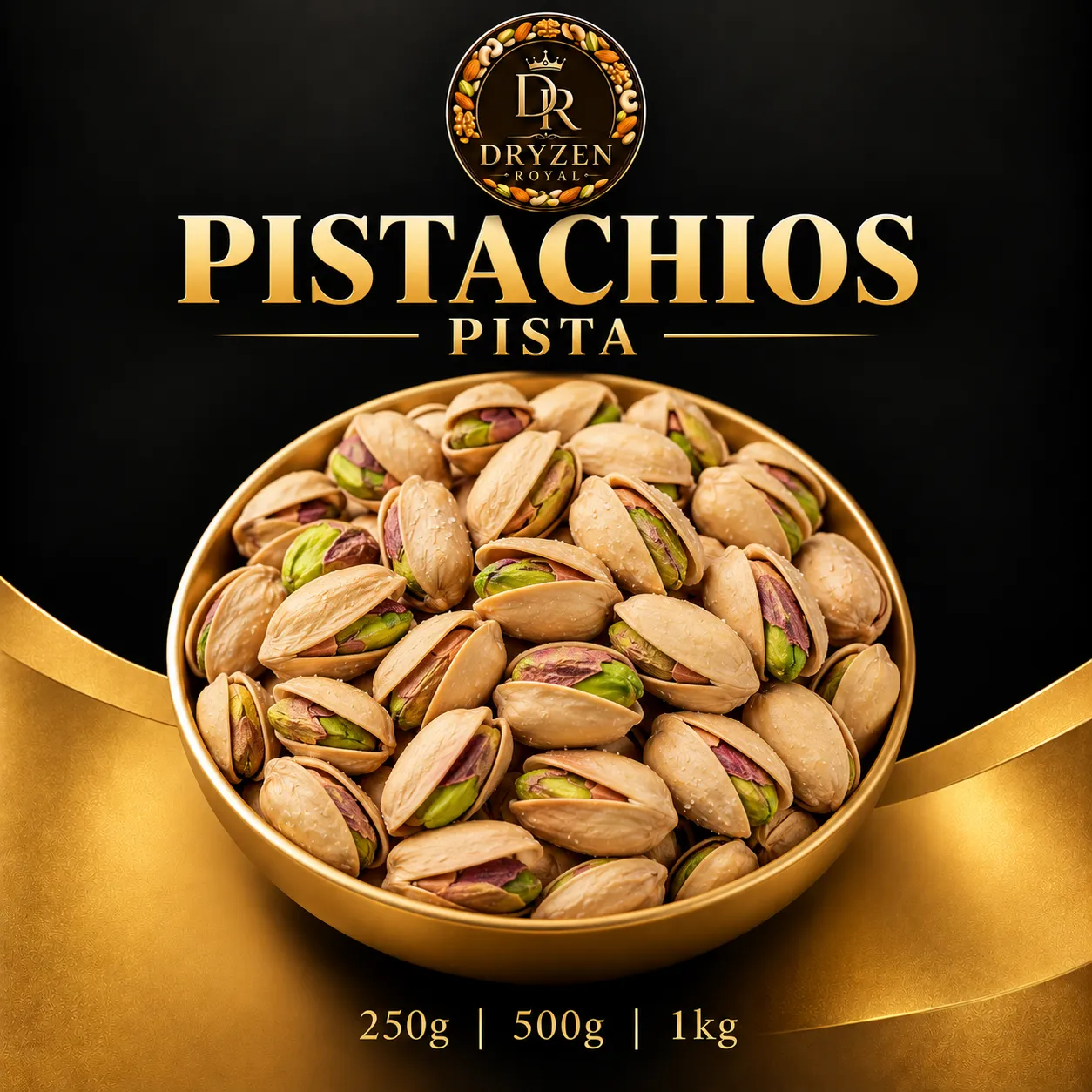
Dryzen Royal's current pistachio listing describes a roasted, lightly salted product. Check that preparation against the flavour you want; do not assume that every pista product is plain or ready-shelled.
For a more strongly flavoured tea, try roasted cashews alongside a small amount of raisins. The two-bowl arrangement lets someone choose a savoury bite, a sweet bite or a little of both. If you add biscuits or another snack, reduce the number of dry-fruit varieties to keep the table manageable.
Choose the tea first, then select two accompaniments. Check preferences and ingredient restrictions before buying. Label bowls where ingredients are not obvious, and do not describe a mixed nut spread as suitable for someone with a nut allergy merely because one ingredient has been removed.
Prepare clean, dry bowls, small serving spoons, napkins and a shell dish if needed. Set out modest amounts and replenish them from the packs. Avoid returning food handled by guests to the original storage bag.
For a larger gathering, use our dry-fruit platter guide to plan the arrangement. Taste is personal: use these pairings as a starting point, then keep the combinations your guests actually enjoy.
Almonds and raisins are a simple starting combination. Offer them separately and adjust the selection to your guests' preferences.
Separate bowls make ingredients and textures easier to choose. A mix can also work if everyone knows and accepts its contents.
Yes, if you like the flavour contrast. Check the seasoning first and consider how strongly flavoured the tea and other snacks are.
Questions about this article?
Email us and we will get back to you.
Explore more
