- 100% Natural
- Premium Quality
- No Preservatives
- Fresh & Healthy
A recipient-focused checklist for opening a dry-fruit gift, retaining product information and organising suitable storage before sharing.
Dry fruit gift unboxing is a good moment to check the food information, not just admire the ribbon and box. A few simple steps help you understand what was sent, how the contents are packed and where they should be stored before anyone begins sharing. The recipient’s job is different from the buyer’s comparison or the sender’s packing checklist.
This guide is for opening a gift at home in Pakistan, including compartment boxes, pouches and mixed assortments. It does not assume that every gift contains the same varieties or that every decorative container provides airtight protection. Use the actual product labels and condition as your reference.
Choose a clean dry surface away from cooking steam, a sink splash zone and direct sunlight. Have a tray for loose wrapping and a separate place for the food. Wash and dry your hands before handling edible contents.
Find the card, receipt or order reference if one is included. Keep personal gifting messages separate from product information so neither is accidentally discarded. A photograph of the unopened arrangement can also help you remember which item came from which compartment.
There is no need to open every inner pouch immediately. If the gift contains several sealed products, inspect the outer arrangement first and decide which portion you actually want to use.
Remove loose ribbons, paper shreds and other non-food decorations carefully. Do not let glitter, adhesive pieces or staples fall into open compartments. A beautiful presentation may contain materials that are not intended for direct eating contact.
Use scissors or a suitable opener away from the food. Avoid cutting deeply through a wrapper when you cannot see whether a food pouch sits directly beneath it.
Look at the outer box for obvious damage and then inspect any inner seals or pouches. A sound wooden lid does not tell you whether the food packaging inside remained intact. Equally, a slightly scuffed decorative box does not by itself establish the condition of every sealed item.
If something is leaking, torn, damp or otherwise concerning, pause before transferring the contents. Document what you can see and keep the relevant packaging. Do not mix an uncertain portion with other foods while deciding what to do.
For an order issue, contact the seller through the current support process associated with the purchase. Do not assume a fixed return window or compensation promise from a general article; the applicable policy and circumstances need to be checked.
Visible mould, an unusual smell, pests or unexplained dampness are reasons for caution. Tasting is not a reliable way to establish whether something is safe. Keep questionable contents away from serving bowls.
If the condition is uncertain, avoid trying to repair it with washing, roasting or extra seasoning. Those steps can hide appearance without resolving the underlying problem.
Identify each product, including whether nuts are in shells, dates contain pits and any salt or flavouring has been added. Similar colours do not guarantee the same preparation. A mixture may contain ingredients that are not obvious at first glance.
Retain the original labels or take clear photographs of names, ingredients, dates and storage instructions. If the gift was divided from larger packs, keep any information supplied by the sender. Do not invent missing details based on the box’s appearance.
For unusual pale marks on dried fruit, our white-spots guide explains why a quick visual assumption can be unreliable. When the condition remains doubtful, do not taste to settle the question.
Before opening several pouches, check that you have suitable clean dry containers and storage space. A large gift can become inconvenient if every item is exposed at once and no reliable place has been prepared for the reserve.
Keep varieties separate when you want distinct textures and clear ingredient identification. Sticky dried fruit can affect crisp nuts in a mixed jar, while strong seasoning spreads. Separation also makes it easier to retain the correct source information.
Our dry-fruit storage guide covers the broader conditions for different varieties. Follow product-specific instructions rather than assigning one storage method to the entire decorative box.
Inspect the actual construction and inner packaging. A divided wooden box may be designed mainly for presentation. Do not assume it is moisture-resistant or airtight unless there is a reliable basis for that claim.
If transferring food, label the new container and keep it linked to its source pack. An elegant jar without a name or opening date can become confusing once several gifts have been unpacked.
Choose what you want to share now and keep the remainder protected. Pour a modest amount into a clean bowl rather than placing the full gift in the centre of a busy table for a long warm gathering.
Provide a separate bowl for discarded shells and pits. Let guests know whether dates contain pits and whether nuts remain in shells. Do not put waste back into food compartments or balance it on a lid that will later cover the food.
Use clean dry serving utensils where appropriate. If a spoon becomes wet or sticky, replace it rather than returning it to the reserve pouch. A small working portion is easier to manage than repeated handling of the entire gift.
Tell other household members where labels and remaining sealed packs are kept. If someone else will serve the gift later, they should not have to guess the ingredients or preparation. A short written note can be more useful than a one-time verbal explanation.
Check individual ingredient needs before sharing a mix. Removing a visible nut does not automatically make the rest suitable for someone avoiding that ingredient. The original product information and handling context matter.
For young children or anyone with chewing or swallowing difficulties, whole nuts, hard pieces and pits need particular attention. Choose an appropriate form and supervision instead of assuming every gift compartment is ready for every guest.
A gift does not have to be eaten immediately to show appreciation. It is reasonable to store it properly, serve only a little or pass clear information to someone else who will use it. The practical aim is suitable handling and informed choice.
If you re-gift an unopened suitable portion, keep its product information with it. Do not remove the label solely to make the presentation look more personal.
Keep a simple note of the arrival, the products received and the storage arrangement. Use the actual dates available rather than creating a new unsupported expiry. Finish older suitable household stock first without mixing every batch together.
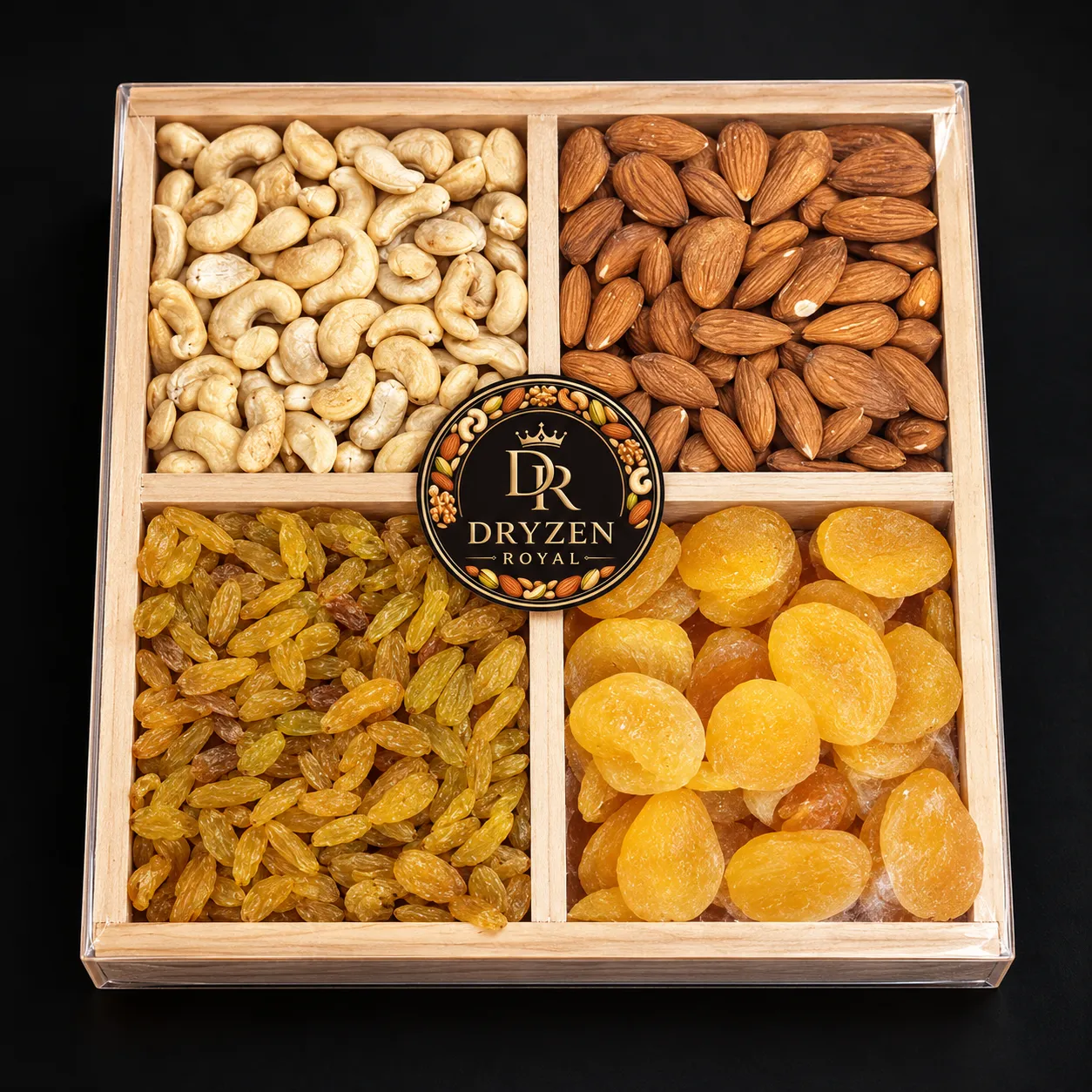
Explore the Dryzen Royal Four-Compartment Gift Box when choosing a future present or planning dry fruit gift unboxing. Check the current contents and packaging details so expectations match the product actually supplied.
Keep them or take clear photographs before discarding packaging. Product names, ingredients and storage instructions may be needed later.
No. Decorative construction and secure food packaging are separate features. Inspect the actual inner packaging and follow product instructions.
Keeping varieties and batches identifiable usually makes storage and ingredient checks easier. Mixing also transfers moisture and seasonings between items.
Document the condition before unnecessary handling and contact the seller using the order’s current support process. Do not assume a particular remedy or policy.
Questions about this article?
Email us and we will get back to you.
Explore more
