- 100% Natural
- Premium Quality
- No Preservatives
- Fresh & Healthy
From badam and kaju to khajoor and kishmish, discover eight popular dry fruit varieties, how to compare quality and prices, and simple ways to use and store them.
A good dry fruit selection should earn its place in your kitchen. Think crisp almonds for breakfast, soft raisins for a bowl of kheer, and a few cashews to make a weekend curry feel special. With so many varieties, pack sizes, and gift boxes available in Pakistan, choosing well is about knowing what you will enjoy, how you will use it, and what to check before ordering.
This dry fruit guide brings those decisions together. You will find familiar names, practical buying tips, everyday serving ideas, and a straightforward way to compare quality and value without getting distracted by fancy packaging.
In Pakistani shops, “dry fruit” usually covers both nuts and dried fruits. Almonds, walnuts, pistachios, and cashews sit beside dates, raisins, dried figs, and dried apricots. They share a shopping category, but they are not nutritionally identical.
Dried fruit is fruit with much of its water removed. Nuts are a different food group and generally contribute more fat and protein. A mixed pack can include both, so read the ingredients instead of assuming that every combination offers the same thing.
Almonds have a firm bite and a mild flavour that works with sweet and savoury food. Slice them over porridge, chop them into baking, or use them to finish a homemade dessert. Whole almonds are convenient for serving, while pieces can be just as useful in the kitchen.
If badam is already part of your routine, explore Dryzen Royal’s almond selection and choose a pack size you can comfortably finish.
Walnuts bring a softer crunch and a slightly bitter edge. They pair well with apples, oats, yoghurt, and banana bread. Their flavour can be more noticeable than that of cashews, so begin with a small amount if you are adding them to a new recipe.
Cashews work well in rice dishes, desserts, and blended sauces. Their mild taste makes them easy to combine with other ingredients. When choosing cashew nuts, check whether they are plain, roasted, or salted so the flavour suits your intended use.
Chopped pistachios can transform the appearance and texture of kheer, sheer khurma, or a simple yoghurt bowl. Shelled pistachios save preparation time; in-shell varieties offer a different serving experience. Compare edible quantity when weighing up prices.
Raisins are dried grapes with a chewy texture. They are useful in breakfast bowls, baking, and rice dishes. A little goes a long way when you want sweetness scattered through a dish. Browse raisins and kishmish if you want a versatile cupboard ingredient.
Dates vary in size, softness, and flavour. Some are easy to chop into oats; others are better suited to stuffing or serving whole. Remove the stones before blending or chopping, and choose the variety according to your recipe rather than assuming all dates behave alike.
Dried figs have a distinctive texture that works in porridge, compotes, and baking. Slice larger figs into smaller pieces so their sweetness spreads through the dish. Follow the pack’s preparation instructions and check the texture before using them in a delicate recipe.
Dried apricots can balance richer flavours in rice, fruit compote, and desserts. Colour and softness vary by product and processing method. Read the label for ingredients and any declared preservatives instead of judging quality by brightness alone.
Nuts and dried fruits can add variety to everyday meals. Nuts contribute plant protein, while dried fruit offers a convenient way to include fruit. The amounts of fibre, fat, sugars, and other nutrients vary between varieties and products, so the nutrition label is more useful than a broad promise about “superfoods.”
The practical benefits are easy to appreciate: many varieties need little preparation, a small amount adds noticeable flavour, and you can use the same pack across breakfast, cooking, and desserts. Dry fruit complements a varied diet; it does not replace balanced meals or act as a treatment for a health condition.
Check for added sugar, salt, oils, and flavourings. A sweetened mix or salted nut may be exactly what you want, but it should be a deliberate choice. “No added sugar” does not mean sugar-free: dried fruits still contain naturally occurring sugars.
A smaller pack can look cheaper while costing more per 100g. For example, a hypothetical 250g pack at Rs. 1,000 costs Rs. 400 per 100g. Use this calculation to compare similar products, then account for shells, coatings, whole kernels, and broken pieces.
For a broader discussion of what affects cost, read our dry fruit prices guide. Check the current product page before ordering because prices and availability can change.
Two mixed dry fruit packs can have very different proportions. One may contain mostly raisins, while another includes more almonds and cashews. Look for clear contents and weights, especially when the gift box is a large part of the presentation.
If you bake once a month, a smaller pack may be more useful than a large bag. If several family members use nuts at breakfast, a larger quantity may make sense. Value depends partly on how much you actually finish while it is still enjoyable.
Look for sealed packaging, clear product details, and storage guidance. Before buying a gift, check delivery information and allow time for the occasion. When the order arrives, inspect the seal and product condition before transferring the contents to a container.
A thoughtful gift starts with the recipient’s preferences. Someone who enjoys cooking may appreciate a practical assortment, while a family celebration may call for an attractive serving box. Ask about nut allergies where relevant and check the exact contents before choosing.
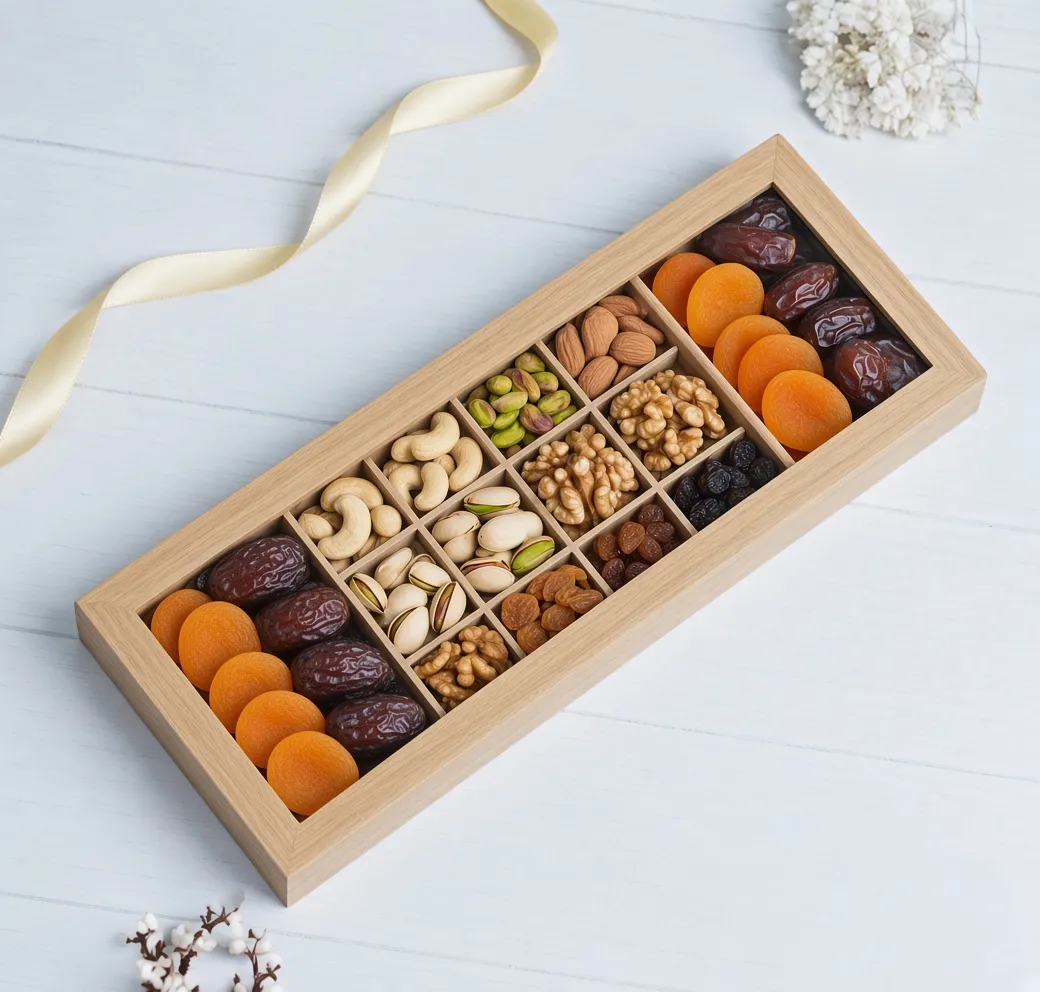
The premium dry fruit gift box is one option to explore. Compare its listed contents with the wider gift collection, keeping your budget, occasion, and recipient in mind.
For more ways to put an open pack to use, explore our dry fruit breakfast ideas. Start with small quantities and adjust to taste; the goal is to complement the meal.
Pour a serving into a small bowl instead of eating directly from a large packet. Dried fruit is concentrated compared with fresh fruit because much of the water has been removed, and nuts are also energy-dense. Your ideal amount depends on the rest of your meals and individual needs.
Dried fruit is best enjoyed as part of a meal rather than repeatedly between meals because it can stick to teeth. Check labels for allergens, particularly in mixed packs. Whole nuts are a choking hazard for young children, so choose an age-appropriate preparation.
Follow the product’s storage instructions first. Keep opened packs securely closed or transfer their contents into clean, airtight containers. Store them away from moisture, direct sunlight, and cooking heat, and use a dry spoon when serving.
In a warm kitchen, check whether the manufacturer recommends refrigeration. Mark the opening date on containers and use older packs first. Do not top up an old batch before checking its condition, and discard products with mould or an unusual, unpleasant smell.
Our dry fruit storage guide covers this topic in more detail. Good storage habits are particularly useful when you keep several varieties at home.
You do not need an elaborate collection to get started. Choose one crunchy variety you enjoy, one dried fruit you will use in meals, and a pack size that fits your household. Read the ingredients, compare equivalent weights, and keep the packaging instructions handy.
Ready to choose? Browse Dryzen Royal’s nuts and dried fruits to find options for breakfast, cooking, sharing, and gifting.
In everyday Pakistani shopping, dry fruits often includes nuts and dried fruits. Dried fruits specifically means fruits with much of their water removed, such as raisins, dates, and dried apricots.
Choose according to taste and how you cook. Almonds add crunch, cashews blend into sauces, and raisins or dates add sweetness to meals. There is no single best variety for everyone.
Compare the cost per 100g for similar products. Account for shells, added coatings, whole kernels versus pieces, pack size, and the proportions of ingredients in mixed packs.
No. Dried fruit naturally contains sugar. No added sugar means sugar has not been added; it does not mean that the product contains none.
Ready-to-eat nuts do not require soaking. Soaking can be useful when a recipe needs a softer texture, such as a blended sauce.
Questions about this article?
Email us and we will get back to you.
Explore more
Check the listed assortment, net weight, allergens, packaging, and delivery information. Choose flavours the recipient enjoys and confirm the current contents on the product page.
