- 100% Natural
- Premium Quality
- No Preservatives
- Fresh & Healthy
A workplace pantry guide focused on a small trial, measured stock, separate serving utensils and reliable refill records.
Dry fruit office pantry planning starts with practical questions: who will use the snacks, where they will be served, and how stock will be kept identifiable. Buying a large assortment before answering those questions can leave some items unused and others repeatedly unavailable. A small measured trial gives a clearer starting point.
This guide is for a modest workplace pantry in Pakistan, not a corporate gift campaign or a nutrition programme. The aim is a tidy, understandable snack setup with sensible quantities and a reliable refill process. Employee choice matters more than assuming one mix is the right answer for everyone.
Choose one or two plain options and a limited trial period. Ask about preferences and relevant ingredient needs through your usual workplace process. Do not infer that every colleague eats nuts or wants the same portion.
For example, 20 trial portions of 25g require 500g of usable product. That is an ordering calculation, not a dietary recommendation or a prediction of daily demand. The trial can be adjusted to the actual number of interested people.
Record the preparation as well as the product name. In-shell pista, plain almond kernels and a sweetened dried-fruit mix create different serving and waste arrangements. A short accurate list is more useful than a vague label reading premium snacks.
Make it clear whether the pantry offers occasional shared snacks or a planned individual allocation. That affects how portions are prepared and how refills are estimated. Avoid ordering from a headcount alone when usage is voluntary.
Keep feedback simple: which item was used, whether the format was convenient, and whether the container worked. There is no need to collect unnecessary personal medical information to decide whether a serving scoop is practical.
Check net weight, shell or pit content, seasoning and storage instructions. A kilogram of in-shell nuts does not provide the same ready-to-eat amount as a kilogram of kernels. If staff need a quick snack between meetings, handling time can matter.
Our price-per-100g guide explains a consistent comparison method. Use the current listed prices when ordering rather than an invented fixed rate in a planning document.
For a measured serving cost, divide the purchase cost by usable grams, then multiply by the planned serving weight. Keep packaging or serving costs separate if they matter to the budget. This makes comparisons clearer when pack sizes differ.
A larger pack can look economical but still be unsuitable if the team uses it slowly or storage space is limited. Include likely waste and handling in the decision. A smaller trial can reveal those issues before they become a recurring expense.
Avoid assuming that every product is always available in every preparation. Confirm the current listing and build a substitution rule, such as plain kernels of the same type, rather than accepting any vaguely similar mix.
Choose a clean, dry area away from kettle steam, a sink splash zone and direct sunlight. A pantry counter can become warm and damp during busy tea rounds, so inspect the actual location rather than relying on its room name.
Use covered food-safe containers with secure lids. Give each item its own clean dry serving utensil and a small place to rest it without touching wet surfaces. Avoid a common scoop passed between several varieties.
If individual portions are more suitable, prepare them with clean equipment and label them. Do not leave the entire reserve exposed while filling dozens of small pouches in a busy office kitchen.
In-shell nuts need a clearly separate waste container. Date pits should not return to the eating bowl. Provide a practical waste route so people do not balance shells on the container lid.
A tidy setup reduces confusion as well as mess. Colleagues should be able to see which container holds food, which utensil belongs to it and where the discarded material goes.
Display the product name, preparation and relevant ingredients beside the serving container. Retain the original label or a clear photograph, including storage instructions and dates. A handwritten jar name should not replace the available product information.
Our dry-fruit label guide explains details worth checking before purchase. Recheck them on a new batch because a familiar package design does not guarantee identical ingredients forever.
Do not label a shared setup allergy-safe without a reliable basis. Removing a visible ingredient from a mix does not establish suitability, and serving equipment can move material between containers.
Use older suitable stock first and keep batches identifiable. Finish and clean a serving container before topping it up from a newly opened pack. Otherwise, the contents can inherit several different dates and instructions.
Keep a simple stock record with product, pack size, opening date, amount transferred and remaining reserve. A spreadsheet is optional; a small clear log can be enough. Record actual use rather than estimating from memory at the end of the month.
If an item becomes damp, smells unusual or shows spoilage, remove it from service and assess the affected stock. Do not mix it with a fresh delivery to disguise a small quantity or try to repair it with extra roasting.
If a 500g trial lasts much longer than expected, reduce the next order or offer that item less often. If one option is repeatedly empty, check whether people prefer it or whether its scoop produces larger portions.
A refill rule should account for real delivery arrangements without promising a particular supplier lead time. Order based on confirmed current information and the stock you actually have.
Dry pantry ingredients should stay protected from moisture and excessive warmth. Follow the product’s storage instructions, and use suitable cold storage if required. A sealed jar near a hot appliance is still exposed to heat.
Keep yogurt, milk, cut fruit and soaked nuts on a separate food-handling plan. Once dry ingredients are mixed with perishables, the resulting snack needs different storage. Do not leave a prepared dairy bowl out simply because its topping is dry.
Bring out a small working quantity for a meeting rather than the full pantry reserve. Keep unused sealed stock in its appropriate storage location and return serving tools clean and dry.
A useful dry fruit office pantry is one that colleagues understand, use voluntarily and can keep tidy. Track waste, refill frequency and practical feedback. Avoid claiming the snack programme treats illness, guarantees productivity or replaces a balanced diet.
For a larger team, expand only after the trial shows how containers, portions and storage work. More varieties create more labels, utensils and stock records, so complexity should earn its place.
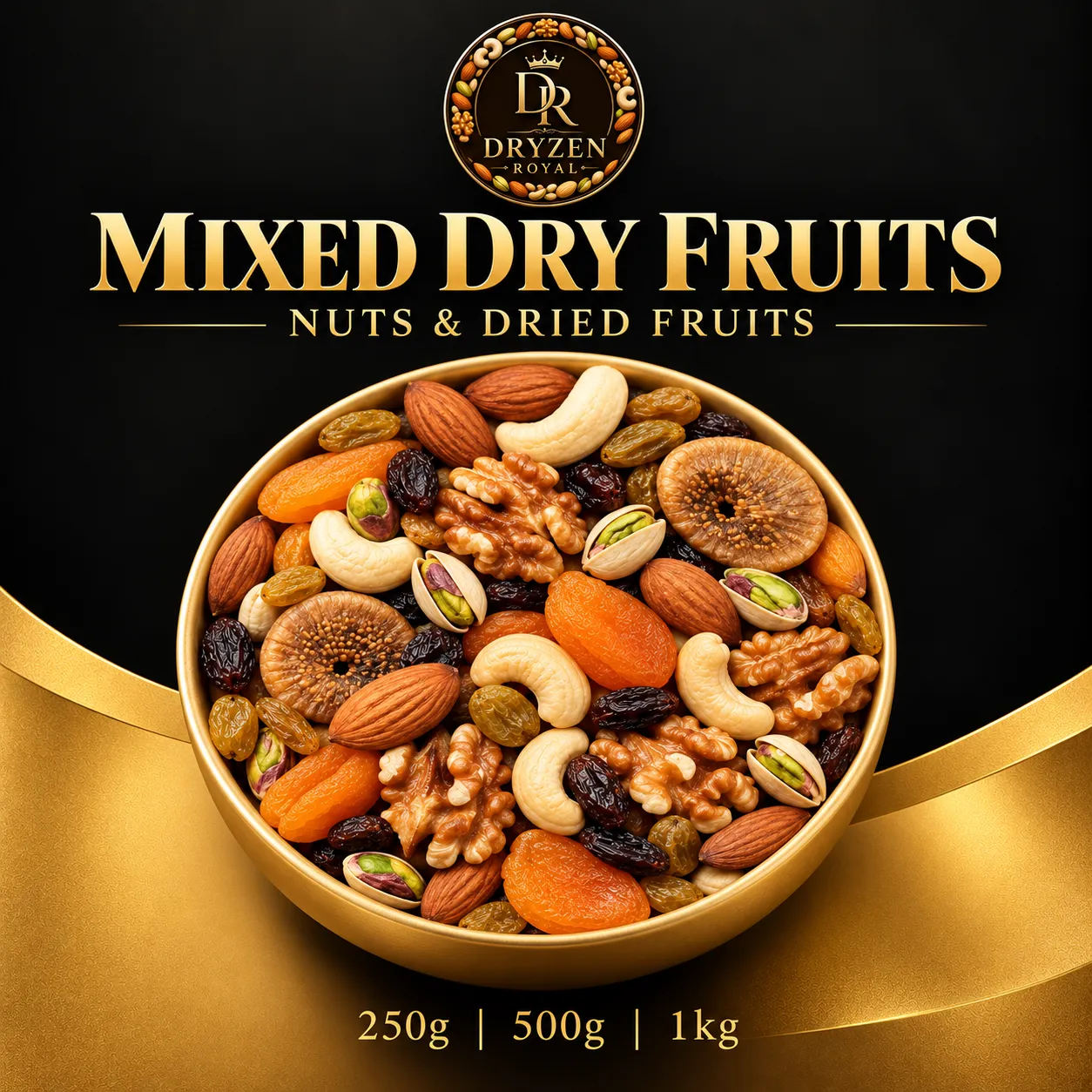
Explore Dryzen Royal Mixed Dry Fruits and Nuts for a dry fruit office pantry trial. Check the current contents, net weight and preparation, then choose a measured quantity that fits your team’s actual routine.
Offer choices and collect relevant preferences. A shared blend is not automatically appropriate for every ingredient need or personal taste.
A covered supply with separate clean serving tools is easier to protect from dust, moisture and repeated hand contact.
Run a limited trial with a measured number of portions, then record actual use. Avoid treating headcount as guaranteed daily consumption.
No. Provide accurate ingredient information and choice without promising medical, productivity or weight-management results.
Questions about this article?
Email us and we will get back to you.
Explore more
