- 100% Natural
- Premium Quality
- No Preservatives
- Fresh & Healthy
Compare order records and delivered packs without assuming prices, policies or charges.
Dry fruit order invoice checking starts with the actual transaction, not a remembered price or a screenshot of a different pack. The useful task is to compare item names, selected variants, quantities and charges across the order confirmation, invoice and delivered products. A small mismatch in pack size can change what you expected to receive.
This guide does not state Dryzen Royal's prices, tax treatment, delivery charges or return terms. Those must come from the current listing, checkout, invoice and published policies. A dry fruit order invoice is most useful when read alongside the exact order reference and the product options you selected.
Keep the order confirmation, the invoice or payment summary supplied for the purchase, and the delivered pack labels available. If only one document exists, use what is provided and ask the seller for clarification where needed. Do not assume every store uses the same document names or layout.
Write down the order reference and date in a simple note. This helps keep separate purchases apart, especially when buying several gifts. A recipient's gift box and your own pantry order may have similar names but different selected options.
Read each item name and compare it with the product page or confirmation. A general label such as mixed dry fruits may describe a category rather than the exact selected pack. Check whether a variant, size or gift format is listed separately.
Mark each line as checked only after matching both name and option. A correct total does not prove the right variant was selected. A longer product title on the invoice does not necessarily mean a different item if the identifying details match.
A 500 g pack ordered twice is two units, not one 500 g line with a vague extra note. The total food weight may be one kilogram, but packaging format can still matter for gifting or storage. Check unit count and weight per unit.
If a gift box is sold by a described assortment rather than a simple net-weight variant, use the listing's actual wording. Do not infer that every compartment has equal weight or that the box's external size establishes its food quantity.
For each line, record item name, selected option, units ordered, units received and the label detail that confirms it. Paper or a spreadsheet is enough. The aim is traceability rather than a complicated accounting system.
If a field is absent, write “not shown” instead of inventing a value. That makes a later query clearer. A dry fruit order invoice review should reveal what is documented and what needs clarification, rather than fill gaps with assumptions.
If unit price and quantity are both shown, multiply them to check the line total. Use the exact displayed values and currency. Do not use a price from a previous order or another pack size.
For a symbolic example, unit price P multiplied by quantity Q gives the pre-adjustment line value. This explains the calculation without inventing a product price. Discounts or other adjustments may then apply according to the actual document.
A discount can appear against an item or once against the order total. Do not subtract it twice. Read the wording and compare with the checkout confirmation if available. If an adjustment is unexplained, prepare a question rather than guessing.
A promotional code also does not prove every item was eligible. Use the actual terms shown at purchase. This guide does not create an entitlement or promise a discount; it explains how to reconcile the records you have.
Look for any delivery, service or tax lines. Some amounts may be included in displayed prices while others appear separately, depending on the transaction and applicable rules. Do not add a charge again simply because a note mentions it.
Compare the final amount with the payment record. If a balance, refund or partial payment is shown, keep it separate from the original order value. Payment status is not always the same as fulfilment or delivery status.
An arithmetic mismatch asks how the numbers add up. A policy question asks whether a charge follows the purchase terms. A clear query identifies which issue needs an answer.
A dry fruit order invoice does not replace the seller's current policy page or applicable consumer requirements. Read the actual terms and seek clarification if needed. A generic blog example is not legal or tax advice for a specific transaction.
Compare labels and quantities before throwing away outer packaging or mixing products into household containers. If something differs, record the name, variant and visible information while it is easy to identify.
For a gift, make the check before decorating or forwarding it where practical. Do not open sealed food unnecessarily if relevant information is visible outside. Confirm the order while preserving appropriate packaging and handling.
State the order reference, the line in question, what the confirmation shows and what you received or were charged. A short comparison is more useful than a long message mixing several purchases.
Include clear relevant photos or screenshots if the seller's support process requests them. Keep unrelated personal or payment details out of public posts. Full card information is not needed for a normal product-line query; use the appropriate transaction reference and evidence.
Price per 100 g can help compare pack options when actual price and net weight are known. It does not capture every difference in gift packaging, assortment or presentation. Use it as one tool rather than proof that two products are identical.
A dry fruit order invoice may include a gift format whose value is not explained by food weight alone. Check the listing's described contents. Do not invent a cost breakdown for wood, ribbon or accessories that the seller has not provided.
Keep confirmation, invoice and any support response together while relevant to your purchase and household needs. Use a clear filename or folder with the order date and reference.
If family members ordered similar gifts, label which record belongs to which purchase. A dry fruit order invoice becomes easier to understand when it is not separated from the confirmation explaining its selected options.
Mark the order checked when names, variants, quantities and totals reconcile, or record the exact unresolved point. Do not keep recalculating a correct document because a later product listing now shows another price.
A careful review uses actual records, separates weights from units and asks focused questions where information is missing. That method supports buying and gifting without invented prices or assumed store promises.
For future purchases, keep a blank note with fields for reference, item, option, unit count, pack weight and final checked status. Fill it from each new transaction rather than copying old values. The template saves effort while still requiring the actual evidence for every order.
Use comparing price per 100 g for comparisons based on actual listed values. Read reading dry-fruit pack labels when checking delivered product information.
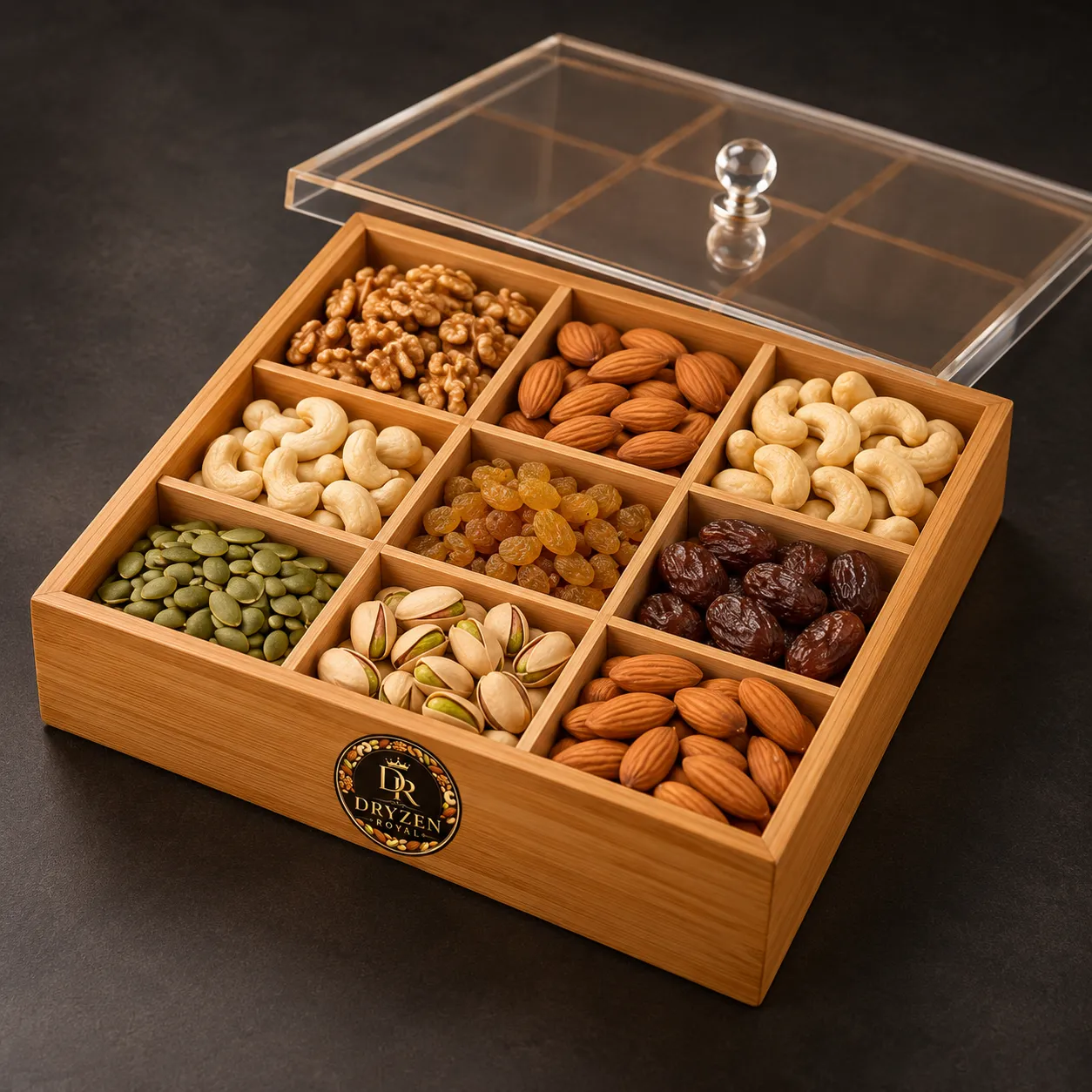
Explore the Wooden dry fruit gift box and other Dryzen Royal options, then review the current listing and your actual order details before purchasing.
No. Match item names, variants, weight per unit and unit count separately.
No. Check where the document applies it so the same adjustment is not counted twice.
Use the actual transaction records; a later listing may differ.
Give the reference, exact line, expected record and observed difference, with relevant evidence if requested.
Questions about this article?
Email us and we will get back to you.
Explore more
