- 100% Natural
- Premium Quality
- No Preservatives
- Fresh & Healthy
Bake pistachio basbousa with semolina, yogurt and a measured syrup. Follow resting, scoring and cooling tips for a moist tray cake with a light pista topping.
Pistachio basbousa is a semolina cake with yogurt in the batter and a light syrup added after baking. The pista forms a modest topping rather than replacing the semolina. Its grainy, moist crumb is different from a flour sponge, so resting and syrup absorption deserve attention.
This small-tray method is intended for a home kitchen. Prepare the syrup first, use an even layer of batter and allow time for cooling. Do not judge a hot syrup-soaked cake by whether it can be lifted immediately.
Allow fifteen minutes for mixing, twenty minutes for resting and thirty to forty minutes for baking. Grease the tin and keep a heatproof surface ready.
For the syrup use 100g sugar, 120ml water and 1 teaspoon lemon juice. A few drops of rose water are optional. Different products have different strengths, so add that accent cautiously.
Heat the syrup ingredients gently until the sugar dissolves. Simmer for around five minutes, remove from the heat and cool. Do not reduce it into dark caramel or a thick candy mixture.
A measured syrup makes the first batch easier to assess. Keep any extra flavouring modest and separate from the water measurement. The cake should retain a clear semolina and dairy character.
Mix the semolina, sugar, baking powder and salt. Combine yogurt, butter and milk separately, then stir into the dry ingredients until even. Cover and rest for twenty minutes.
The batter thickens as it stands. If exceptionally stiff, add milk one spoonful at a time and record the amount. Very fine and very coarse semolina absorb differently, so the stated medium grind is useful for a first trial.
Our salted and unsalted pista guide explains why the topping preparation matters. Weigh kernels after shell removal and check the current product description.
Heat the oven to 180°C conventional or about 160°C fan. Spread the rested mixture into the tin and level the corners. Avoid a high mound in the middle.
Score shallow portion lines and scatter the chopped nuts lightly. The marks help later cutting without requiring a thick layer of garnish. Very exposed pieces may colour early, so keep them small.
Bake on the middle shelf for approximately thirty to forty minutes. The top should be golden and the centre set, with no raw batter on a skewer. Cover loosely if the topping colours before the middle finishes.
Move the hot tin to a protected surface. Pour the cooled syrup gradually, including along the scored lines. Allow a moment between additions rather than flooding one corner.
Stop if the cake stops absorbing and a deep puddle forms. The measured quantity is a reference, not a reason to ignore the actual tray. Different reductions and pan dimensions can change absorption.
Let the cake cool and the syrup distribute. Cut along the marked lines and support each piece with a small spatula. Hot saturated crumb is fragile even when properly baked.
Serve a modest square with plain tea or a separate spoonful of yogurt. A second sweet sauce is unnecessary. Keep perishable accompaniments chilled until needed.
For a finer finish, our pistachio garnish guide offers chopping ideas. Large hard chunks are less comfortable on a small soft cake.
If the crumb is dry, review bake duration and syrup absorption before changing every liquid. If it is wet and dense, check centre doneness and whether too much syrup was added.
If your pistachio basbousa is too sweet, use slightly less syrup on the next trial. Do not remove yogurt or butter at random because they also affect batter structure.
Cool leftovers promptly and store in suitable covered packaging. Refrigeration is sensible in warm conditions for this dairy-based cake. Identify wheat, milk and pistachios when sharing, and keep wet syrup utensils away from the dry nut reserve.
For a dinner, bake early enough for the syrup to settle before guests arrive. Prepare the topping in a separate dry bowl and keep the yogurt accompaniment chilled. Trying to bake, soak and lift portions at the last minute makes it harder to judge whether the centre is ready.
If changing tin size, compare surface area and keep a similar batter depth. Doubling ingredients in the same tin creates a deeper cake with a different centre bake. Two suitable small tins are often easier to monitor than one overfilled tray. Record the dimensions and actual checking time for the next batch.
If the first tray is unfamiliar, cut a small corner only after the cake has cooled enough to hold together. Assess the crumb near the centre as well as the edge. An edge exposed to more oven heat may feel drier and should not determine the syrup quantity for the entire tray.
For the next bake, write down the semolina grind, tin material and amount of syrup actually used. Keep the sugar, yogurt and butter quantities unchanged while adjusting only the syrup finish. This makes the effect of that change easier to judge than rewriting the whole recipe.
When serving a group, cut the cooled tray into equal pieces and use a supporting spatula. Keep a separate plate for any broken edge pieces instead of pressing them back into a clean portion. Store the reserve covered and bring out smaller serving plates as needed, especially when dairy accompaniments are also on the table.
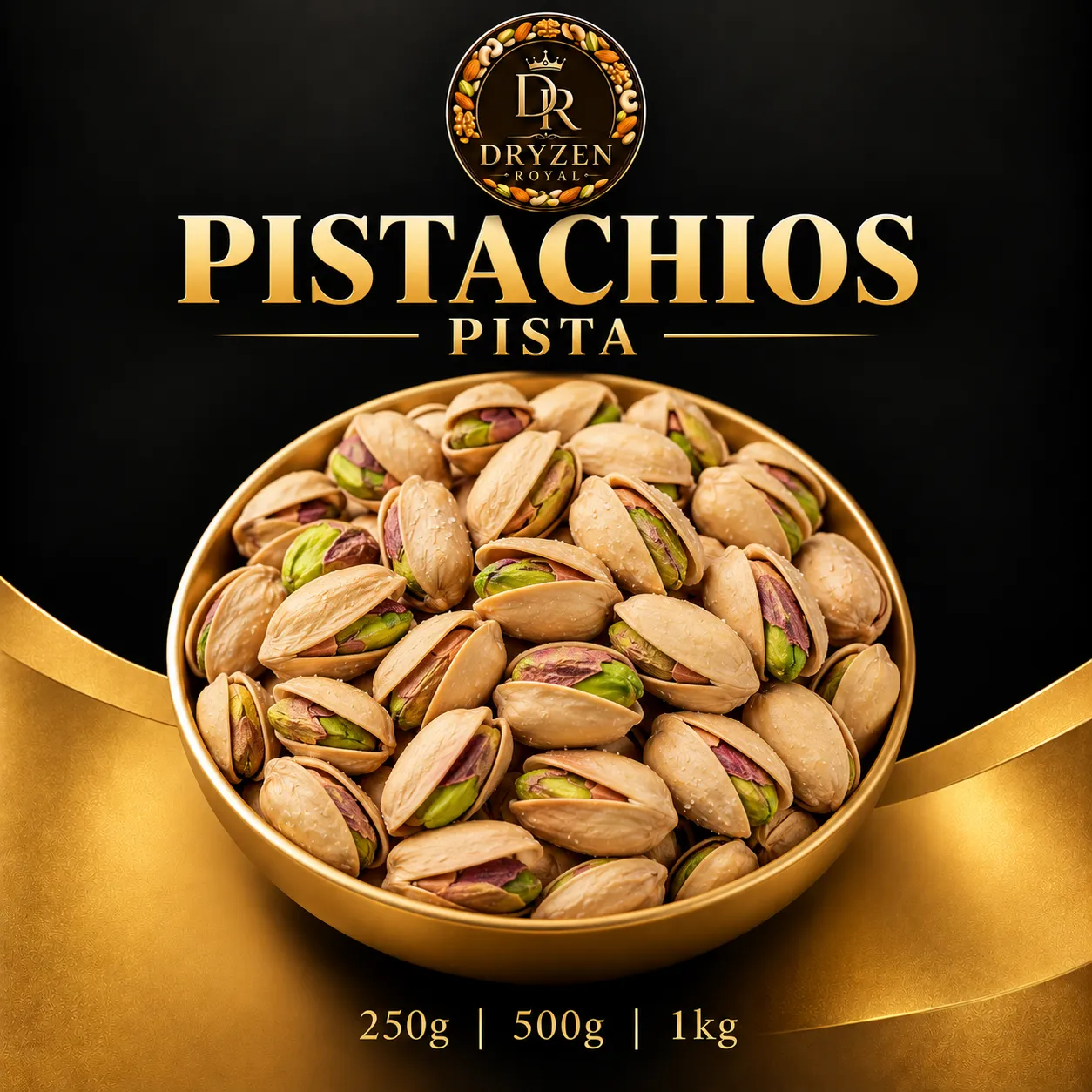
Explore Premium Pistachios Pista Nuts Dryzen Royal when planning pistachio basbousa. Check the current preparation and pack information, choose the quantity your recipe needs, and keep the remaining dry ingredients stored as directed.
Not directly. Semolina provides a distinct grain structure; a flour sponge needs its own recipe.
Watch absorption and stop if liquid pools deeply. Pan size and the degree of reduction affect the amount needed.
Plain kernels give more control. Check the product preparation and test a small amount before topping the tray.
The pause allows semolina to hydrate, making the texture more even before baking.
Questions about this article?
Email us and we will get back to you.
Explore more
