- 100% Natural
- Premium Quality
- No Preservatives
- Fresh & Healthy
A practical pista comparison covering shell weight, recipe quantities, seasoning and when ready-to-use kernels are worth the convenience.
The key difference in shelled vs in-shell pistachios is simple: shelled pista has the hard outer shell removed, while in-shell pista still includes it. That difference matters when comparing prices or weighing nuts for a dessert. A 250g pack with shells does not contain 250g of edible kernels.
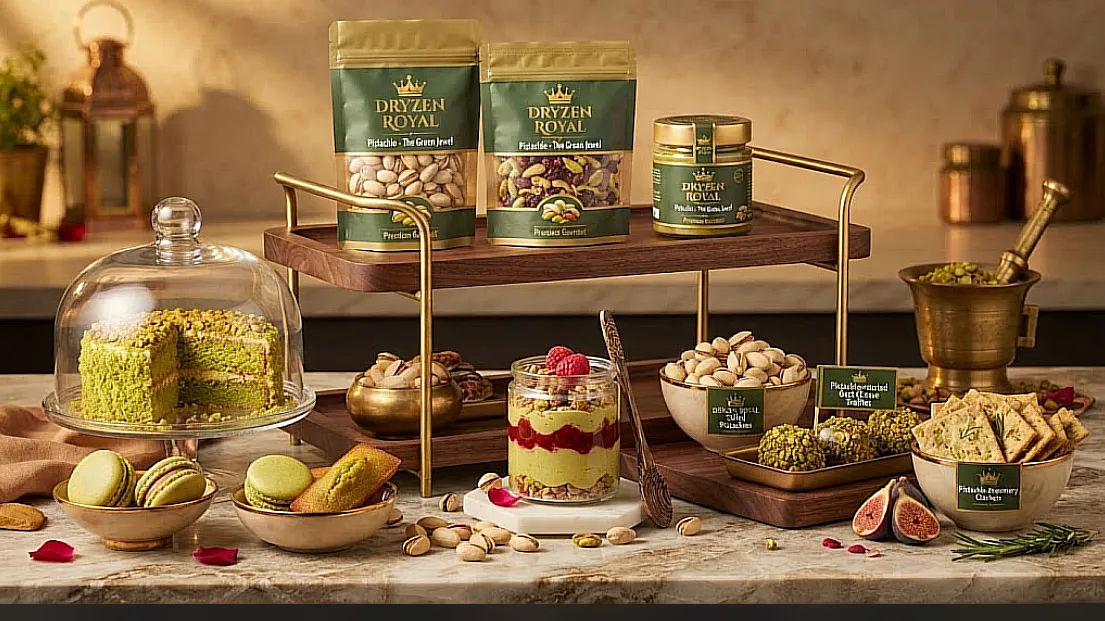
For relaxed snacking, you may enjoy opening the shells. For chopping, grinding or baking, ready-to-use kernels save a preparation step. Neither format is automatically the better purchase for every household.
| Task | What to consider |
|---|---|
| Snack bowl for adults | In-shell pista offers the familiar shelling experience; provide a separate bowl for shells. |
| Finely chopped dessert garnish | Kernels make weighing and preparation more convenient. |
| Pistachio paste | Use kernels and check whether the recipe specifies plain or roasted nuts. |
| Price comparison | Compare the cost of usable kernels, not just total pack weight. |
| Gift selection | Ask whether the recipient prefers ready-to-eat kernels or in-shell nuts. |
American Pistachio Growers describes shelled kernels as a convenient format for kitchen uses such as paste and flour. That convenience is separate from the question of which pack is cheaper.
If the seller provides a reliable kernel yield, you can use it. Otherwise, measure a sample from your own pack rather than assuming every variety and batch has an identical shell ratio.
Illustration only: suppose a 200g sample gives 100g of usable kernels. That sample’s yield is 50%. If a 500g in-shell pack costs Rs 1,500, its estimated usable amount at that yield is 250g, giving Rs 600 per 100g of kernels. A 250g shelled pack at Rs 1,400 would cost Rs 560 per 100g. These are invented numbers to show the method, not current prices or a guaranteed shell ratio.
A small sample is an estimate, not a precise promise about every pack. It can still reveal why a lower price printed on an in-shell bag does not automatically mean better value.
When a recipe specifies “100g shelled pistachios”, weigh 100g after removing the hard shells. If it simply says “pistachios”, look at the method and ingredient notes. A cake batter needs edible nuts, not the weight of discarded shells. Clarify an ambiguous recipe before measuring.
The thin skin around the kernel is different from the hard shell. A recipe may separately call for removing that skin for appearance or texture. Do not confuse shelling with blanching or assume every dessert needs the extra step.
Shelled does not mean unsalted. In-shell does not mean raw. Read the ingredient list and processing description independently of the format. For a recipe in which you control the salt, an unsalted product is easier to work with than a seasoned snack mix.
Roasting can change the flavour of a filling or garnish. Use the type the recipe requests where possible. If you choose a different type, expect a different result rather than trying to correct it by adding extra flavourings without tasting.
Confirm the pack’s form, net weight, seasoning and intended use. For a large batch of desserts, allow time for shelling if you buy in-shell nuts. For occasional snacking, compare the amount you will use before opening a much larger pack merely because its unit price is lower.
Read the current pistachio product details before choosing a variant. For presentation ideas, see the dry-fruit platter guide; for suitable combinations, explore chocolate and dry-fruit pairing.
Yes. Shelled pistachios are the edible kernels without the hard outer shells. In-shell pistachios retain those shells.
The yield varies. Measure a sample or use a reliable yield supplied for that product rather than assuming an exact universal ratio.
No. Shell removal and seasoning are separate details. Check the ingredients and whether the nuts are plain, roasted, salted or flavoured.
Questions about this article?
Email us and we will get back to you.
Explore more
