- 100% Natural
- Premium Quality
- No Preservatives
- Fresh & Healthy
Small savoury steamed bread logs with pumpkin kernels, cooled slightly and sliced rather than filled.
Pumpkin seed steamed bread is a soft yeast bread with chopped kaddu beej kernels, cooked over steam rather than browned in an oven. This version is shaped into short logs that can be sliced after a brief rest. It has no fruit filling and no crisp baked crust.
The pale outside is expected. The useful checks are a risen dough, a cooked centre and a soft but stable crumb. Pumpkin seed steamed bread suits a small savoury meal where you want gentle bread slices beside vegetables, soup or a spread, without heating a full oven.
The batch makes four short logs, giving several small slices each. Allow twenty minutes for mixing and shaping, around an hour for the first rise, a short second proof and about twenty minutes for steaming. Actual rise times depend on yeast and room temperature.
You need a bowl, scales, steamer with a secure lid and four pieces of suitable baking paper. Check that the steamer can hold the logs with room for expansion. Two uncrowded batches are better than pieces pressed together before they rise.
The small sugar amount supports flavour and the dough formula; this is not a sweet filled bun. The recipe contains wheat and may have other ingredient-label considerations. Use edible kernels rather than hard white-shelled seeds that would interrupt a soft slice.
Toast kernels lightly in a dry pan over medium-low heat for three to five minutes. Transfer to a plate and cool fully. Chop into small pieces around 2–3 mm, keeping some texture without large sharp edges.
Warm seeds can raise dough temperature unexpectedly, so do not add directly from the hot pan. A fine dry powder is not required. The measured pieces should spread through the crumb rather than form a thick layer that splits the loaf when sliced.
Combine flour, yeast, sugar and salt. Add lukewarm water and oil, then mix into a rough dough. Knead for eight to ten minutes until smoother and elastic. Add water only a teaspoon at a time if dry flour remains.
A soft slightly tacky dough is normal. Avoid adding large amounts of flour to make it completely dry against the board. Once the structure is developed, fold in the cooled chopped kernels and knead just enough to distribute them evenly.
Put dough in a lightly oiled bowl and cover. Leave until roughly doubled, often forty-five to seventy-five minutes. A warm Pakistani kitchen may shorten that time, while a cool room may need longer. Keep away from direct strong heat that dries the surface.
Do not add more yeast to a partly risen dough simply because the clock has passed a suggested number. Check the yeast product and give the dough a suitable environment. A covered bowl in a stable warm place is more useful than a hot appliance surface.
Turn out and press gently to release large air pockets. Divide into four equal pieces and shape each into a short log around 10 cm long. Keep the thickness reasonably even so the centre cooks at a similar pace.
Place each on its own paper piece. Do not make one large thick loaf from the same dough without changing the steaming plan. Pumpkin seed steamed bread is written for small logs, and a deep centre needs more time than the surface suggests.
Arrange logs with at least 3 cm between them and cover loosely. Leave for twenty to thirty minutes until visibly puffed but not fragile. A gentle fingertip mark should recover slowly. Overproofed dough can wrinkle or collapse more noticeably after cooking.
If steaming in two rounds, keep the waiting pieces in a cooler place so they do not over-rise. The second batch does not need a full extra proof just because the first is cooking. Watch the dough rather than automatically repeating a timer.
Bring water in the lower pan to a steady simmer or moderate boil. The basket and paper must remain above the water. Put the basket in place, cover and steam for about eighteen to twenty-two minutes, checking your steamer's guidance.
Keep enough water in the base and avoid repeated early lid opening. If the lid produces heavy drips, use only the manufacturer's recommended condensation method. Do not improvise loose cloth hanging near a flame or heating element.
Turn off the heat and leave covered for three minutes, then open away from your face and hands. Remove logs carefully with a spatula. The dough should be cooked through without a sticky raw flour band.
If uncertain, cut one log after a brief rest and inspect the centre. A larger shape may need additional steaming. Pale colour does not mean raw, and longer cooking will not create an oven-browned crust. Pumpkin seed steamed bread remains light on the outside by design.
Let the logs settle for five to ten minutes before slicing. Use a serrated knife and gentle motion. Very hot bread can compress and look gummy even when cooked, so a short rest helps you judge the crumb more fairly.
Serve pumpkin seed steamed bread in modest slices beside a savoury dish. A spread can be added at the table. Keep wet sauce off the whole batch so unused slices do not absorb liquid and become difficult to store.
Chop seeds and measure dry ingredients ahead. Keep yeast dough under an appropriate refrigerated method if preparing overnight; do not leave this warm-rise formula on the counter through a hot night.
Refrigerate cooked leftovers promptly in a covered container and use within two days as a conservative household schedule. Re-steam until thoroughly hot, using 74°C as a useful reheating target. The crumb softens again, though repeated heating can make it firmer.
Freeze cooled logs or slices in a labelled container if needed. Reheat according to portion size and your steamer, checking the centre rather than assuming one fixed time. Take out only the amount required.
If the bread is dense, check yeast activity, kneading and proofing before adding extra oil or sugar. If wrinkled, review overproofing and abrupt steam changes. Different problems deserve different corrections.
Pumpkin seed steamed bread becomes dependable when the kernels are small, the dough is evenly divided and steam can circulate around each log. The soft seed bread rewards those measured stages more than a decorative shape or an expectation of baked-bread colour.
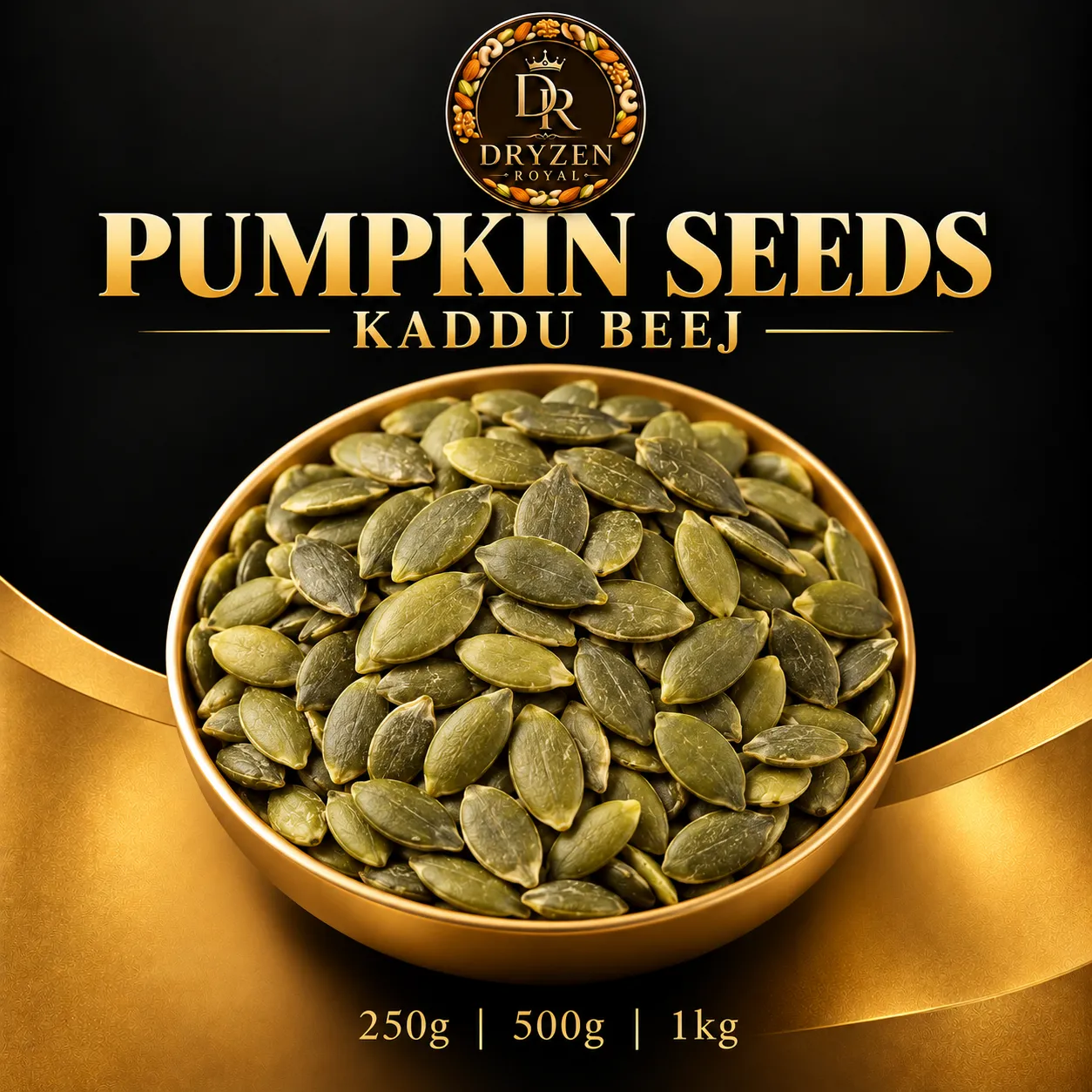
For a pan-cooked bread with a different texture, explore pumpkin seed skillet flatbread. Choose the edible seed format with pumpkin kernels and whole seeds.
Explore Pumpkin seeds at Dryzen Royal and check the kernel format before planning a small savoury bread batch.
Place the empty paper pieces in the steamer first to confirm the logs will have expansion space. If the basket is smaller than expected, make more short pieces rather than squeezing four thick logs against the sides.
No. A pale surface is expected because steam cooks without the dry heat of an oven.
Not reliably. A larger centre needs a different cooking check and usually more time.
Hot seeds can warm the dough unevenly and make the first rise harder to control.
Re-steam until hot through the centre, taking out only the portion needed.
Questions about this article?
Email us and we will get back to you.
Explore more
