- 100% Natural
- Premium Quality
- No Preservatives
- Fresh & Healthy
A gently sweet kishmish scone with cold-butter mixing, clear dough cues and practical freezing advice.
Raisin scones are useful when you want something warm for tea without preparing a cake batter or waiting for yeast dough to rise. Their lightly sweet crumb holds pockets of kishmish, while cold butter and gentle handling help create a tender middle. The dough should look a little rustic rather than perfectly smooth.
This recipe makes eight medium scones and uses ingredients that are straightforward to measure in a Pakistani home kitchen. The main priorities are keeping the butter cool, avoiding excess flour and cutting portions of similar thickness. You can serve them plain or split them with a little butter or jam.
Allow approximately 20 minutes for mixing and shaping, plus 15 to 20 minutes in the oven. If the kitchen is hot, include a short chilling pause rather than rushing dough that has become warm and greasy.
Use a baking tray, baking paper, mixing bowl, fork and either a sharp 6cm cutter or a knife. A kitchen scale is especially helpful for the flour. Dipping a cup repeatedly into a flour bag can pack in more than intended and leave the scones dry.
Separate any raisins stuck together and remove visible stems. Use fruit that smells normal and shows no mould or unusual dampness. Very firm raisins may benefit from a brief softening in warm water, but they must be drained well and surface-dried before joining the dough.
If you are choosing between similar dried grapes, our raisins, sultanas and currants guide explains the naming and preparation differences. Small fruit pieces distribute more evenly than a few very large clumps.
Heat the oven to 210°C conventional or around 190°C fan and line the tray. Whisk together the flour, baking powder, sugar and salt so the raising agent is not concentrated in one part of the mixture. Add the cold butter cubes.
Rub the butter into the flour using your fingertips, lifting the mixture slightly as you work. Stop when it resembles coarse crumbs with a few small flattened butter pieces remaining. You do not need to make the entire bowl resemble fine sand.
If the butter begins coating your hands like a soft paste, pause and chill the bowl for 10 minutes. Warm weather can change the handling quickly, especially beside a running oven. Starting with cold milk and avoiding a warm work surface also helps.
Stir the raisins through the flour mixture, separating them as you go. Coating them lightly helps spread them through the dough. Do not knead them into the dough later with repeated heavy folding, which makes it harder to keep the crumb tender.
Beat the egg with 130ml milk and the optional vanilla in a separate jug. Keep the remaining milk aside so you can judge the dough before adding more. Egg size and flour absorption vary, and you may not need all the extra liquid.
Pour most of the liquid into the bowl and mix with a fork or broad spoon. Draw the flour from the sides toward the centre until the mixture forms moist clumps. Add the last liquid gradually if there are dry areas that cannot join the dough.
The mixture should feel soft and slightly tacky, but it should not pour. Tip it onto a lightly floured board and bring it together with your hands. One or two gentle folds are enough; this is not a bread dough that needs sustained kneading.
Pat it to approximately 2.5cm thickness. Keeping it tall gives the scones room to rise, while pressing it thin can produce flat biscuits. Brush away heavy surface flour before cutting so it does not leave a dusty coating after baking.
Press the cutter straight down and lift it without twisting. Transfer each piece to the tray with a small gap around it. Gather scraps together gently for the remaining scones rather than kneading them into a tight ball.
If you prefer wedges, form a round approximately 18cm across and cut eight equal sections. Separate them slightly on the tray. Wedges avoid repeated scrap handling and are useful when you do not own a cutter.
Brush the tops lightly with milk, keeping large drips off the cut sides. Bake promptly while the dough is still cool. If the tray has waited in a hot kitchen, a short refrigerator pause before baking can make handling more predictable.
Bake on a middle-to-upper shelf for approximately 15 to 20 minutes. The tops should be golden, the sides set, and the bases lightly coloured. A scone split for checking should not contain a line of wet dough in the centre.
Rotate the tray if one side browns noticeably faster. If the tops colour well before the centres are baked, lower the tray position or reduce the temperature slightly for your oven. Do not cover the scones tightly while hot, because trapped steam changes the crust.
Transfer to a rack and allow a short rest before serving warm. The FDA’s flour-safety advice explains why raw dough should not be sampled during preparation.
If your raisin scones are dense, check whether the dough was heavily kneaded, rolled too thin or made with an old raising agent. A gentle method cannot compensate for baking powder that no longer performs well. Note the opening date of the tin when troubleshooting repeated flat batches.
If they crumble into dry pieces, excess flour or too little liquid may be involved. Add bench flour sparingly and judge the dough before baking. If the raisins scorch, tuck exposed fruit lightly into the surface rather than leaving large pieces standing proud.
For a more systematic approach to dried-fruit substitutions, read our baking with dried fruit guide. Change one ingredient at a time so you know what produced the difference.
Raisin scones are especially pleasant on the day they are baked. Serve a small plate with chai and put spreads on the side so everyone can choose. Because the raisins already contribute sweetness, you may prefer a simple butter accompaniment rather than several sweet toppings.
Cool any reserve completely before sealing it. For a longer reserve, wrap portions and freeze rather than assuming a warm cupboard will preserve the fresh crumb. Thaw covered and rewarm gently, checking the middle before serving.
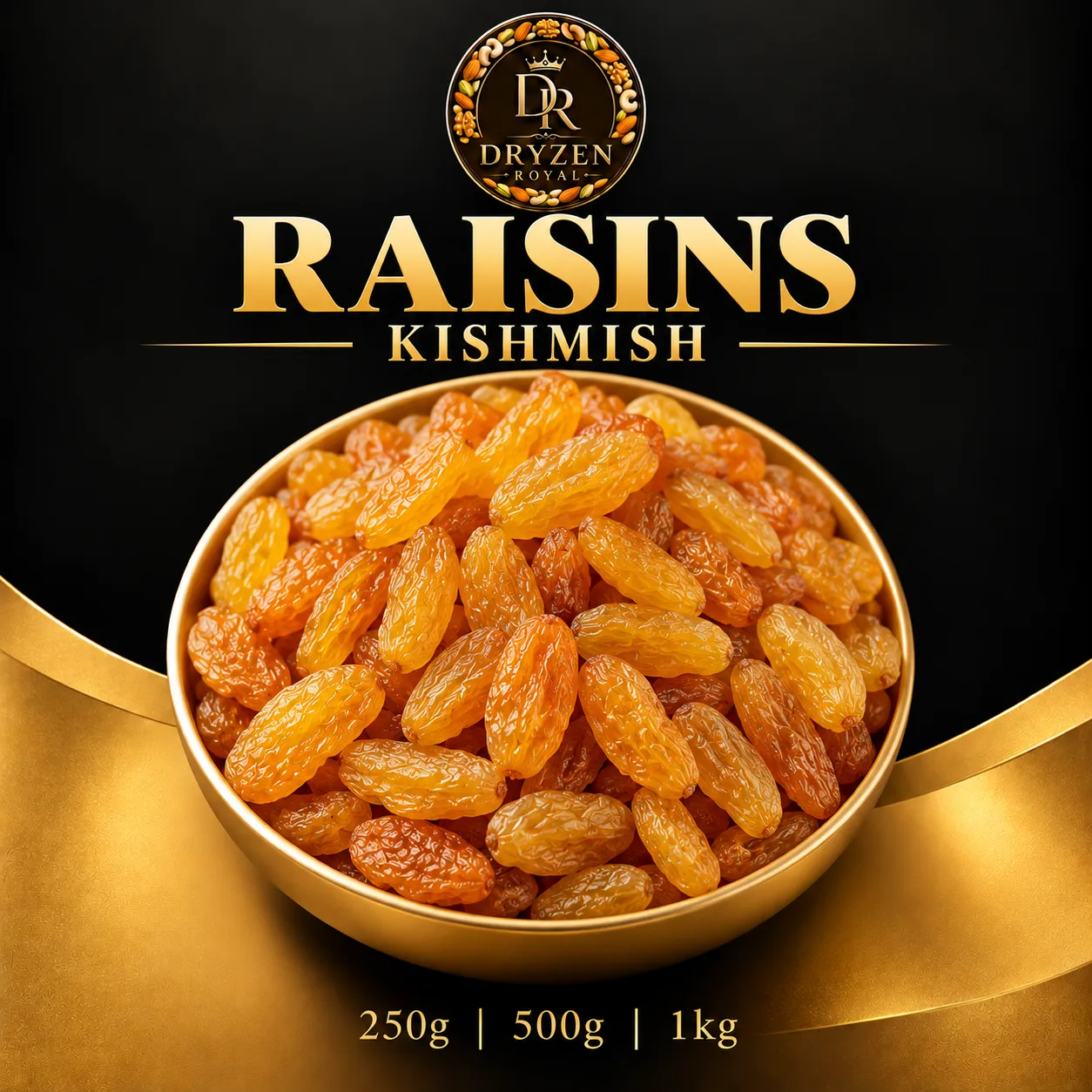
The recipe includes wheat, milk and egg, so keep ingredient information with any shared batch. Explore Dryzen Royal Premium Raisins for your next raisin scones and store the remaining kishmish according to the pack instructions.
When serving eight people, cut equal portions before the tray goes into the oven rather than splitting random sizes afterwards. If only a few people are eating, freeze some cooled scones individually. That lets you rewarm a small amount for tea without repeatedly opening and handling the entire reserve.
Press straight down and lift it up. Twisting can compress the cut edges and make the rise less even.
Yes. Pat the dough into a round and cut it into eight wedges with a sharp knife, keeping them roughly equal in size.
Soft raisins can go in directly. If you briefly soften very dry raisins, drain and dry their surfaces before adding them.
Cool them fully, wrap individual portions and freeze in suitable packaging. Rewarm after thawing and expect the crust to differ slightly from freshly baked.
Questions about this article?
Email us and we will get back to you.
Explore more
